2026-07-10 12:00:00
Developed by the renowned MIT Media Lab under researcher Nataliya Kosmyna and Professor Pattie Maes, AttentivU (with its Personalized Performance-Optimization Platform, or P-POP) emerged from cutting-edge work on wearable physiological sensing. The project integrates EEG, EOG, and other biosensors into XR-compatible form factors like clip-ons for headsets and glasses, with NASA sponsorship highlighting its mission to enhance human capabilities in demanding environments. By delivering real-time, closed-loop feedback on cognitive load, attention, fatigue, and engagement, AttentivU boosts efficiency, well-being, and safety across personal and professional spheres, backed by prototypes tested with over 100 users in workplace, learning, and simulator settings. It specifically addresses three impactful use cases: optimizing astronaut performance during prolonged spaceflight, enhancing driver attention in high-stakes automotive scenarios, and personalizing educational or workplace productivity through adaptive XR environments. Learn more about AttentivU.
Astronaut Performance in Space: Thriving Beyond Earth
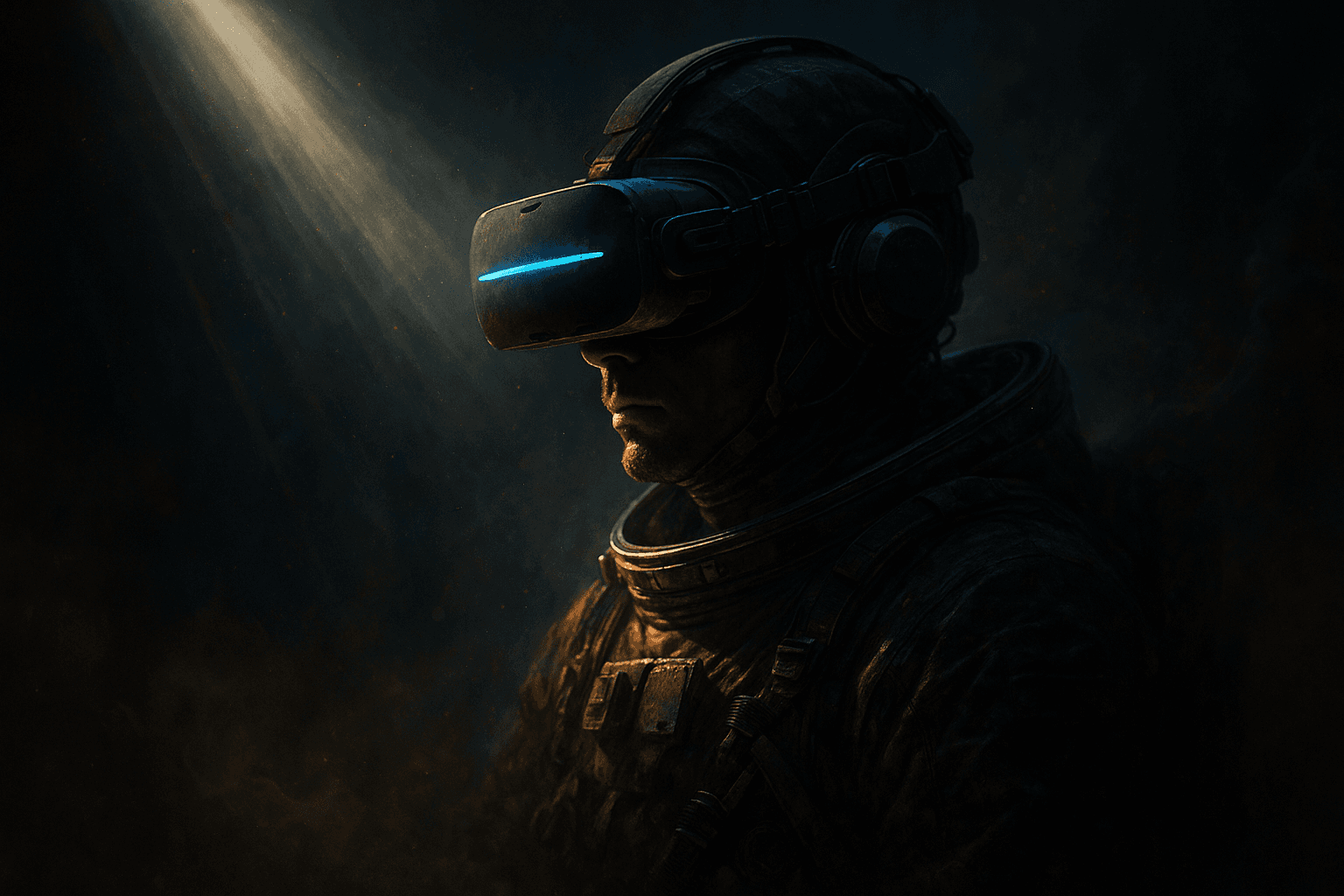
AttentivU's P-POP leverages XR headsets augmented with non-invasive EEG and eye-tracking sensors to monitor astronauts' cognitive states in real time during extended missions, where isolation, microgravity, and sleep disruption erode focus and decision-making. For instance, the system can detect rising fatigue or declining attention via brainwave patterns and deliver subtle haptic or audio cues through the headset to prompt rest or refocus, while dynamically adjusting virtual task interfaces for optimal load. This harnesses XR's immersive spatial computing to overlay personalized performance dashboards in the astronaut's field of view, fostering proactive interventions that traditional monitoring cannot match. Real-world testing in zero-gravity flights and NASA-backed simulations demonstrates measurable gains in sustained attention and reduced error rates, with logical implications for mission success and crew mental health. Edge cases like sensor drift in extreme conditions are mitigated through adaptive calibration, underscoring the platform's robustness in turning XR from entertainment into a life-sustaining tool.
Driver Attention and Safety: Staying Sharp on the Road
In automotive applications, AttentivU clips onto XR or AR glasses to provide closed-loop biofeedback during simulated or real driving, alerting users via gentle vibrations or sounds when attention wanes—proven effective in overnight simulator trials with 30+ participants. Technical nuances include real-time fusion of EEG for cognitive load and EOG for eye movements, integrated with XR's passthrough capabilities to highlight hazards spatially without breaking immersion. This use case exploits interactivity and immersion to create personalized training scenarios that adapt difficulty based on user performance, yielding outcomes like improved reaction times and fewer lapses. Challenges such as motion artifacts in bumpy conditions are addressed through robust signal processing, while benefits extend to commercial fleets for reduced accident risks. Testimonials from MIT studies highlight enhanced alertness, positioning XR as a transformative ally in everyday safety rather than a distraction.
Learning and Workplace Productivity: Adaptive Focus Unleashed
For education and professional settings, AttentivU powers XR environments that personalize content delivery—such as adjusting virtual lecture complexity or task interfaces based on detected engagement levels—tested successfully in university lectures and solo study with over 100 subjects. Examples include AI-driven hints during VR training modules when cognitive overload is sensed, leveraging spatial computing for contextual overlays that boost retention and flow states. This approach capitalizes on XR's interactivity to create empathetic, user-responsive experiences unavailable in flat screens. Potential edge cases like individual biometric variability are handled via machine learning personalization, delivering measurable benefits like higher completion rates and reduced fatigue. Logical implications include scalable productivity gains in hybrid work, where XR becomes an extension of the mind rather than just a tool.
Interconnected Impact on Human Progress
These use cases interconnect through AttentivU's core closed-loop sensing and XR augmentation, creating synergies that amplify productivity in isolated extremes (space), safety-critical routines (driving), and creative daily workflows (learning/work). Collectively, they drive societal progress by fostering empathy via personalized insights, enabling scalable innovation in high-stakes fields, and shifting XR toward proactive human augmentation with long-term implications for global challenges like space colonization and workforce efficiency. Nuanced trade-offs include privacy considerations around biometric data and the need for complementary AI advancements, yet the platform's evidence-based foundation promises transformative accessibility across contexts.
Getting Started with Attentivu: Your Step-by-Step Adoption Guide
Begin by visiting the official AttentivU site to explore research prototypes and contact the MIT team for collaboration or early access opportunities. Hardware requirements typically involve compatible XR headsets like Hololens 2 or Oculus Rift with clip-on sensor modules; start with basic setups using provided SDKs for integration. Setup tips include initial calibration sessions in controlled environments and pairing with existing productivity apps via APIs. Learning resources encompass MIT publications and demo videos on attentivu.com; costs are currently research-oriented but expected to scale affordably. Overcome barriers by beginning with short 15-minute sessions for beginners, gradually advancing to full workflows, ensuring accessibility through guided tutorials for all levels while prioritizing safety data reviews.
Key Insights and Forward Look
- AttentivU transforms XR from passive immersion into active cognitive optimization, with NASA-backed validation for extreme environments.
- Real-time biofeedback in driving simulators reduced attention lapses, showcasing practical safety impacts backed by peer-reviewed trials.
- Personalized XR learning adapts in real time, improving engagement metrics across 100+ tested users in educational settings.
- Synergies across use cases highlight scalable potential for space, automotive, and workplace domains, with privacy as a key evolving consideration.
- Future integrations with generative AI could further personalize experiences, positioning this as a cornerstone for empathetic tech advancement.
- Actionable takeaway: Pilot with short XR sessions to experience attention gains, verifying claims independently for personal workflows.
Transparency and Credits
This post was generated with AI assistance using Grok/xAI tools, synthesizing information from publicly available sources including the AttentivU website, MIT Media Lab publications, and recent research. All details should be independently verified by readers, with discretion advised on technical claims, health/safety applications, or any investment decisions. XR technology evolves rapidly, and perspectives here reflect available data as of mid-2026; ongoing developments may introduce updates.