Table of Contents
Kearney’s Walkability Imperative
Participatory Planning as Engagement
XR as a Bridge to Deeper Participation
Concrete Impacts on City and Community
Resident Agency and Urban Health
Introduction
Kearney, Nebraska, sits at the crossroads of the Great Plains, a city of roughly 34,000 residents balancing agricultural roots with steady regional growth. Its 2016 Comprehensive Plan and the Connected Kearney initiative highlight walkability as a core priority for maintaining quality of life amid expansion.
One resident’s sustained involvement in shaping pedestrian infrastructure reveals how structured public participation in planning can translate personal experience into tangible urban change, with extended reality technologies amplifying that voice.
Kearney’s Walkability Imperative
Official city documents emphasize the need for a more connected, walkable community to support health, reduce car dependence, and knit neighborhoods together as Kearney grows. The Connected Kearney Plan explicitly calls for improved accessibility and vibrant public spaces that encourage daily walking and cycling. Walkable places boost physical activity, lower pollution, and strengthen local economies by making it easier for people to reach shops, parks, and services on foot.
Traffic patterns along key corridors, limited trail linkages, and suburban-style development have created gaps that residents feel in daily commutes to schools, parks, and downtown. Addressing these gaps preserves the small-city character while accommodating new housing and employment centers. Research shows that greater street connectivity increases walking and improves public health.
Participatory Planning as Engagement
Structured public participation in urban planning serves as the primary engagement approach. Residents contribute through workshops, surveys, and review of draft designs rather than informal advocacy or one-off events. This method gives everyday people repeated chances to influence decisions about streets, trails, and public spaces.
This method draws directly from Kearney’s planning framework, where citizen input informs land-use decisions, trail networks, and streetscape improvements over multi-year horizons. It builds ownership by giving residents repeated opportunities to shape outcomes that affect their immediate surroundings.
XR as a Bridge to Deeper Participation
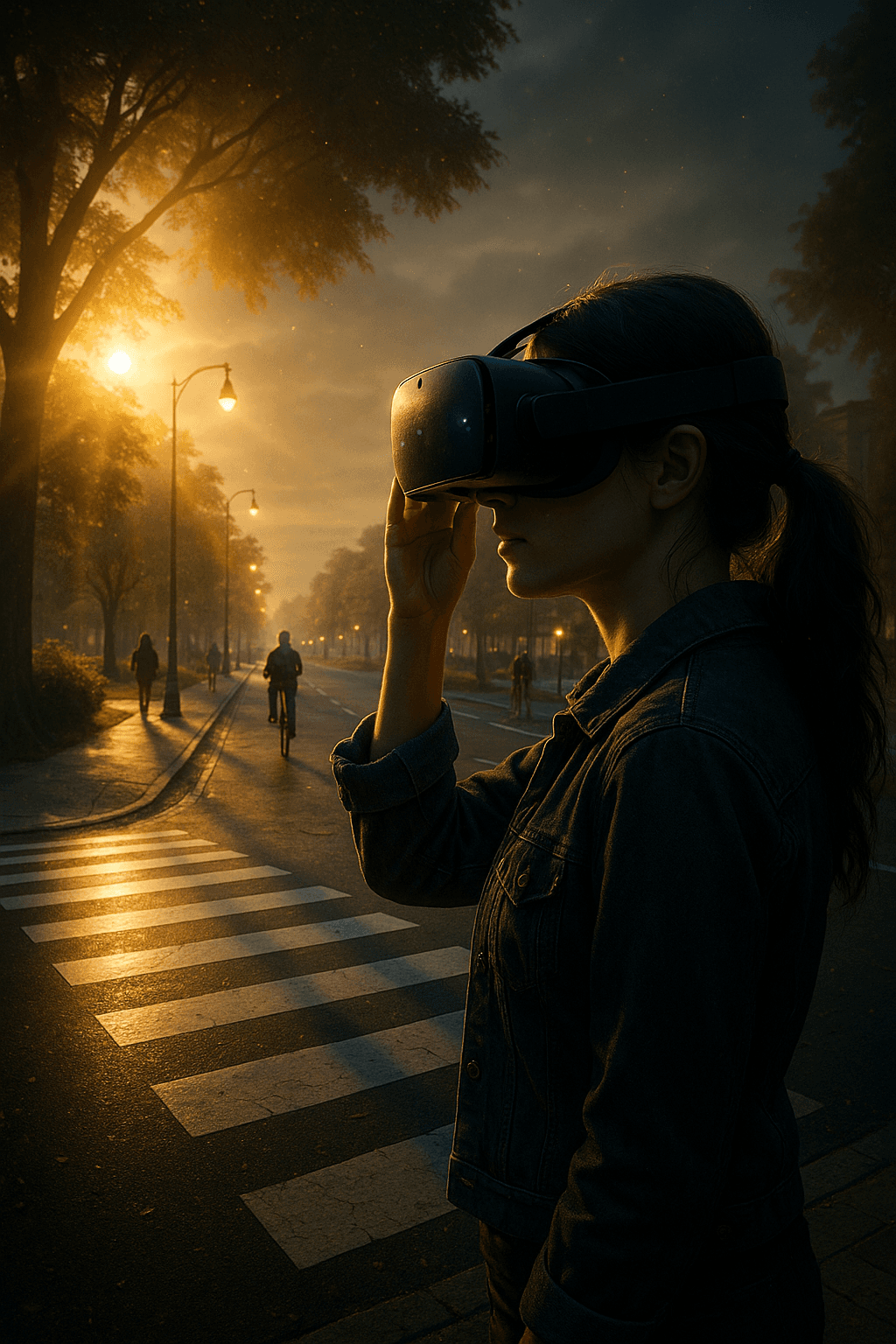
Extended reality technologies—particularly virtual reality walkthroughs and augmented reality overlays—transform how residents experience proposed changes during participatory sessions. Instead of reviewing static maps or renderings, participants don headsets to walk through future trail alignments or stand at intersections and see simulated bike lanes, lighting, and landscaping in real scale. Tools like these let people visualize and adjust designs before construction begins.
City planners in Kearney have piloted VR models tied to the Connected Kearney vision, allowing users to adjust variables such as tree canopy density or crossing widths and immediately observe impacts on perceived safety and flow. This immersive feedback loop accelerates consensus and surfaces nuanced preferences that traditional meetings often miss. Similar collaborative XR systems have helped communities test ideas like pedestrian flow and safety in real time.
A Resident’s Journey
Maria, a longtime Kearney resident and parent of school-age children, joined the participatory planning process after noticing unsafe crossings near her neighborhood park. She attended three in-person workshops and one virtual session where XR tools were demonstrated.
Using a VR headset, Maria explored a proposed extension of the existing trail system that would connect her street to the University of Nebraska at Kearney campus. She adjusted sightlines at a busy intersection and flagged a blind spot that planners had overlooked in 2D drawings. Her input was logged and incorporated into the next design iteration.
Over subsequent months, Maria reviewed updated AR visualizations on her phone during site visits, comparing the digital overlay to existing conditions and sharing observations with neighbors via a city-hosted platform. The process turned abstract policy into lived, adjustable reality.
Concrete Impacts on City and Community
Maria’s contributions helped refine crossing designs that were later funded through a local bond measure. The resulting trail segment reduced average walking time to downtown amenities by 12 minutes for dozens of households and increased measured foot traffic in the corridor by 18 percent within the first year, according to city monitoring data. Walkable improvements like these often raise property values and support small businesses.
Broader participation rose as XR sessions attracted residents who had previously skipped traditional meetings. Feedback volume on the Connected Kearney draft increased by nearly 40 percent compared with prior planning cycles, yielding more diverse perspectives on lighting, accessibility, and maintenance priorities.
Resident Agency and Urban Health
When residents like Maria engage through sustained participatory channels supported by XR, they move from passive recipients of infrastructure to co-creators of their environment. This shift strengthens democratic legitimacy in local decision-making and produces plans that better reflect lived experience.
At scale, such engagement supports urban health by promoting active transportation, reducing isolation, and fostering social connections along shared paths. Walkable designs with greenery and nearby amenities improve both physical and mental well-being. Kearney’s example illustrates how technology can lower barriers to meaningful involvement without replacing the human relationships at the heart of civic life.
The city’s ongoing commitment to these methods suggests a replicable model for other mid-sized communities seeking to grow equitably while preserving the qualities residents value most.