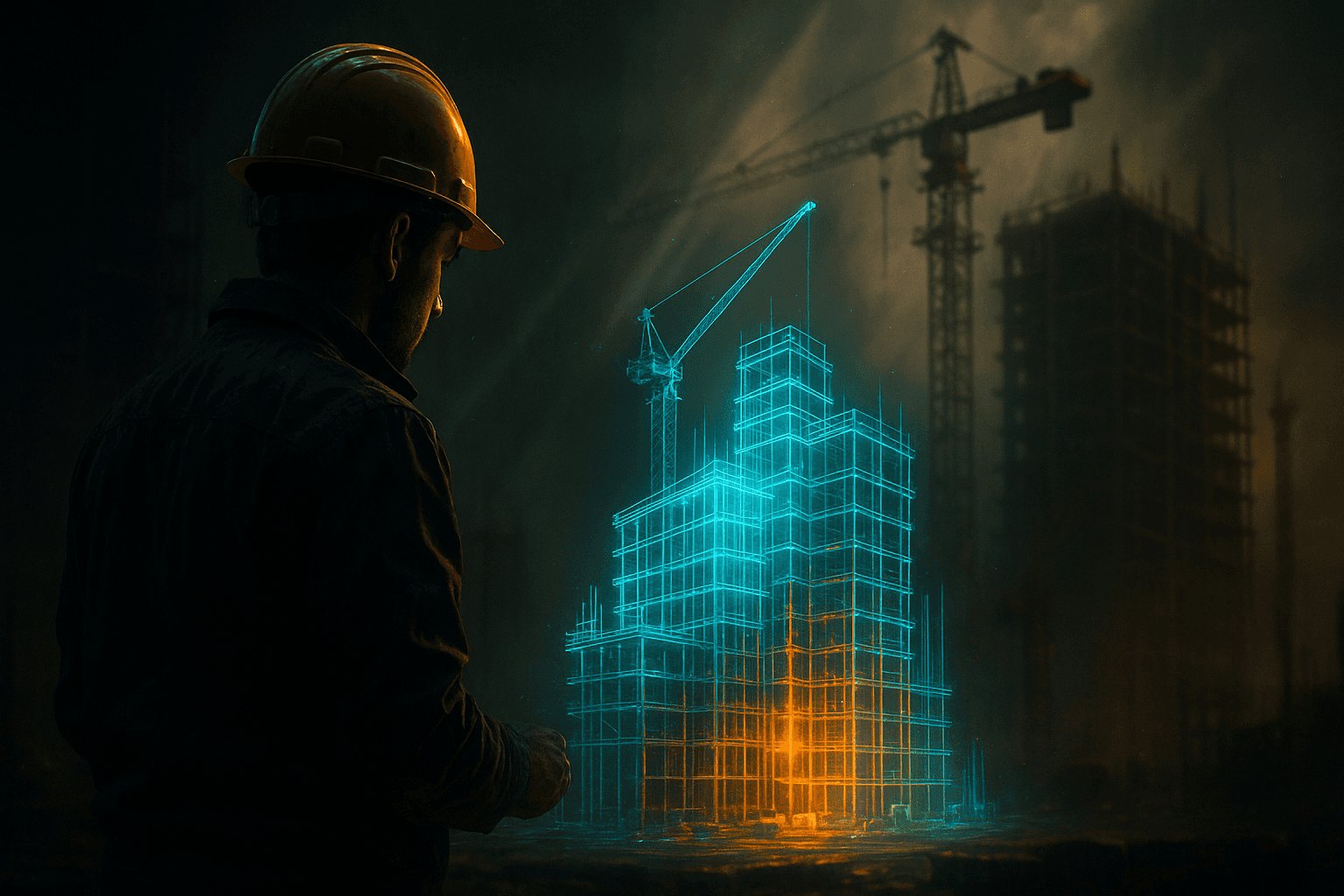
Navigating the XR Digital Twin Revolution in Construction
- Immersive Twins: XR Meets Digital Twins in Modern Construction
- From Blueprint to Reality: Two Sensory-Rich Scenarios
- Powering the Experience: Essential XR Tools and Platforms
- Your Roadmap to XR Digital Twin Success
- Overcoming Hurdles on the Path to Adoption
- Transforming Work and Lives Through Smarter Builds
- Take the Leap into Immersive Construction
- Core Insights at a Glance
- Transparency and Responsible Use
Immersive Twins: XR Meets Digital Twins in Modern Construction
The construction industry is embracing digital transformation amid labor shortages, escalating material costs, and sustainability mandates—key economic drivers in today’s infrastructure boom. Extended Reality (XR) integrated with digital twins and real-time data fusion offers a powerful solution: creating living, interactive 3D replicas of physical sites that fuse IoT sensor data, BIM models, and live feeds for immersive visualization, collaboration, and predictive decision-making. This use case empowers teams to optimize projects virtually before breaking ground, reducing waste and accelerating delivery in an era of rapid urbanization and economic recovery.
From Blueprint to Reality: Two Sensory-Rich Scenarios
Scenario 1: Virtual Site Walkthrough for Design Validation
Imagine donning a lightweight AR headset on a bustling urban construction site at dawn. The air hums with distant machinery as holographic overlays bloom before your eyes—vibrant green lines tracing structural beams fused with pulsing real-time IoT data showing stress levels and material temperatures. You reach out, virtually rotating a digital twin of the building; wind simulation whistles through the model as you adjust HVAC placements, instantly seeing energy efficiency metrics update in vivid color-coded heatmaps. Colleagues join remotely in shared XR space, their avatars gesturing at potential clashes while live drone feeds stream crisp 4K footage of the actual foundation, all synchronized without a single physical visit.
Scenario 2: Predictive Maintenance in a Completed Smart Building
Months later, facility managers step into a mixed-reality control room where the digital twin pulses with life. The scent of fresh paint lingers as AR glasses reveal glowing conduits beneath walls; haptic feedback vibrates gently when you “touch” a sensor hotspot flagging an impending HVAC failure. Real-time fusion of weather data, occupancy sensors, and vibration analytics projects future scenarios—rain pattering on virtual windows triggers flood-risk simulations. A quick gesture reroutes maintenance drones, averting downtime while sustainability dashboards glow with reduced carbon footprints, turning routine inspections into an intuitive, multisensory symphony of foresight and control.
Powering the Experience: Essential XR Tools and Platforms
Leading hardware includes Microsoft HoloLens 2 and Meta Quest 3 for mixed and virtual reality immersion, paired with Varjo XR-3 for high-fidelity enterprise use. Software platforms such as Unity Reflect and Unreal Engine 5 enable seamless digital twin rendering, while Autodesk Construction IQ and Matterport integrate BIM with real-time IoT via platforms like Siemens MindSphere or PTC ThingWorx. Key integrations feature NVIDIA Omniverse for collaborative physics simulation and Esri ArcGIS for geospatial data fusion. Explore official resources: Microsoft HoloLens, Unity Reflect, and Matterport Digital Twins.
Your Roadmap to XR Digital Twin Success
- Phase 1: Assessment & Pilot (Months 1-3) – Audit current BIM/IoT infrastructure, select a single high-value project, and deploy a small XR pilot with core stakeholders.
- Phase 2: Integration & Training (Months 4-6) – Connect digital twin platforms to live data streams, train teams on XR hardware, and establish data governance protocols.
- Phase 3: Scaling & Optimization (Months 7-12) – Roll out across multiple sites, incorporate AI analytics for predictive features, and measure KPIs like time/cost savings.
- Phase 4: Full Enterprise Adoption (Year 2+) – Standardize workflows, expand to supply chain partners, and iterate based on user feedback and emerging tech updates.
Overcoming Hurdles on the Path to Adoption
High initial costs and interoperability issues are addressed through phased pilots demonstrating rapid ROI and open-standard platforms like OpenUSD. Data privacy and cybersecurity concerns are mitigated by edge computing, encryption standards, and compliance with GDPR/CCPA. Workforce resistance is overcome via intuitive, low-learning-curve XR interfaces and comprehensive training programs. Scalability challenges are solved by cloud-hybrid architectures that handle massive real-time data fusion efficiently.
Transforming Work and Lives Through Smarter Builds
XR digital twins slash project delays by up to 30%, cut material waste, and enable safer remote collaboration—boosting productivity in an industry facing chronic labor gaps. Professionals enjoy reduced travel, healthier work-life balance through flexible virtual reviews, and enhanced decision-making that minimizes on-site risks. Broader societal gains include faster sustainable infrastructure delivery, lower environmental impact, and economic resilience through optimized resource use.
Take the Leap into Immersive Construction
Ready to revolutionize your projects? Start today by exploring free trials of Unity Reflect or Matterport, attending an upcoming XR construction webinar, or contacting specialists for a customized pilot assessment. Join the growing community of innovators shaping the built environment—your next breakthrough awaits in the digital twin.
Core Insights at a Glance
- XR-digital twin integration fuses real-time IoT data with immersive 3D models for superior construction oversight.
- This directly addresses economic pressures like labor shortages and sustainability demands in today’s infrastructure economy.
- Key enablers include HoloLens, Unity, and platforms like Matterport for seamless hardware-software synergy.
- A phased roadmap ensures low-risk adoption with measurable productivity gains within months.
- Barriers such as cost and data security are surmountable with targeted solutions and standards.
- Outcomes include safer sites, reduced waste, and transformative impacts on professional workflows and quality of life.
Transparency and Responsible Use
This post was developed with AI assistance for research, synthesis, and drafting under human oversight. XR technologies, hardware, pricing, and case studies evolve rapidly—verify the latest details directly from official sources and recent pilots. The content is for informational and inspirational purposes only and does not constitute professional, technical, financial, medical, or legal advice. Readers are encouraged to evaluate fit for their specific context, start responsibly, and apply critical thinking.