2026-06-23 12:00:00
Table of Contents
Unlocking Team Synergy: PEGAVERSE and Immersive Factory Collaboration
Revolutionizing Remote Diagnostics Through Shared XR Spaces
Driving Predictive Performance Analytics in Virtual Factories
Accelerating Scenario Testing and Workforce Alignment
Interconnected Impact: Scaling Human-Centered Industrial Progress
Your Roadmap to Adopting PEGAVERSE for Team Excellence
Essential Insights on XR-Driven Collaboration
Transparency and Forward-Looking Notes
Revolutionizing Remote Diagnostics Through Shared XR Spaces
Driving Predictive Performance Analytics in Virtual Factories
Accelerating Scenario Testing and Workforce Alignment
Interconnected Impact: Scaling Human-Centered Industrial Progress
Your Roadmap to Adopting PEGAVERSE for Team Excellence
Essential Insights on XR-Driven Collaboration
Transparency and Forward-Looking Notes
Unlocking Team Synergy: PEGAVERSE and Immersive Factory Collaboration
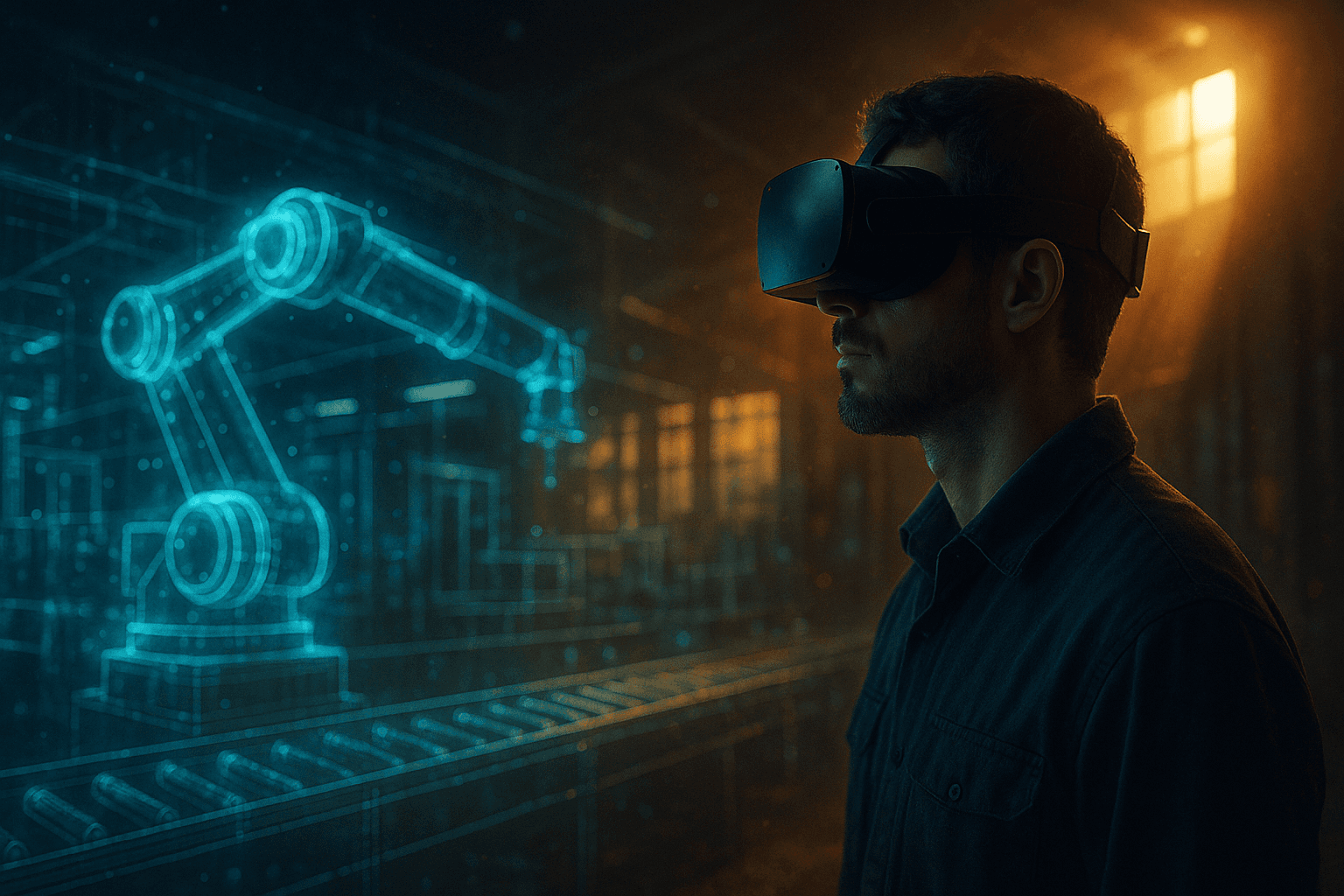
Pegatron, a leading Taiwanese electronics manufacturer founded in 2010 as a spin-off from ASUS, developed PEGAVERSE on NVIDIA Omniverse to digitize and optimize its global factory operations through AI-enabled digital twins. This innovative XR platform creates physically accurate virtual replicas of production environments, enabling teams to collaborate seamlessly across locations while delivering real-time insights that boost efficiency, reduce defects, and enhance decision-making. By leveraging immersion and spatial computing, PEGAVERSE improves well-being through safer planning and creativity via interactive simulations, with documented outcomes like a 67% drop in defect rates. It addresses three distinct use cases: remote diagnostics and collaborative troubleshooting in live factory settings, predictive analytics for team performance monitoring and bottleneck identification, and virtual scenario testing for proactive optimization and training. PEGAVERSE on NVIDIA Omniverse.
Revolutionizing Remote Diagnostics Through Shared XR Spaces
In remote diagnostics, PEGAVERSE allows distributed engineering and operations teams to enter synchronized virtual factory twins via XR headsets or browsers, where they can inspect 3D models overlaid with live IoT sensor data, identify equipment issues, and annotate in real time. For instance, technicians in Taiwan and overseas sites can jointly walk through a simulated production line, simulate repairs, and resolve bottlenecks without physical travel, leveraging Omniverse's real-time synchronization and OpenUSD for multi-user spatial interaction. Technical nuances include AI agents from NVIDIA Metropolis and Isaac Sim that flag anomalies automatically, though edge cases like network latency in low-connectivity regions may require fallback to asynchronous reviews. Measurable benefits include reduced downtime and a projected 40% faster new factory construction, as teams achieve consensus faster through immersive visualization. This use case harnesses XR's unique strengths in presence and interactivity to foster empathy and shared understanding among global teams, turning isolated data into collective problem-solving.
Driving Predictive Performance Analytics in Virtual Factories
PEGAVERSE excels in collaborative performance analytics by aggregating interaction data, simulation runs, and sensor feeds into dashboards that track team dynamics, such as decision speed, collaboration patterns, and process efficiency within the virtual environment. Teams can review replayable sessions to analyze how members navigate digital twins, optimize workflows, and predict outcomes using AI blueprints for video summarization and visual language models. Real-world applications span electronics assembly lines where managers monitor multi-user sessions to refine training or reassign roles based on performance metrics. Challenges include ensuring data privacy in shared spaces and handling complex variable interactions in high-volume production, yet benefits are clear with 67% defect reductions and continuous optimization. XR's spatial computing enables intuitive data exploration—users literally "stand inside" analytics visualizations—driving deeper insights than traditional 2D tools and promoting proactive team adjustments.
Accelerating Scenario Testing and Workforce Alignment
For scenario testing, PEGAVERSE empowers cross-functional teams to simulate factory layouts, equipment changes, or disruption events in immersive XR environments, iterating designs collaboratively before physical implementation. Specific examples include virtual commissioning of new lines or hazard identification drills, where participants from design, operations, and safety roles interact spatially to validate plans. Technical elements leverage NVIDIA Isaac Sim for physics-accurate simulations integrated with AI for predictive modeling, though edge cases like highly customized machinery may demand additional modeling time. Outcomes include minimized change orders and enhanced knowledge retention through experiential learning. This leverages XR immersion for creative exploration and interactivity for consensus-building, yielding scalable impacts on innovation and risk reduction across Pegatron's facilities.
Interconnected Impact: Scaling Human-Centered Industrial Progress
These use cases interconnect through PEGAVERSE's unified digital twin foundation, where remote diagnostics feed real-time data into performance analytics, which in turn informs scenario testing—creating a virtuous cycle of observation, insight, and proactive refinement that elevates team dynamics from reactive firefighting to strategic foresight. Collectively, they drive broader productivity by minimizing travel and errors, foster empathy via shared spatial experiences, and accelerate societal progress in sustainable manufacturing. Long-term, the platform scales globally as 5G and edge computing mature, enabling transformative shifts in Industry 4.0, though trade-offs like initial hardware investments and integration with legacy systems require careful planning alongside complementary AI tools.
Your Roadmap to Adopting PEGAVERSE for Team Excellence
1. Assess hardware needs—start with compatible XR devices like NVIDIA RTX-powered workstations or supported headsets, ensuring enterprise-grade GPUs for smooth multi-user sessions. 2. Pilot via NVIDIA Omniverse Enterprise licensing (contact sales for quotes; costs vary by scale but often subscription-based) and integrate with existing IoT/PLM systems using OpenUSD. 3. Access free learning resources including NVIDIA's Omniverse documentation, tutorials, and GTC sessions on digital twins. 4. Begin with a small team simulation to build familiarity, addressing barriers like training curves through phased rollouts and IT support. 5. Monitor ROI via built-in analytics and scale gradually, prioritizing accessibility with browser-based options for non-XR users.
Essential Insights on XR-Driven Collaboration
- PEGAVERSE demonstrates how digital twins turn XR into measurable performance engines, cutting defects by up to 67% in real factories.
- Spatial collaboration in Omniverse bridges physical distances, enabling global teams to co-create with unprecedented fidelity and speed.
- Predictive analytics embedded in immersive environments reveal hidden team dynamics invisible in traditional dashboards.
- Scalable scenario testing reduces physical prototyping risks and accelerates innovation cycles by 40% or more.
- Start small with pilots to overcome adoption hurdles while unlocking synergies between XR, AI, and IoT for lasting efficiency gains.
- This technology signals a shift toward human-centric industrial metaverses that prioritize both productivity and well-being.
- Spatial collaboration in Omniverse bridges physical distances, enabling global teams to co-create with unprecedented fidelity and speed.
- Predictive analytics embedded in immersive environments reveal hidden team dynamics invisible in traditional dashboards.
- Scalable scenario testing reduces physical prototyping risks and accelerates innovation cycles by 40% or more.
- Start small with pilots to overcome adoption hurdles while unlocking synergies between XR, AI, and IoT for lasting efficiency gains.
- This technology signals a shift toward human-centric industrial metaverses that prioritize both productivity and well-being.
Transparency and Forward-Looking Notes
This post was generated with AI assistance using Grok/xAI tools for research synthesis. Information is drawn from publicly available sources like NVIDIA case studies and should be independently verified by readers for the latest details. Exercise discretion with technical claims, health/safety considerations in XR use, or any investment decisions. XR technology evolves rapidly, and perspectives here reflect synthesized insights as of mid-2026.