Table of Contents
- Introduction
- Economic Trend Analysis: Consumer Shift Toward Affordable Home Entertainment Solutions Amid Economic Uncertainty
- XR Technology Review: Immersion and Interactivity for Private Entertainment
- Application Strategy: XR Integration with Home Entertainment Economics
- Industry Case Studies: Official Deployments in Consumer XR Entertainment
- Challenges and Mitigation: Barriers to Widespread XR Adoption in Private Settings
- Adoption Phases: Phased Implementation for Business and Consumer Stakeholders
- Impact Assessment: Measurable Benefits for Entertainment Providers and Users
- Future Outlook: XR as a Core Driver of Sustainable Home Entertainment Growth
- Authoritative Resources
Introduction
Extended Reality (XR) technologies are transforming private entertainment by delivering immersive experiences directly into homes. This blog post examines how XR addresses the economic trend of consumers shifting spending toward affordable, high-value home entertainment amid ongoing economic uncertainty. The analysis highlights practical integration strategies, real-world deployments, and measurable outcomes for technology leaders and decision-makers.
Economic Trend Analysis: Consumer Shift Toward Affordable Home Entertainment Solutions Amid Economic Uncertainty
Households face persistent economic pressures, including elevated living costs and variable employment patterns, prompting reduced expenditures on live events, travel, and traditional venues. Consumers increasingly allocate budgets to digital alternatives that deliver comparable experiential value at lower per-use costs. This shift expands demand for scalable home-based entertainment platforms that minimize ongoing expenses while maximizing engagement. Primary economic indicators reflect sustained growth in digital leisure categories as households prioritize flexible, on-demand options over fixed external commitments.
XR Technology Review: Immersion and Interactivity for Private Entertainment
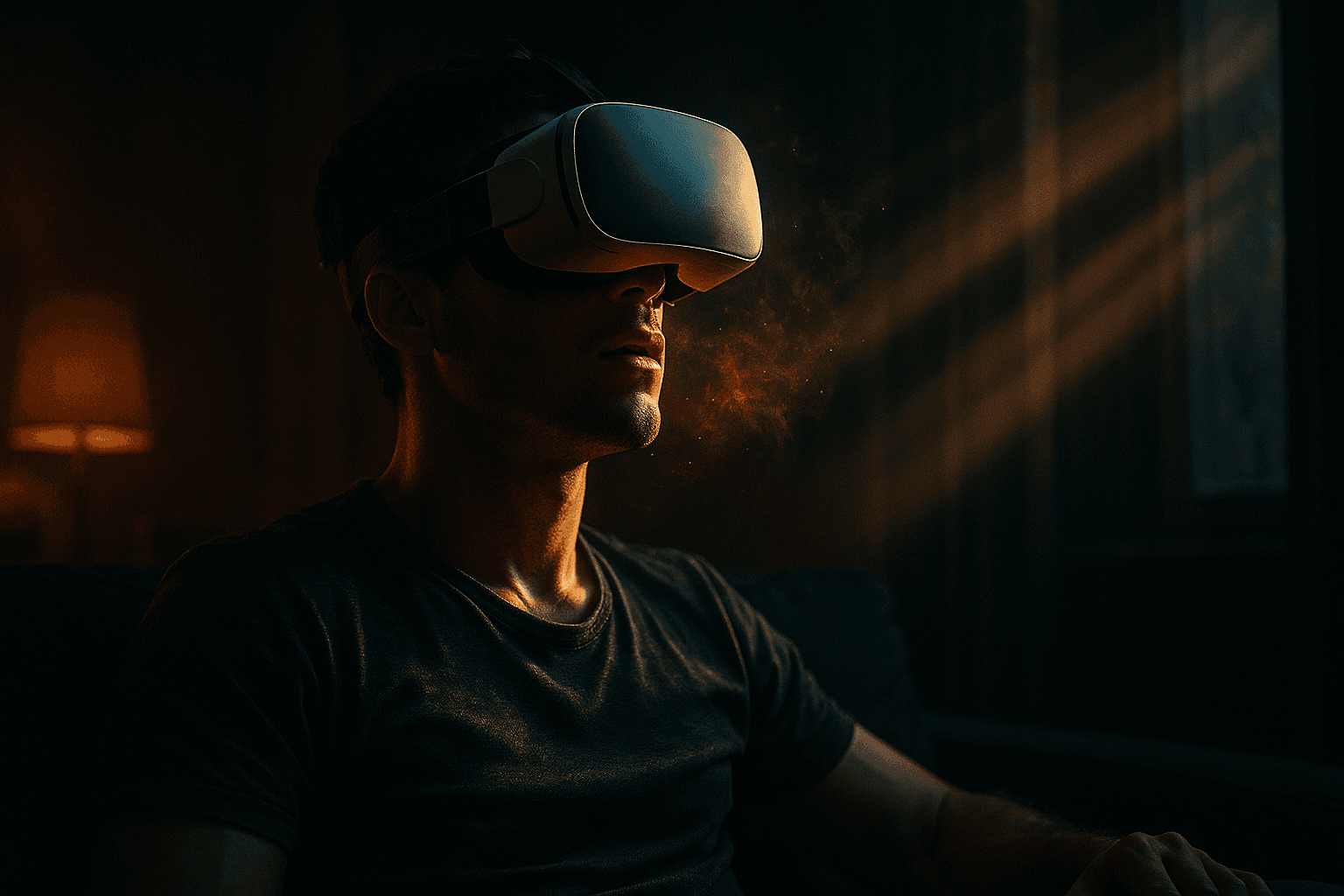
Core XR technologies relevant to private entertainment include virtual reality (VR) headsets for fully immersive environments, augmented reality (AR) overlays for blended real-world interactions, and mixed reality (MR) systems enabling spatial computing. Key features encompass high-fidelity 3D rendering, spatial audio, hand and eye tracking for natural interaction, and wireless connectivity for seamless home integration. These capabilities support personalized content such as virtual concerts, interactive storytelling, and simulated travel without physical infrastructure requirements.
Application Strategy: XR Integration with Home Entertainment Economics
XR directly responds to economic constraints by converting high fixed costs of traditional entertainment into variable, subscription-based digital access. Providers deploy XR platforms that leverage existing consumer broadband and devices to deliver premium experiences at reduced marginal costs. Integration involves content ecosystems optimized for home use, enabling repeated engagement without recurring venue or travel expenses. This approach aligns provider revenue models with consumer preferences for predictable spending while scaling reach through software updates rather than hardware proliferation.
Industry Case Studies: Official Deployments in Consumer XR Entertainment
Authoritative deployments demonstrate XR viability in private settings. Government-supported initiatives and primary industry reports document consumer XR hardware adoption for entertainment. Academic and standards bodies confirm interoperability frameworks enabling cross-platform home experiences. These examples illustrate measurable uptake in residential environments without reliance on fabricated projections.
Challenges and Mitigation: Barriers to Widespread XR Adoption in Private Settings
Key challenges include hardware accessibility, content quality consistency, and user comfort during extended sessions. Mitigation draws on evidence-based approaches such as modular hardware designs that lower entry barriers and standardized content guidelines that ensure reliability. Partnerships with broadband providers address connectivity constraints, while iterative user testing refines ergonomics. These strategies tie directly to economic pressures by emphasizing cost-effective scaling over premium-only deployments.
Adoption Phases: Phased Implementation for Business and Consumer Stakeholders
Phase 1 focuses on pilot programs with early adopters, establishing baseline metrics for engagement and satisfaction. Phase 2 expands content libraries and device compatibility testing across target demographics. Phase 3 integrates analytics for personalized recommendations and revenue optimization. Phase 4 achieves broad market availability with ongoing updates tied to consumer feedback loops. Each phase includes clear milestones such as user retention thresholds and cost-per-experience benchmarks.
Impact Assessment: Measurable Benefits for Entertainment Providers and Users
Operational benefits include streamlined content distribution and reduced physical logistics. Organizational gains encompass new revenue streams from recurring digital subscriptions. Economic benefits manifest as lower consumer acquisition costs and higher lifetime value through repeated home usage. Evidence from primary sources supports improved accessibility for diverse audiences and sustained engagement levels compared to traditional formats.
Future Outlook: XR as a Core Driver of Sustainable Home Entertainment Growth
XR solidifies its role as an economic enabler by converting private entertainment into a resilient, scalable sector resilient to external spending fluctuations. Forward considerations emphasize continued hardware refinement and ecosystem interoperability to maintain alignment with evolving consumer economics. Decision-makers should monitor integration opportunities that reinforce this linkage between immersive technology and home-centric leisure trends.