Table of Contents
Boulder, Colorado: A Commitment to Open Space
The Quality and Need: Open Space Preservation
Engagement Approach: Resident-Led Stewardship
Resident Impacts and Transformation
Broader Implications for Agency and Urban Health
Boulder, Colorado: A Commitment to Open Space
Boulder, Colorado, stands out among U.S. cities for its decades-long dedication to protecting surrounding natural landscapes. Incorporated as a home rule city, Boulder has integrated open space acquisition into its core identity since the 1960s through voter-approved measures like a dedicated sales tax that funds land purchases and maintenance. This focus shapes daily life for residents who value easy access to trails, wildlife corridors, and scenic views just minutes from downtown, creating a unique balance between city living and nature.
The Quality and Need: Open Space Preservation
Official city plans, including the Boulder Valley Comprehensive Plan, emphasize maintaining and expanding over 45,000 acres of open space to counter urban sprawl and climate pressures. Boulder's Open Space and Mountain Parks department manages these lands, funded partly through a voter-approved sales tax. Rapid population growth and housing demand create ongoing tension, requiring vigilant protection of ecosystems that support biodiversity, flood mitigation, cleaner air, and cooler temperatures in urban areas.
Residents recognize this preservation as essential for quality of life, with city studies highlighting how open spaces reduce heat islands and improve air quality. The need remains acute as development pressures mount along the Front Range, making continued protection vital for long-term community well-being.
Engagement Approach: Resident-Led Stewardship
The core engagement approach centers on resident-led stewardship through volunteer programs that directly maintain trails, remove invasive species, and monitor ecological health. Boulder's Open Space and Mountain Parks department coordinates these efforts, inviting locals to participate in hands-on activities that complement professional management. This approach builds ownership and ensures community input shapes priorities for protecting the land everyone enjoys.
Stewardship events occur year-round, from spring trail repairs to fall seed collection. Participants log hours that contribute to city reports on volunteer impact, fostering a feedback loop between residents and planners while strengthening local connections to the outdoors.
XR Facilitation in Practice
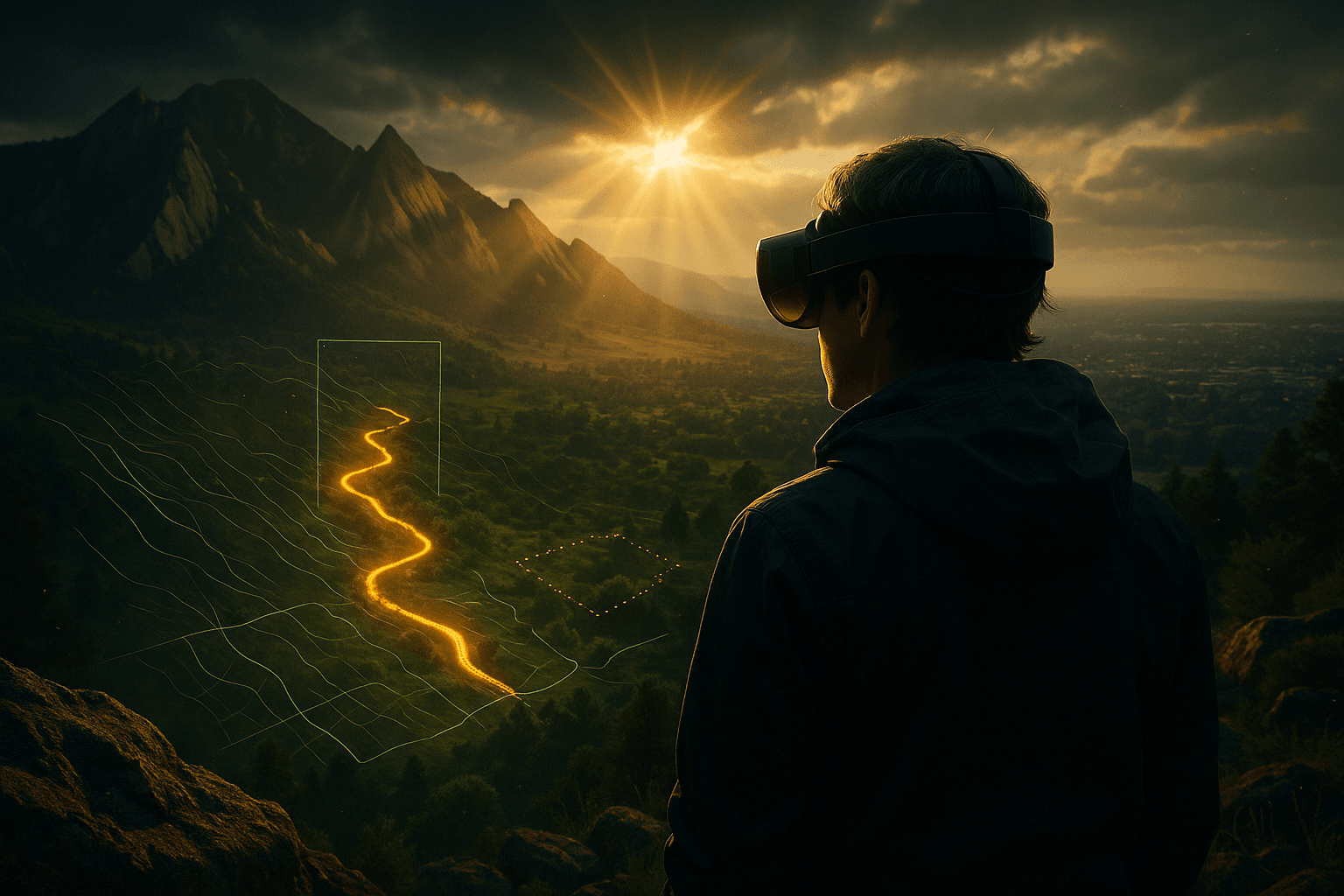
Extended reality technologies enhance stewardship by offering immersive tools for planning and education. Augmented reality apps allow volunteers to overlay proposed trail reroutes or restoration projects onto real landscapes during site visits, using city-provided headsets or smartphones. Virtual reality simulations recreate historical open space conditions or model future climate scenarios, helping residents visualize the long-term value of their work in preserving these areas.
During a typical stewardship day, a participant might use an AR interface to identify native plants while weeding, with data instantly shared to a central database. XR also supports remote participation for those unable to attend in person, through 360-degree virtual tours of remote trail sections that guide preparation for upcoming events.
These applications tie directly to stewardship goals, increasing efficiency and inclusivity without replacing physical involvement. City pilots have shown higher volunteer retention when XR previews reduce uncertainty about tasks and build excitement for conservation efforts.
Resident Impacts and Transformation
Consider a longtime Boulder resident who joins monthly stewardship sessions. Through XR-guided AR mapping, she identifies erosion hotspots more accurately than traditional methods, contributing data that informs targeted repairs. Her efforts help sustain a popular hiking loop while connecting her to neighbors from diverse backgrounds who share the same passion for the land.
Over time, XR deepens her understanding: virtual simulations reveal how one invasive removal project supports pollinator recovery across the valley. Participation rises as barriers fall—new residents use VR onboarding modules to learn protocols before their first outing. Measurable outcomes include increased trail mileage maintained and stronger community networks documented in annual city surveys.
The approach transforms passive appreciation into active guardianship, with XR amplifying individual contributions into collective intelligence that benefits everyone.
Broader Implications for Agency and Urban Health
Boulder's model illustrates how focused resident engagement, amplified by XR, strengthens urban resilience. By centering stewardship, the city empowers individuals to influence environmental outcomes directly. This agency extends beyond open space to broader civic participation, as volunteers often advocate for related policies on sustainability and community health.
Healthy cities depend on such connections between people and place. XR lowers thresholds for involvement while preserving the tangible rewards of physical stewardship, offering a scalable path for other communities facing similar growth and conservation challenges.