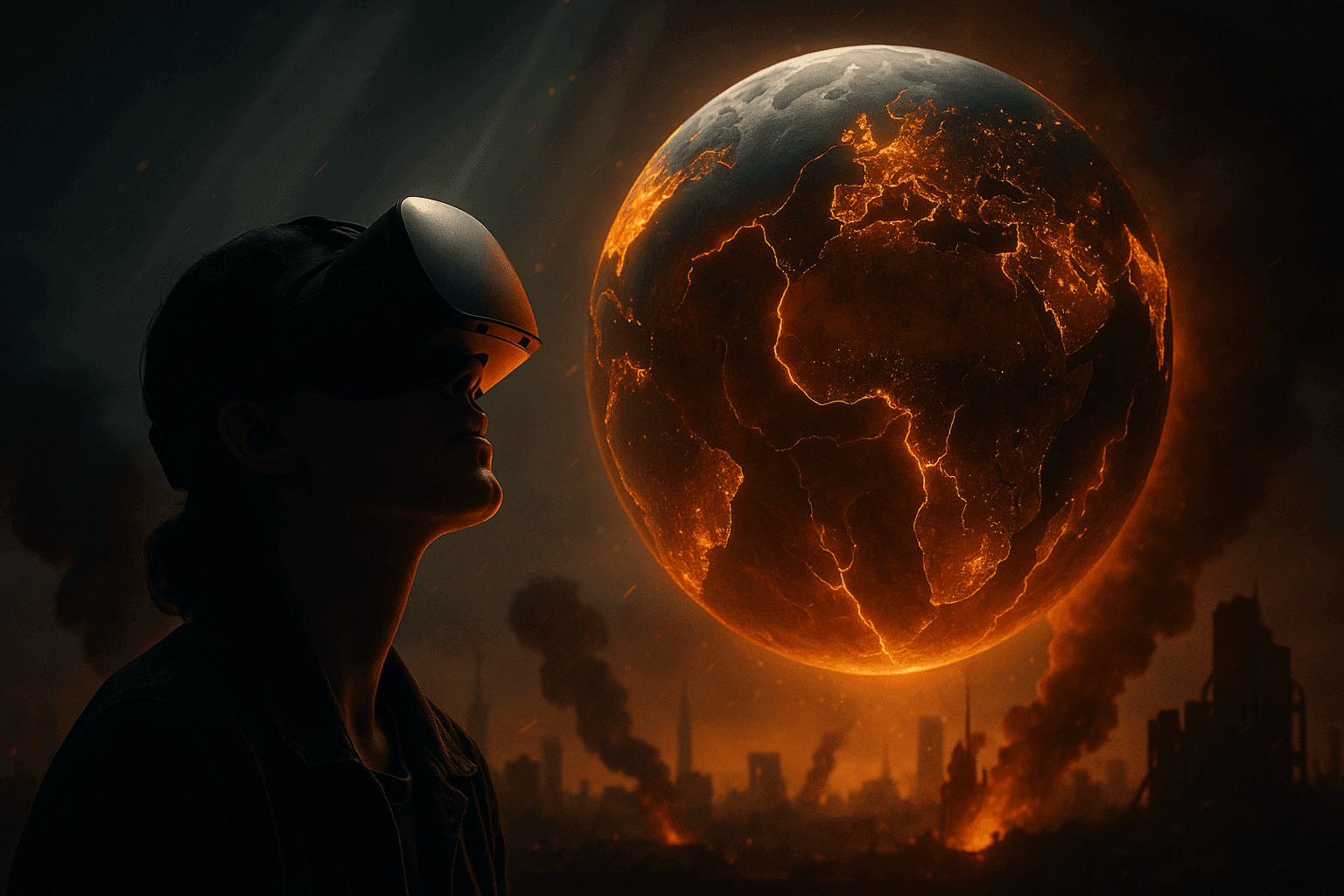
In a world increasingly defined by uncertainty, the Global Risks Report 2026 paints a stark picture of escalating geopolitical and economic tensions. Released by the World Economic Forum, this annual assessment highlights geoeconomic confrontation as the top risk for the year ahead, surging eight positions in the short-term outlook, while economic downturns and inflation also climb dramatically in perceived severity. Drawing from over 1,300 global experts, the report notes a surge in AI anxiety, with adverse AI outcomes jumping to fifth place in the 10-year horizon, amid fears of job disruptions and societal divides. Meanwhile, short-term environmental risks like extreme weather have dipped in rankings, though long-term threats remain dire, with 75% of respondents anticipating a turbulent environmental future. Societal polarization and misinformation round out the top concerns, fostering a multipolar world where 68% expect fragmented global orders. This convergence of risks underscores everyday anxieties—from supply chain vulnerabilities to digital disinformation waves—that touch personal livelihoods and community stability. But what if immersive technologies could bridge these divides? By drawing parallels to extended reality (XR), we explore how virtual simulations might foster empathy, rehearse crisis responses, and enable collaborative problem-solving across borders. This post delves into these connections, offering data-driven insights, ethical considerations, and practical steps to harness XR for navigating 2026's complexities, empowering readers to transform uncertainty into proactive engagement.
Table of Contents
- Unpacking the 2026 Risks
- AI Anxiety and XR Mitigation
- Geopolitical Tensions via Immersive Lens
- Economic Shifts and XR Solutions
- Ethical XR Considerations
- Actionable XR Pathways
Unpacking the 2026 Risks
The Global Risks Report 2026 reveals a landscape where geoeconomic confrontation tops the list, with 18% of experts seeing it as the most likely trigger for a global crisis. Economic risks like downturns and asset bubbles have risen sharply, reflecting broader uncertainties in trade and finance. Half of the surveyed leaders anticipate a turbulent two-year outlook, up 14 points from last year, while inequality emerges as the most interconnected risk, linking to societal polarization ranked third in the near term.
Environmental concerns, though lower in short-term severity, loom large over decades, with biodiversity loss and Earth system changes dominating long-range fears. As outlined in the full report, these intertwined challenges demand innovative approaches to build resilience.
"A new competitive order is taking shape as major powers seek to secure their spheres of interest," notes Børge Brende, President of the World Economic Forum.
| Risk Category | Short-Term Rank Change | Key Impact |
|---|---|---|
| Geoeconomic Confrontation | +8 | Supply chain disruptions |
| AI Adverse Outcomes | +25 (to 5th long-term) | Job market shifts |
| Extreme Weather | -2 | Community vulnerabilities |
AI Anxiety and XR Mitigation
With AI climbing to the fifth most severe long-term risk, anxieties center on labor disruptions and ethical dilemmas. Imagine using XR to simulate AI-integrated workplaces, allowing users to practice skills in virtual environments that adapt to real-time data, easing the transition amid tech-driven job shifts.
Drawing from scenarios in AI and talent futures, XR could gamify reskilling, turning abstract fears into tangible, interactive learning experiences.
- Virtual training modules for AI literacy, reducing misinformation risks.
- Haptic feedback in simulations to build empathy for displaced workers.
Geopolitical Tensions via Immersive Lens
State-based conflicts and a fragmented global order highlight the need for cross-cultural understanding. XR platforms enable remote collaboration, letting diverse teams co-create solutions in shared virtual spaces, countering isolation from geoeconomic barriers.
As explored in geoeconomic futures, immersive diplomacy simulations could rehearse negotiations, fostering empathy and reducing polarization.
- Enter a virtual summit replicating real-world tensions.
- Interact with AI avatars representing global perspectives.
- Analyze outcomes to inform real policy.
Economic Shifts and XR Solutions
Economic downturns, ranked high in interconnections, threaten livelihoods. XR can visualize supply chain disruptions through interactive models, helping businesses and individuals prepare for inflation or asset bubbles.
Integrating data from the Global Risks Initiative, these tools promote proactive community responses, like virtual town halls for economic planning.
Ethical XR Considerations
While XR offers promise, it raises privacy concerns in data-rich simulations, potentially exacerbating misinformation if not regulated. Balancing innovation with ethics requires inclusive design, ensuring access doesn't widen inequalities.
Edge cases, like XR in authoritarian contexts, demand scrutiny to avoid amplifying geopolitical risks.
Actionable XR Pathways
Start with free XR apps for risk education, progressing to community workshops using metaverse tools for collaborative problem-solving.
- Explore virtual economic scenarios to build financial resilience.
- Join online XR forums to discuss global risks.
Key Takeaways
- Geoeconomic confrontation tops 2026 risks, per WEF report.
- AI anxiety surges to 5th in long-term outlooks, linked to job shifts.
- XR simulations can foster empathy and rehearse responses to polarization.
- Environmental risks remain severe long-term, with XR aiding awareness.
- Inequality interconnects risks; XR promotes inclusive collaboration.
- Ethical XR use requires addressing privacy and access gaps.
- Action: Try XR tools for personal risk navigation and community engagement.
As we synthesize these insights from the 2026 Global Risks Report, it's clear that while challenges like geoeconomic tensions and AI disruptions loom large, they also present opportunities for innovation. XR technologies, by immersing us in simulated realities, can humanize abstract threats, enabling better preparation and empathy-building across divides. Consider the broader implications: in a multipolar world, these tools might redefine collaboration, turning potential conflicts into cooperative ventures. Yet, the 'so what?' lies in action—without ethical deployment, XR could amplify inequalities. What next? Dive into XR platforms to explore risk scenarios firsthand, join virtual communities tackling local economic issues, or advocate for inclusive tech policies. Subscribe for more on emerging digital intersections, share your experiences in the comments, or experiment with an XR app today to bridge online curiosity with real-world impact. Let's transform uncertainty into empowered futures.
What are your thoughts? Comment below!
Generated by AI. Reviewed by Human.