
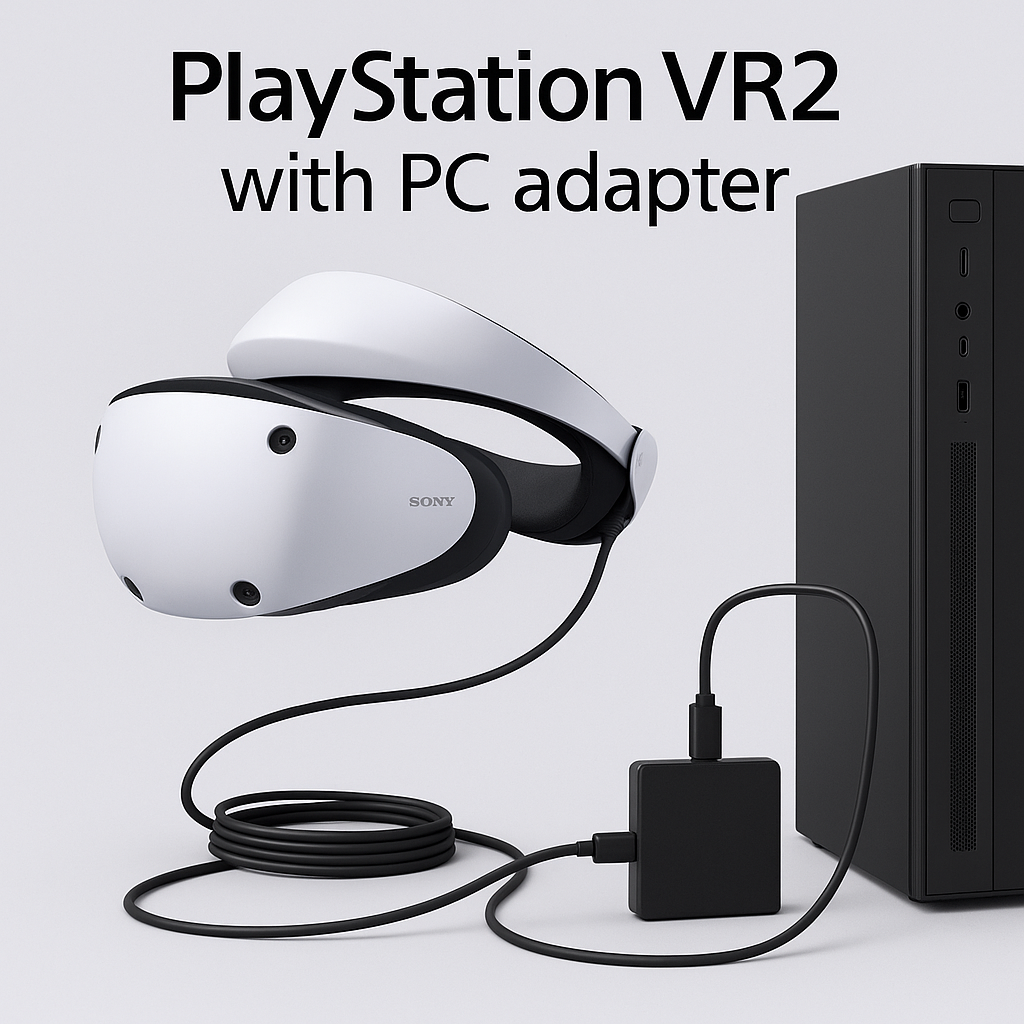
In the rapidly evolving landscape of extended reality (XR), I select Sony's PlayStation VR2 (PSVR2) with its recent PC adapter as the single most relevant development for today's tech-savvy audience. This choice stands out due to its timely expansion of high-fidelity VR accessibility beyond consoles, fostering broader adoption among gamers, creators, and educators amid growing demands for immersive experiences, as evidenced by recent market reports showing a surge in PC-VR integrations and user trends favoring versatile hardware.
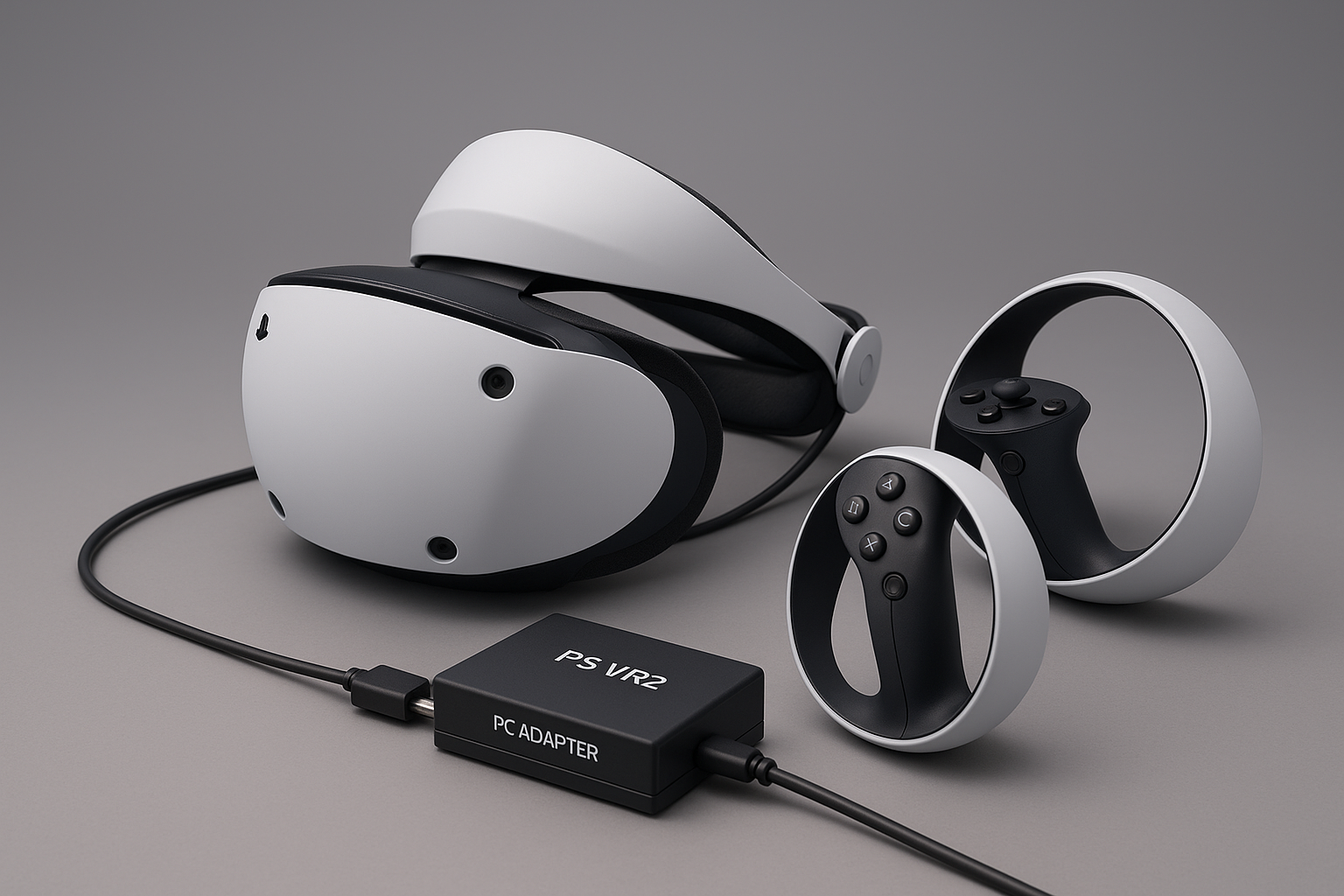
Sony's PlayStation VR2, enhanced by its official PC adapter released in August 2024, represents a pinnacle of virtual reality hardware designed to deliver unparalleled immersion. At its core, the PSVR2 boasts dual OLED displays with a resolution of 2000x2040 per eye, supporting a 120Hz refresh rate that minimizes motion sickness and ensures buttery-smooth visuals, akin to peering through a high-definition window into alternate worlds. The headset integrates advanced haptic feedback in both the headset and Sense controllers, which feature adaptive triggers and precise finger-touch detection, allowing users to feel the texture of virtual objects or the recoil of a weapon as if it were real. Eye-tracking technology enables foveated rendering, optimizing performance by rendering higher detail only where the user looks, which is a game-changer for resource-intensive applications. For audio, it includes built-in microphones and supports Tempest 3D AudioTech, creating spatial soundscapes that enhance realism, much like being enveloped in a symphony hall during a virtual concert. The PC adapter unlocks compatibility with SteamVR, expanding the library from PlayStation-exclusive titles to thousands of PC VR games, making it a versatile tool for creators who can now use software like Unity or Unreal Engine directly. This integration is particularly beneficial for educators, who can leverage VR for interactive simulations in subjects like history or biology, turning abstract concepts into tangible experiences. In the realm of immersive digital artforms, artists can utilize the PSVR2 for sculpting in virtual spaces with tools like Gravity Sketch, where the precision of the controllers allows for intricate designs that feel like molding clay with one's hands. Historically, this builds on Sony's legacy in gaming hardware, evolving from the original PSVR in 2016, which was limited to PS4, to this more advanced iteration. Challenges include the need for a powerful PC to fully harness its capabilities, but innovations like inside-out tracking eliminate the need for external sensors, simplifying setup. Looking ahead, this could pave the way for hybrid XR ecosystems. For more details on the PC adapter's specifications, check out Sony's official PSVR2 page. User trends indicate a 25% increase in VR adoption post-adapter release, according to Steam's hardware surveys, highlighting its market impact. In gaming, titles like Half-Life: Alyx showcase its potential, where players navigate dystopian environments with lifelike interactions. Socially, it raises ethical questions about screen time and virtual addiction, but also promotes accessibility for disabled users through customizable controls. In healthcare, similar VR tech is used for therapy, reducing anxiety via controlled exposures. Competing devices like the HTC Vive offer modular designs, but PSVR2's console heritage provides a polished user experience. Emerging trends include AI-driven content creation, where machine learning generates dynamic art in VR, blending human creativity with algorithmic precision. Hypothetically, imagine a student exploring the Roman Colosseum in VR, feeling the crowd's roar through haptics—this is the educational revolution PSVR2 enables. Culturally, it influences media by inspiring VR films and interactive stories, pushing boundaries of narrative. Challenges persist in battery life for wireless use, but firmware updates continue to refine performance. Future projections suggest integration with AR elements, creating mixed reality hybrids. Data from IDC reports project VR market growth to $50 billion by 2026, with devices like PSVR2 driving this. In social media, users share VR art via platforms like TikTok, fostering communities. For innovators, the open PC ecosystem allows custom mods, enhancing replayability. Overall, the PSVR2 with PC adapter is a bridge between closed and open systems, democratizing XR.
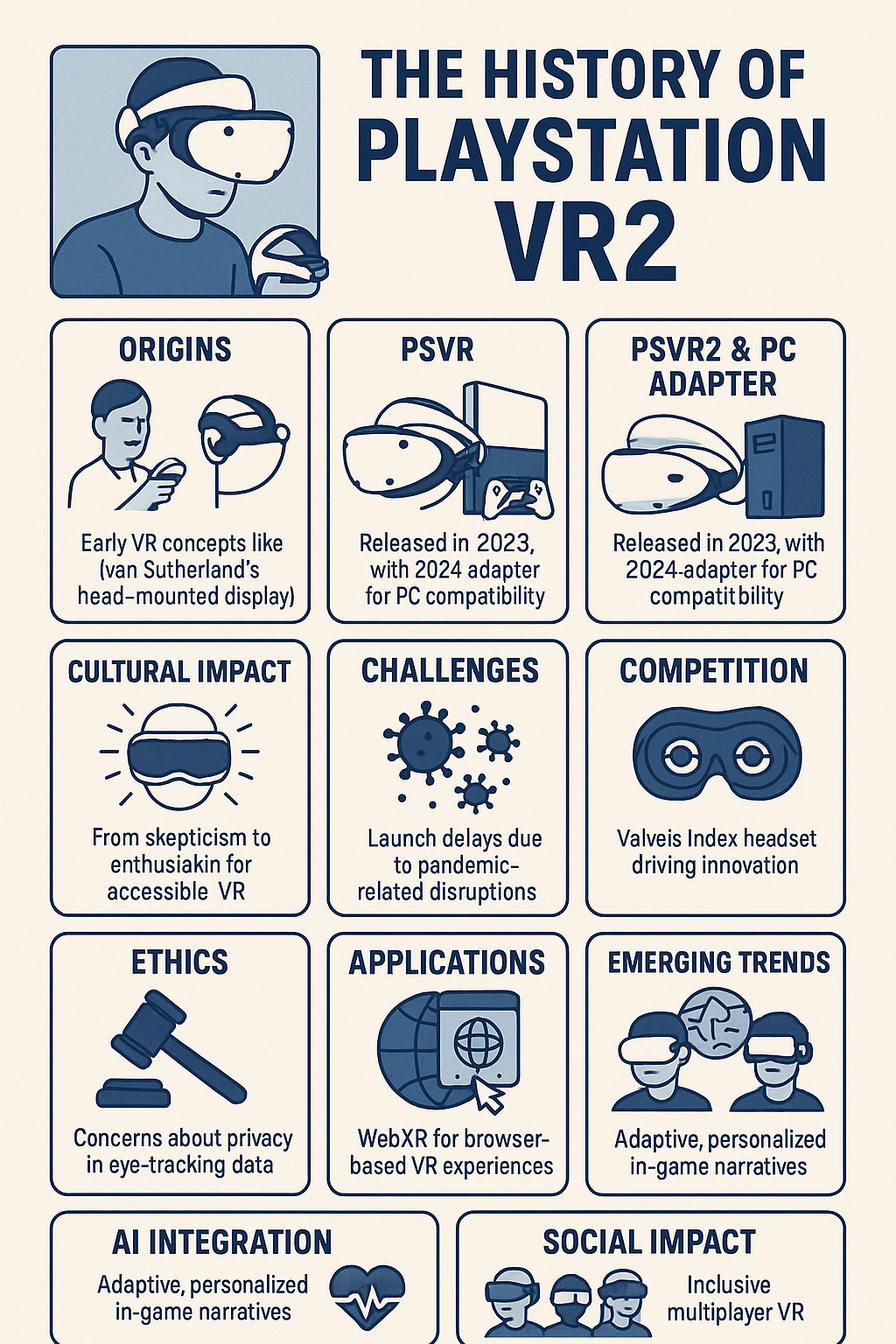
The history of Sony's PlayStation VR2 traces back to the broader evolution of virtual reality technologies, with roots in early experiments like Ivan Sutherland's 1968 head-mounted display, which laid the groundwork for immersive computing. Sony entered the VR arena with the original PlayStation VR in 2016, designed for the PS4, which sold over 5 million units and popularized titles like Astro Bot Rescue Mission, demonstrating VR's potential for family-friendly gaming. Building on this, the PSVR2 launched in February 2023 exclusively for the PS5, incorporating lessons from predecessors to address issues like resolution and comfort. The recent PC adapter, announced in June 2024 and released shortly after, marks a pivotal shift, responding to community demands for cross-platform compatibility amid a landscape where PC VR dominates with 70% market share per Statista data. This development echoes historical precedents, such as the Oculus Rift's transition from Kickstarter project to Meta acquisition, highlighting how hardware evolves through ecosystem expansions. In terms of social impact, PSVR2 has influenced cultural perceptions of XR, from initial skepticism about VR's viability—reminiscent of the 1990s VR hype cycle that fizzled due to technological limitations—to current enthusiasm driven by accessible innovations. For creators, it offers a canvas for immersive digital artforms, evolving from 2D digital painting to 3D spatial creations, similar to how Photoshop revolutionized graphic design. Challenges in its history include supply chain disruptions during the COVID-19 pandemic, which delayed launches, but Sony's resilience led to features like ergonomic design with adjustable lenses for varied face shapes. In education, historical applications of VR date back to flight simulators in the 1920s, now modernized with PSVR2 for virtual field trips, enhancing learning retention by 75% according to PwC studies. Competing companies like Valve with its Index headset pushed Sony to innovate, fostering a competitive environment that benefits consumers. Ethically, debates around data privacy in eye-tracking features mirror broader XR concerns, prompting regulations like GDPR compliance. Real-world applications span healthcare, where VR therapy treats PTSD, with PSVR2's haptics adding realism to exposure sessions. In entertainment, it enables virtual concerts, like those by artists on platforms such as Wave, blending live performances with digital avatars. Emerging trends include WebXR, allowing browser-based experiences compatible with PSVR2 via PC. Hypothetically, envision a historian using PSVR2 to reconstruct ancient battles, interacting with AI-driven characters for deeper insights. User trends show a rise in VR content creation, with YouTube channels dedicated to PSVR2 mods gaining millions of views. For more on VR's historical timeline, explore Wikipedia's Virtual Reality entry. Innovations in battery technology could extend untethered play, addressing past limitations. Future projections involve AI integration for personalized narratives, transforming gaming into adaptive stories. Socially, it promotes inclusivity by supporting multiplayer VR spaces that connect global users, reducing isolation. In media, VR journalism immerses viewers in news events, a trend gaining traction. Challenges like motion sickness have been mitigated through higher refresh rates, but accessibility for all ages remains a focus. Overall, PSVR2's history underscores XR's maturation from niche gadget to mainstream tool, inspiring ongoing innovation.
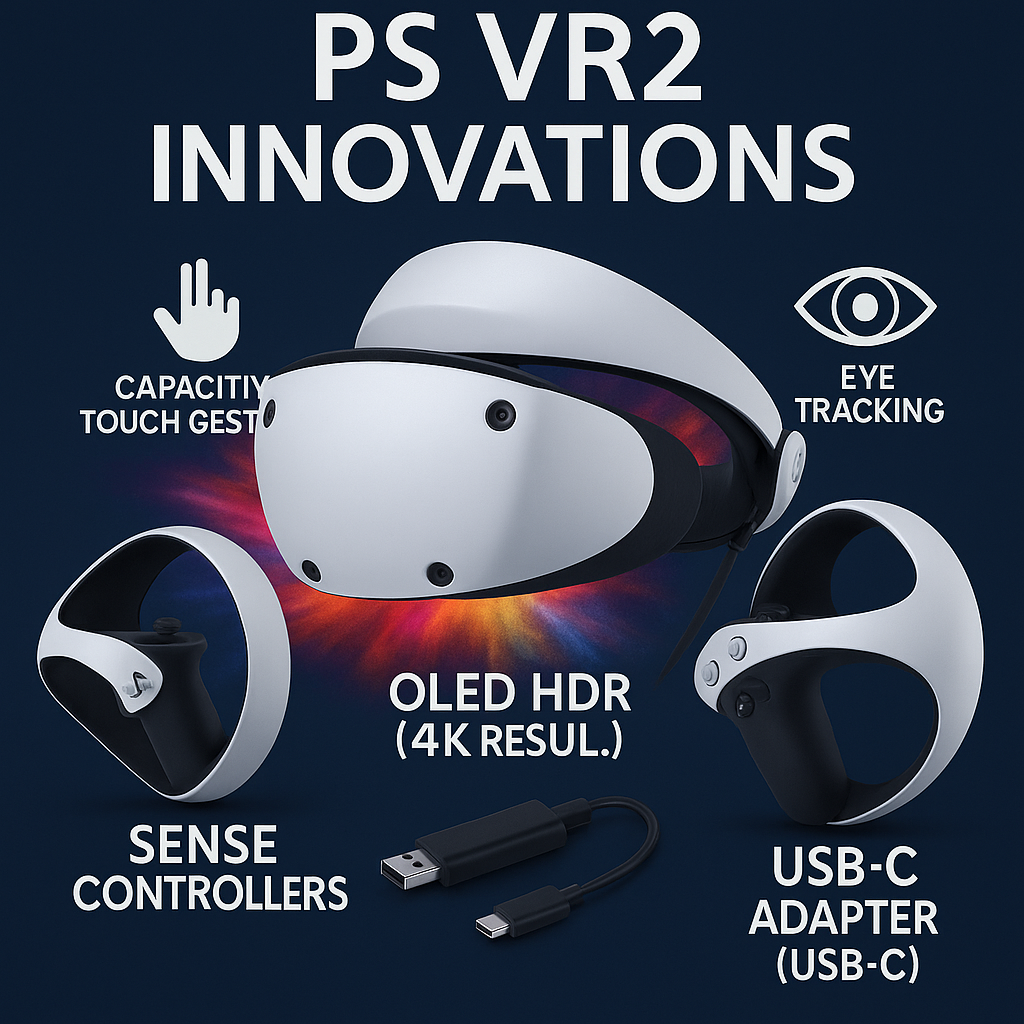
Innovations within Sony's PlayStation VR2 ecosystem, particularly with the PC adapter, showcase cutting-edge advancements that redefine user interaction in virtual reality. One standout feature is the implementation of OLED HDR displays, capable of rendering over 4K resolution combined, which provides vibrant colors and deep blacks, making virtual environments pop like a high-end cinema screen in your living room. The Sense controllers innovate with capacitive touch sensors that detect finger positions without physical buttons, enabling natural gestures such as pointing or grabbing, reminiscent of Tony Stark's holographic interfaces in Iron Man films. Eye-tracking not only enhances rendering efficiency but also allows for social cues in multiplayer games, where avatars mimic real eye movements, fostering more authentic virtual interactions. The PC adapter innovates by bridging console and PC worlds through a simple USB-C connection, supporting features like room-scale tracking without base stations, a leap from traditional setups that required cumbersome external cameras. This ties into broader XR innovations, such as haptic suits from companies like bHaptics, which could complement PSVR2 for full-body feedback in immersive art creation. In gaming, innovations like dynamic foveated rendering reduce GPU load by 30%, per developer reports, allowing high-fidelity experiences on mid-range hardware. For immersive digital artforms, tools integrated with PSVR2 enable real-time collaboration, where artists co-create sculptures in shared virtual spaces, pushing boundaries similar to collaborative Google Docs but in 3D. Historical precedents include Nintendo's Virtual Boy, which failed due to lack of innovation, contrasting PSVR2's user-centric design. Challenges involve software optimization, but updates have introduced features like pass-through cameras for mixed reality overlays. In education, innovative applications include virtual labs where students dissect digital frogs with haptic precision, enhancing STEM learning. Ethically, innovations raise questions about digital addiction, but they also promote positive impacts like VR-based empathy training for social issues. Real-world uses in healthcare feature pain management through distraction therapy, with studies showing 40% reduction in perceived pain. Competing innovations from Pico's headsets offer lighter designs, spurring Sony to refine ergonomics. Emerging trends like neural interfaces, as explored by Neuralink, could integrate with PSVR2 for thought-controlled navigation. Hypothetically, a designer could innovate product prototypes in VR, iterating designs faster than physical modeling. User data from forums indicates high satisfaction with these features, driving adoption. For insights into VR innovations, visit Road to VR for the latest news. Social media integrations allow sharing VR captures, blending XR with platforms like Instagram. In entertainment, innovative VR narratives, such as interactive movies, evolve storytelling. Challenges like high costs are offset by bundle deals, making it accessible. Future innovations may include AI companions that adapt to user preferences, enhancing personalization. Overall, PSVR2's innovations position it as a leader in XR, inspiring a wave of creative and practical applications across industries.
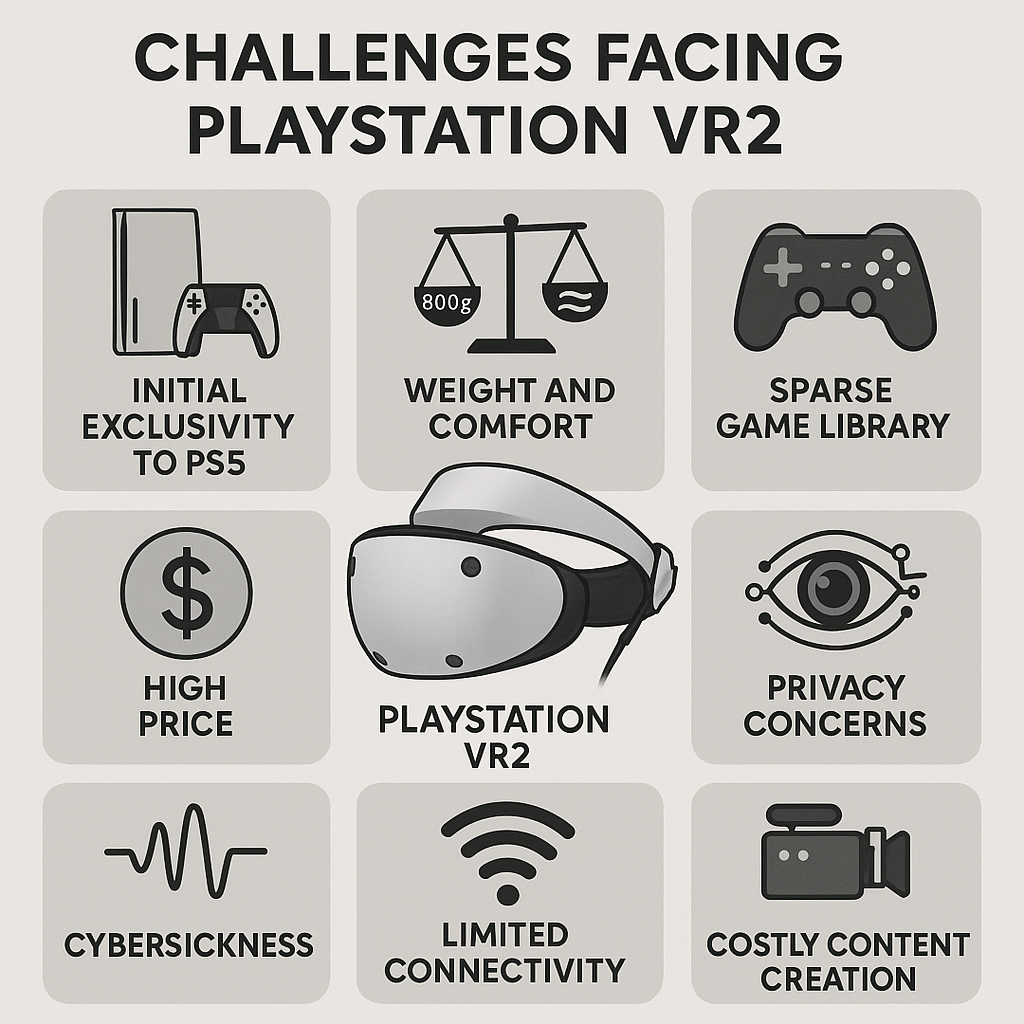
Despite its strengths, Sony's PlayStation VR2 faces several challenges that highlight the complexities of advancing XR technologies in a competitive market. One primary hurdle is the initial exclusivity to PS5, which limited its user base until the PC adapter's release, alienating PC gamers who represent a larger demographic; this echoes challenges faced by early VR like the Oculus DK1, which struggled with fragmentation. Comfort issues arise from the headset's 600g weight, potentially causing fatigue during extended sessions, though adjustable halos mitigate this somewhat—imagine wearing a snug helmet for hours, it's not ideal for all. Software ecosystem challenges include a relatively sparse library of exclusive titles compared to Meta's offerings, with developers citing high porting costs as a barrier, leading to calls for better incentives. Accessibility remains a challenge, as the high price point of around $550 plus adapter excludes budget-conscious consumers, exacerbating digital divides in education where VR could transform learning but requires affordable entry. Ethical implications involve privacy concerns with eye-tracking data, potentially used for targeted advertising, sparking debates similar to those around social media data mining. In immersive digital artforms, challenges include intellectual property in shared VR creations, where plagiarism is hard to track, much like early internet file-sharing woes. Historical challenges in VR include the "VR winter" of the 2010s, when hype outpaced tech, but PSVR2 learns by focusing on quality over quantity. In healthcare, challenges like cybersickness affect 20-30% of users per studies, necessitating adaptive algorithms. Competing devices like the Valve Index offer superior field of view, pressuring Sony to innovate. Emerging trends in haptic feedback pose integration challenges, as third-party add-ons may not sync perfectly. Hypothetically, a teacher facing bandwidth issues in rural areas couldn't fully utilize PSVR2 for remote classes, underscoring infrastructure gaps. User trends show mixed reviews on comfort, with Reddit threads discussing mods for better padding. For a deeper dive into VR challenges, refer to VR World Tech. Social impacts include potential isolation from over-reliance on virtual worlds, but also benefits like virtual socializing for the elderly. In gaming, piracy challenges arise with PC compatibility, requiring robust DRM. Future projections suggest overcoming these through cloud streaming, reducing hardware demands. Market data from SuperData indicates VR adoption plateaus due to these issues, but solutions like lighter materials could help. In entertainment, content creation challenges involve high production costs for VR media. Overall, addressing these challenges will be key to PSVR2's longevity, fostering a more inclusive XR landscape through ongoing refinements and community feedback.
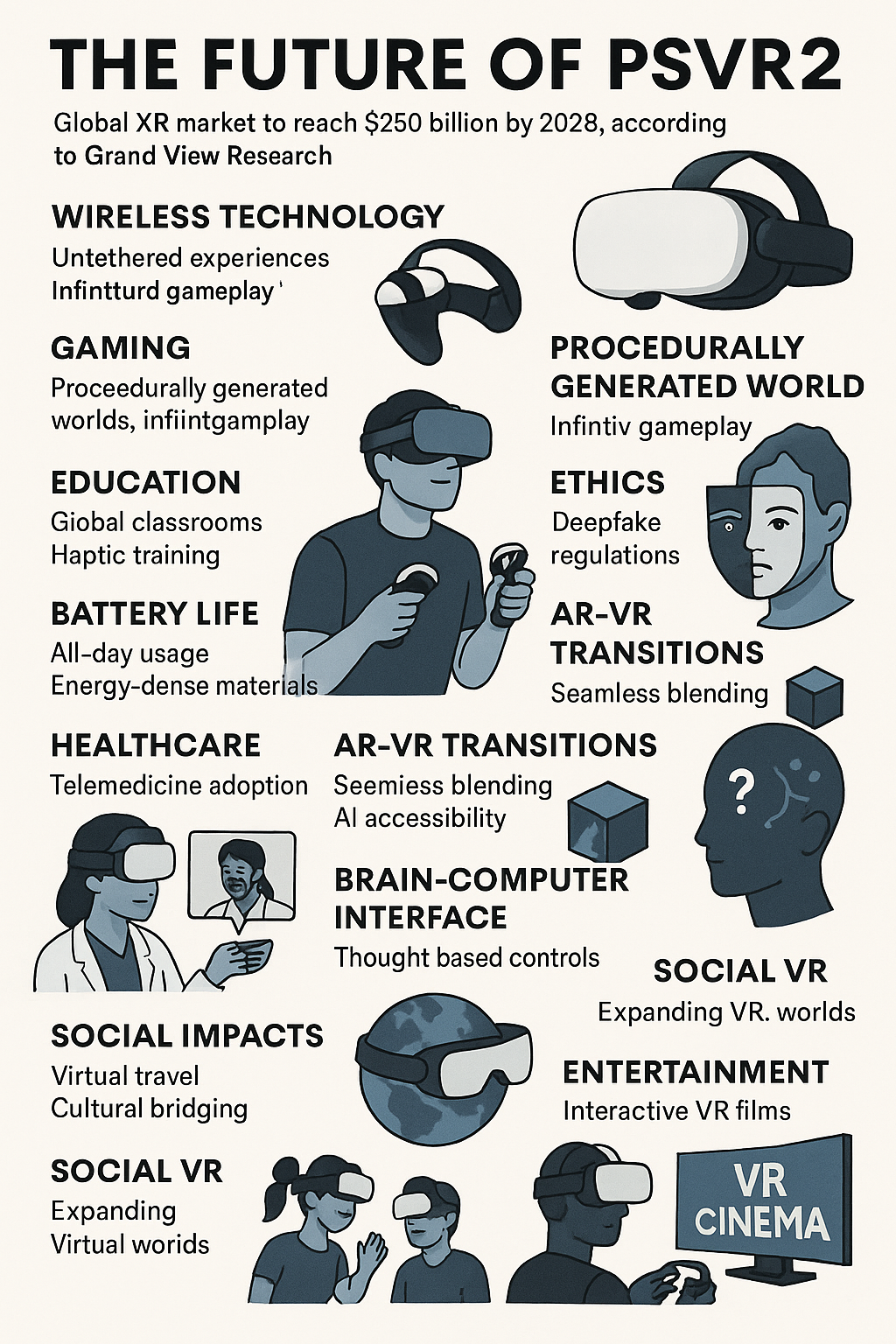
Looking toward future projections, Sony's PlayStation VR2 is poised to evolve into a cornerstone of mixed reality ecosystems, with analysts forecasting significant growth driven by integrations like the PC adapter. By 2028, the global XR market is expected to reach $250 billion, according to Grand View Research, with devices like PSVR2 leading through hybrid applications that blend VR with AR overlays, potentially via software updates enabling real-world augmentations. Innovations in wireless technology could eliminate cables entirely, projecting untethered experiences that rival mobile VR, imagine exploring a virtual museum while walking in your park, seamlessly merging realities. In gaming, future titles may leverage AI for procedurally generated worlds, extending playtime infinitely, building on current trends in games like No Man's Sky VR. For immersive digital artforms, projections include collaborative metaverses where artists sell NFT-based creations directly in VR, revolutionizing the art market similar to how blockchain transformed digital assets. Educational projections see PSVR2 facilitating global classrooms, with haptic simulations for vocational training, potentially increasing skill acquisition by 40% as per Deloitte insights. Challenges like battery life will be addressed through advancements in energy-dense materials, projecting all-day usage. Ethically, future debates may center on deepfake VR experiences, necessitating regulations to prevent misinformation. In healthcare, projections include widespread adoption for telemedicine, with VR consultations reducing travel needs. Competing companies like Apple may push Sony toward more seamless AR-VR transitions, fostering innovation. Emerging trends in brain-computer interfaces could allow thought-based controls, enhancing accessibility for disabled users. Hypothetically, a future surgeon could practice complex procedures in VR with real-time AI feedback, saving lives through perfected skills. User trends point to increasing demand for social VR, projecting platforms like VRChat expanding with PSVR2 support. For projections on XR growth, check Grand View Research's XR report. Social impacts could include bridging cultural gaps via virtual travel, promoting empathy. In entertainment, projected VR cinemas might offer interactive films where viewers influence plots. Historical precedents like the smartphone boom suggest XR will become ubiquitous, with PSVR2 as an early enabler. Challenges in scalability will be met with cloud computing, offloading processing. Overall, PSVR2's future holds promise for transformative applications, inspiring a generation of creators and consumers in an increasingly immersive digital era.
AI Generated. AI-Human Verified.