2026-07-03 13:00:00
Table of Contents
Unlocking Human Potential: Synchron’s BCI-XR Revolution
Thought-Powered Immersion: Restoring Accessibility in XR Environments
Immersive Neurorehabilitation: Transforming Digital Therapeutics
Professional Productivity and Education: Empowering Inclusive Workflows
Synergies for Societal Progress: The Collective Impact of BCI-XR
Getting Started with Synchron BCI-XR: Your Step-by-Step Guide
Key Insights and Forward-Looking Implications
Transparency and Future Outlook
Thought-Powered Immersion: Restoring Accessibility in XR Environments
Immersive Neurorehabilitation: Transforming Digital Therapeutics
Professional Productivity and Education: Empowering Inclusive Workflows
Synergies for Societal Progress: The Collective Impact of BCI-XR
Getting Started with Synchron BCI-XR: Your Step-by-Step Guide
Key Insights and Forward-Looking Implications
Transparency and Future Outlook
Unlocking Human Potential: Synchron’s BCI-XR Revolution
Synchron, founded in 2012 by neurointerventionalist Dr. Tom Oxley, pioneered minimally invasive endovascular brain-computer interfaces to overcome the scalability barriers of traditional open-brain surgery. Its flagship Stentrode implant, inserted via blood vessels, restores agency for individuals with severe motor impairments. The company’s groundbreaking 2025 native integration with Apple’s BCI Human Interface Device protocol enables direct thought-based control of iPhone, iPad, and Apple Vision Pro, dramatically improving accessibility, independence, and immersive experiences. This innovation leverages XR’s spatial computing strengths to deliver real-world impact in healthcare and daily life. Three key use cases include restoring hands-free XR interaction for paralyzed users, advancing immersive neurorehabilitation therapies, and boosting inclusive productivity in professional and educational settings.
Thought-Powered Immersion: Restoring Accessibility in XR Environments
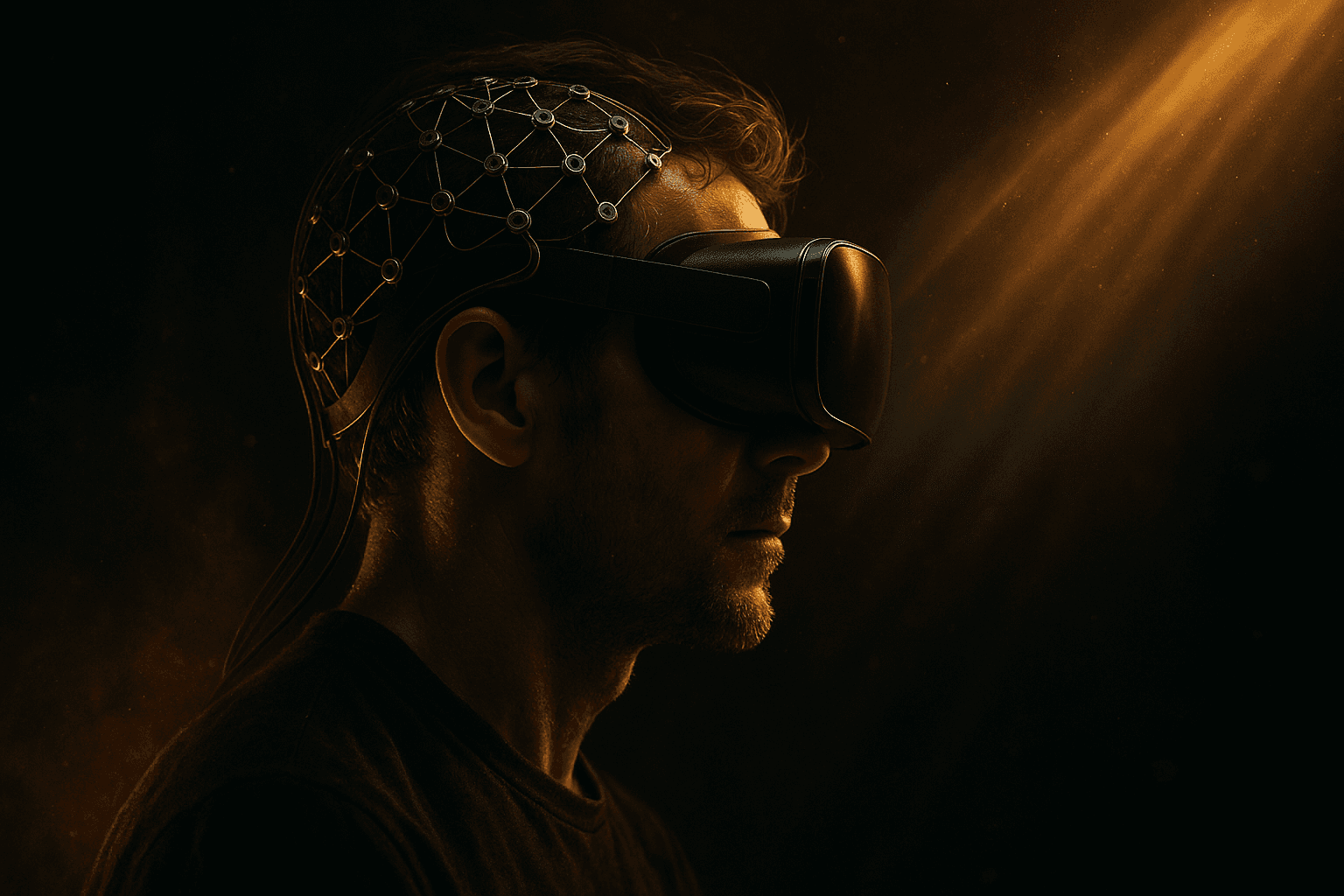
Synchron’s Stentrode paired with Apple Vision Pro allows patients with ALS or paralysis to navigate immersive spatial interfaces purely through neural signals, bypassing the need for hand gestures or voice. In a landmark 2024-2025 demonstration, a 64-year-old ALS patient used thoughts alone to play Solitaire, watch Apple TV, and send messages within the headset—experiences previously inaccessible due to motor loss. This leverages XR’s immersion for intuitive spatial interaction and real-time feedback, where brain signals map directly to virtual cursors or selections via Apple’s Switch Control. Challenges include signal calibration for varying neural patterns and ensuring low-latency performance in dynamic XR scenes, yet measurable benefits include restored autonomy and reduced caregiver dependency. Early user feedback highlights emotional uplift from re-engaging with digital worlds, underscoring BCI-XR’s unique strength in creating seamless mind-to-environment bridges.
Immersive Neurorehabilitation: Transforming Digital Therapeutics
Beyond basic control, the integration supports closed-loop neurorehabilitation by combining BCI data with XR’s adaptive environments to deliver personalized motor imagery or cognitive training. Patients can practice virtual tasks—such as reaching for objects in a simulated space—while the system monitors and reinforces neural pathways in real time. Technical nuances involve high-resolution endovascular signal capture feeding into XR platforms for immediate visual/auditory feedback, enhancing neuroplasticity. Real-world applications target stroke recovery or spinal cord injury, with potential edge cases like variable signal stability during fatigue. Outcomes include accelerated functional gains, as evidenced by ongoing clinical trials showing improved task performance. XR’s interactivity amplifies traditional therapy by creating engaging, repeatable scenarios impossible in physical settings alone.
Professional Productivity and Education: Empowering Inclusive Workflows
In workplace and learning contexts, Synchron’s BCI enables thought-driven operation of XR tools for document navigation, virtual collaboration, or interactive simulations—ideal for users with motor limitations. Examples include controlling multi-window Vision Pro setups for email, coding, or virtual meetings without physical input. Spatial computing strengths allow precise 3D manipulation via neural intent, fostering deeper engagement than flat screens. Potential challenges involve initial training periods and integration with existing accessibility software, but benefits encompass heightened focus, reduced physical strain, and equitable participation. Early adopters report enhanced productivity metrics, positioning this as a scalable solution for inclusive education platforms and remote professional environments.
Synergies for Societal Progress: The Collective Impact of BCI-XR
These use cases interconnect through Synchron’s minimally invasive BCI as the neural gateway to XR’s immersive layer, collectively advancing human agency from personal independence to societal inclusion. They synergize to drive productivity gains, therapeutic breakthroughs, and empathetic design in technology, with long-term scalability toward broader cognitive applications. Trade-offs include ethical data privacy considerations and the need for complementary AI decoding, yet the shift enables transformative access across global contexts—reducing isolation for millions while accelerating innovation in neurotechnology ecosystems.
Getting Started with Synchron BCI-XR: Your Step-by-Step Guide
1. Consult a qualified neurologist or neurotechnology clinic to assess candidacy for Synchron’s clinical programs or future commercial access. 2. Verify hardware compatibility—current focus is on Apple Vision Pro and iOS devices via the native BCI HID protocol; no consumer purchase yet, but monitor synchron.com for updates. 3. Participate in approved trials for hands-on setup, which involves endovascular implantation followed by calibration sessions. 4. Leverage free Apple accessibility resources and Synchron’s patient support for gradual integration, starting with basic cursor control before advancing to immersive apps. 5. Budget considerations include potential trial participation (often covered) versus future device costs; begin with educational webinars on the company site to overcome barriers safely.
Key Insights and Forward-Looking Implications
- Synchron’s endovascular approach offers a safer, scalable alternative to open-brain BCIs, already demonstrating real-user success with XR.- Native Apple integration in 2025 marks the first commercial-grade BCI input for mainstream spatial computing devices.- XR immersion amplifies BCI utility by providing rich, immediate feedback loops unavailable in traditional interfaces.- Measurable outcomes include restored digital autonomy for paralyzed individuals, with expanding applications in rehab and work.- Long-term potential lies in ethical, privacy-first neurotechnology that protects cognitive liberty while unlocking creativity and connection.- Readers can advocate for inclusive tech policies to accelerate equitable access as these systems mature.
Transparency and Future Outlook
This post was generated with AI assistance using Grok/xAI tools, synthesizing publicly available information from sources such as Business Wire, company announcements, and recent clinical reports (primarily 2025). All details should be independently verified by readers, as XR and neurotechnology evolve rapidly. Exercise discretion regarding health, safety, or investment decisions, and consult professionals for personalized advice. Evolving standards, including emerging ethical guidelines on neural data, underscore the importance of responsible innovation in this field.