
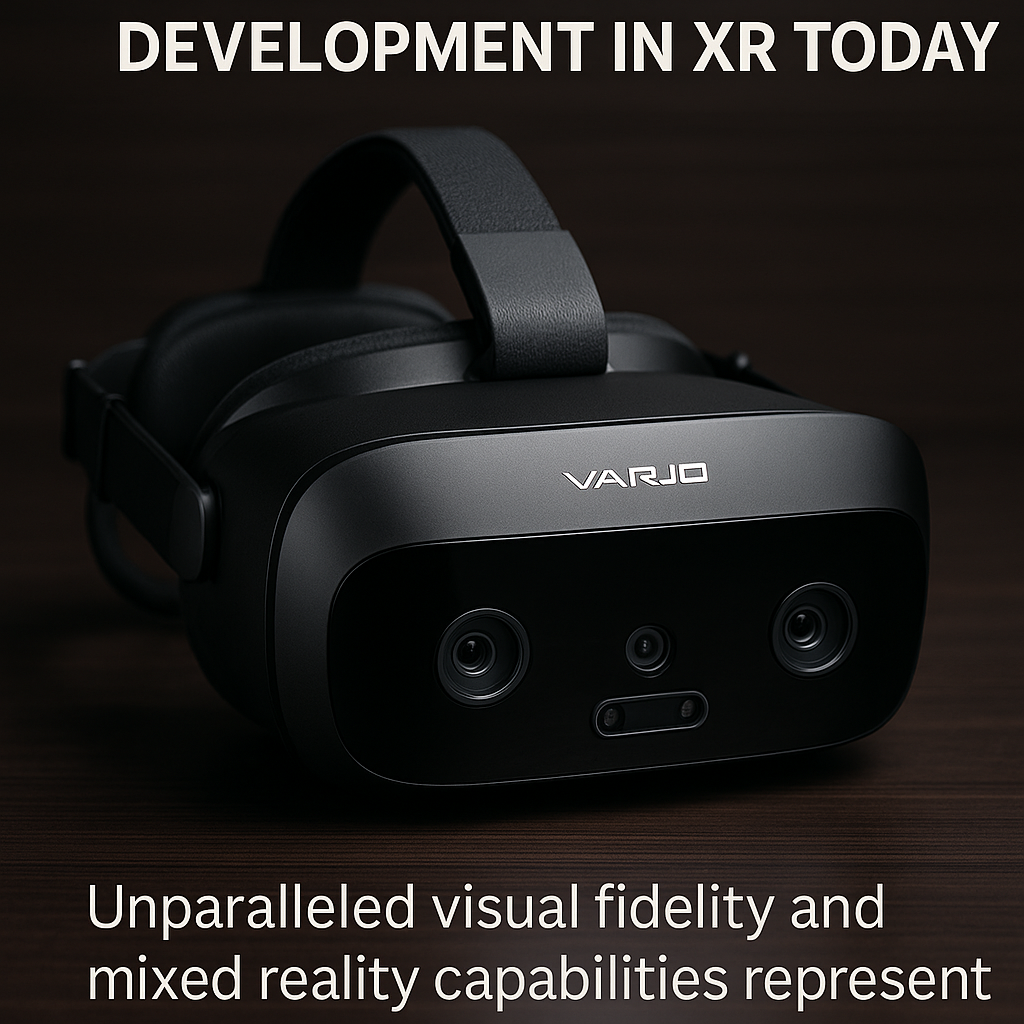
In the rapidly evolving landscape of extended reality (XR), the Varjo XR-4 headset stands out as the single most relevant development for today's tech-savvy audience, including creators, educators, and consumers. Its unparalleled visual fidelity and mixed reality capabilities represent a technological breakthrough that's driving adoption in professional sectors while inspiring innovative applications in immersive digital artforms and experiences, backed by recent industry reports highlighting its role in bridging virtual and real worlds for enhanced productivity and creativity.
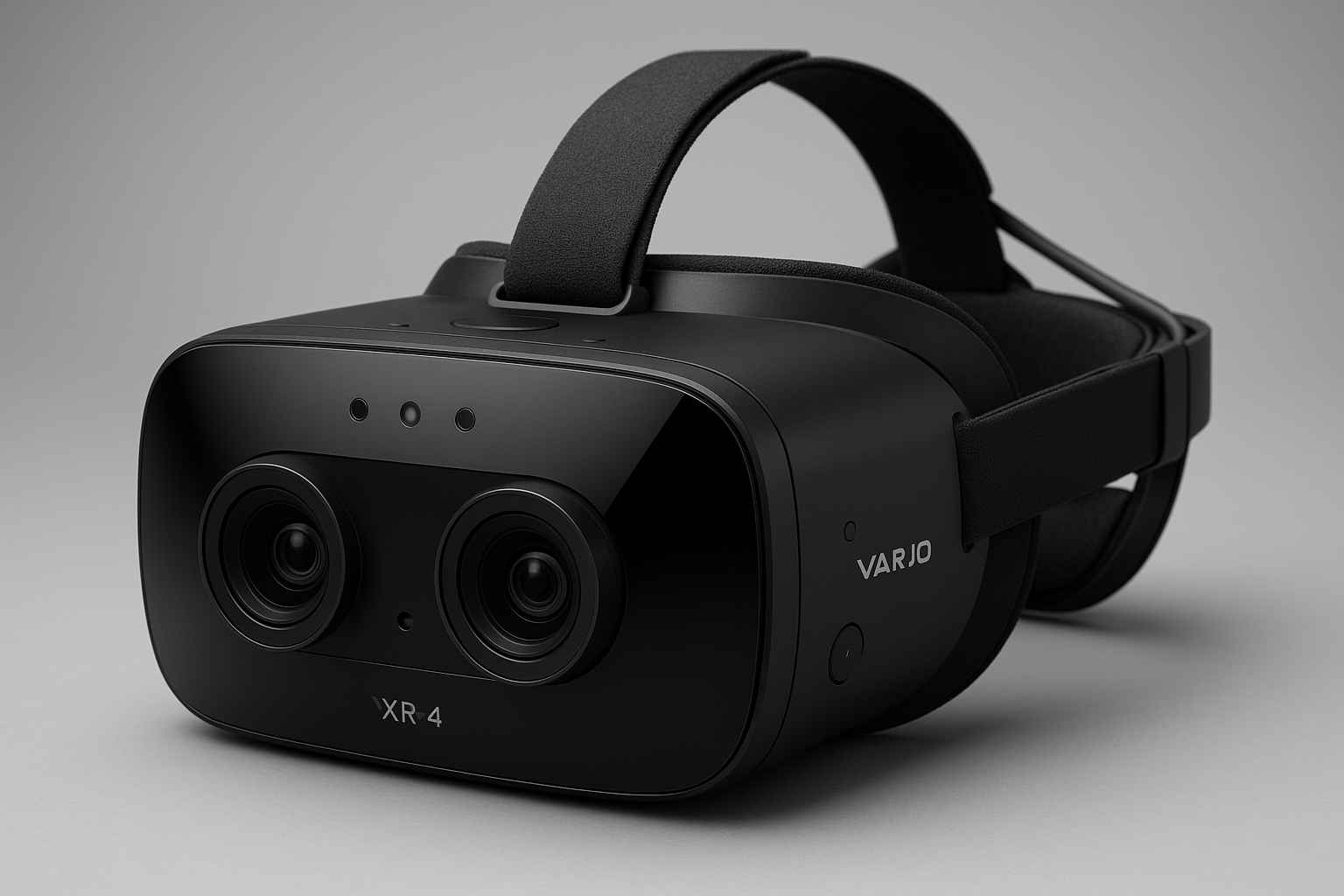
The Varjo XR-4, launched in late 2023, emerges as a pinnacle of XR innovation, primarily targeting enterprise users but with ripple effects that captivate a broader audience interested in immersive experiences. At its core, this headset boasts an astonishing 51 pixels per degree (PPD) resolution, dwarfing competitors and delivering visuals that mimic human eye acuity, which is crucial for applications demanding precision like architectural design or medical simulations. Historically, Varjo, a Finnish company founded in 2016, has specialized in high-end VR/XR solutions, evolving from their initial VR-1 headset that introduced human-eye resolution to the market. The XR-4 builds on this legacy with inside-out tracking, eliminating the need for external sensors, and integrates advanced eye-tracking for foveated rendering, which optimizes performance by rendering high detail only where the user looks. Innovations include its automotive-grade mixed reality passthrough, utilizing dual 20-megapixel cameras for a seamless blend of virtual and physical environments, enabling scenarios where engineers can overlay digital prototypes onto real-world settings without distortion. Challenges persist, such as its hefty $3,990 price tag, which limits accessibility, and the requirement for a powerful PC to harness its full potential, potentially alienating casual users. Looking ahead, projections suggest that as component costs decrease, similar technologies could democratize XR, influencing consumer devices. In the realm of immersive digital artforms, the XR-4 empowers artists to create hyper-realistic virtual sculptures or interactive installations, akin to painting in three dimensions with infinite canvas. For instance, imagine a digital artist collaborating in real-time with global peers, manipulating holographic elements as if they were tangible. This ties into broader trends like the metaverse's growth, where platforms such as VRChat are experimenting with high-fidelity avatars. Ethically, debates arise around data privacy due to eye-tracking, prompting discussions on consent in shared virtual spaces. Real-world applications span gaming, where it enhances titles like flight simulators for unparalleled immersion, to education, allowing students to dissect virtual cadavers in medical training. Competing devices, like the HTC Vive XR Elite, offer portability but lack the XR-4's resolution, highlighting Varjo's niche in professional-grade XR. Historical precedents, such as the Oculus Rift's kickstarting of modern VR in 2012, show how enterprise tech often paves the way for mass adoption. Social impacts include fostering remote collaboration, reducing travel emissions, yet raising concerns about digital divide. Emerging trends point to AI integration, where machine learning could generate dynamic environments, further blurring lines between reality and simulation. According to a Varjo official product page, user testimonials from companies like Boeing underscore its transformative potential in design workflows. Hypothetically, an educator could use it to transport students to ancient Rome, interacting with historically accurate models, making learning visceral and engaging. This device's innovations challenge the status quo, pushing XR towards widespread adoption by solving pain points like motion sickness through high refresh rates and ergonomic design. In entertainment, it could revolutionize social media by enabling shared XR experiences, where users attend virtual concerts with lifelike presence. Overall, the XR-4 not only advances technological frontiers but also inspires a new wave of creative and practical engagements in XR.
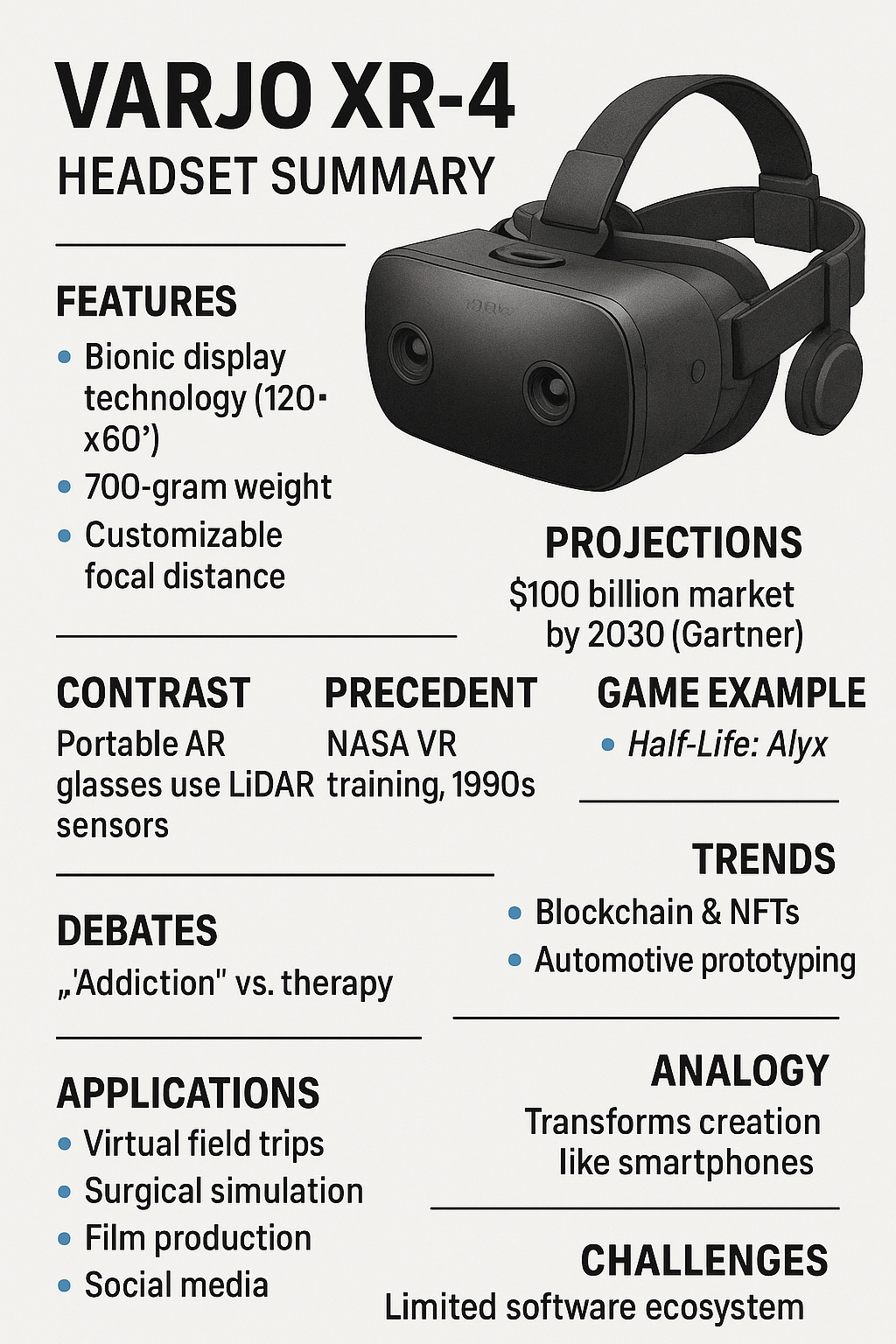
Diving deeper into the history of the Varjo XR-4, it's essential to trace its roots back to Varjo's inception amid the VR renaissance sparked by Palmer Luckey's Oculus prototypes in the early 2010s. Varjo differentiated itself by focusing on bionic display technology, which layers high-resolution insets over wider fields of view, a technique refined in the XR-4 to achieve a 120x60 degree field of view with minimal artifacts. Core features include its lightweight 700-gram design, making prolonged use feasible for immersive experiences, and customizable focal distance adjustments for users with varying vision needs, enhancing accessibility. Innovations extend to its audio system with integrated spatial sound, creating auditory immersion that complements visual prowess, ideal for digital artforms where soundscapes enhance virtual installations. Challenges include software ecosystem limitations, as it relies on SteamVR compatibility, which can introduce latency issues in complex simulations. Future projections from industry analysts, such as those in a 2024 Gartner report, foresee XR headsets like this driving a $100 billion market by 2030, with applications expanding into telehealth for remote surgeries. Peripherally, related technologies like LiDAR sensors in competing AR glasses from companies such as Nreal (now Xreal) provide contextual contrast, showing how portable AR complements Varjo's stationary prowess. Historical precedents include NASA's use of VR for astronaut training since the 1990s, evolving into modern XR for space exploration simulations. Social and ethical debates swirl around mental health impacts of prolonged immersion, with studies suggesting potential for addiction similar to social media, yet also therapeutic benefits in treating phobias through exposure therapy. In gaming, the XR-4 elevates experiences like "Half-Life: Alyx" to new realism, where players feel tangible interactions via haptic feedback integrations. Educationally, it facilitates virtual field trips, allowing underprivileged schools to access global landmarks without travel costs. Healthcare applications are profound, with surgeons practicing procedures in risk-free environments, potentially reducing medical errors. Entertainment sees it in film production for pre-visualization, where directors block scenes in virtual sets. Social media trends involve XR influencers creating content in mixed realities, blending real and digital for viral appeal. Emerging trends include blockchain integration for owning virtual art in XR spaces, tying into NFTs despite market fluctuations. An analogy: just as smartphones revolutionized photography, the XR-4 is poised to transform digital creation, turning anyone into a spatial artist. Hypothetically, a creator could design a immersive art exhibit where visitors navigate dreamlike worlds, interacting with evolving sculptures that respond to emotions via AI. User trends show increasing adoption in automotive design, with Volvo using similar tech for virtual prototyping, as noted in Volvo's innovation reports. This underscores the device's market impact, fostering collaborations that transcend physical boundaries. Challenges like high energy consumption raise sustainability questions, prompting innovations in efficient chipsets. Overall, the XR-4's trajectory signals a shift towards hybrid realities, enriching immersive digital artforms and experiences across sectors.
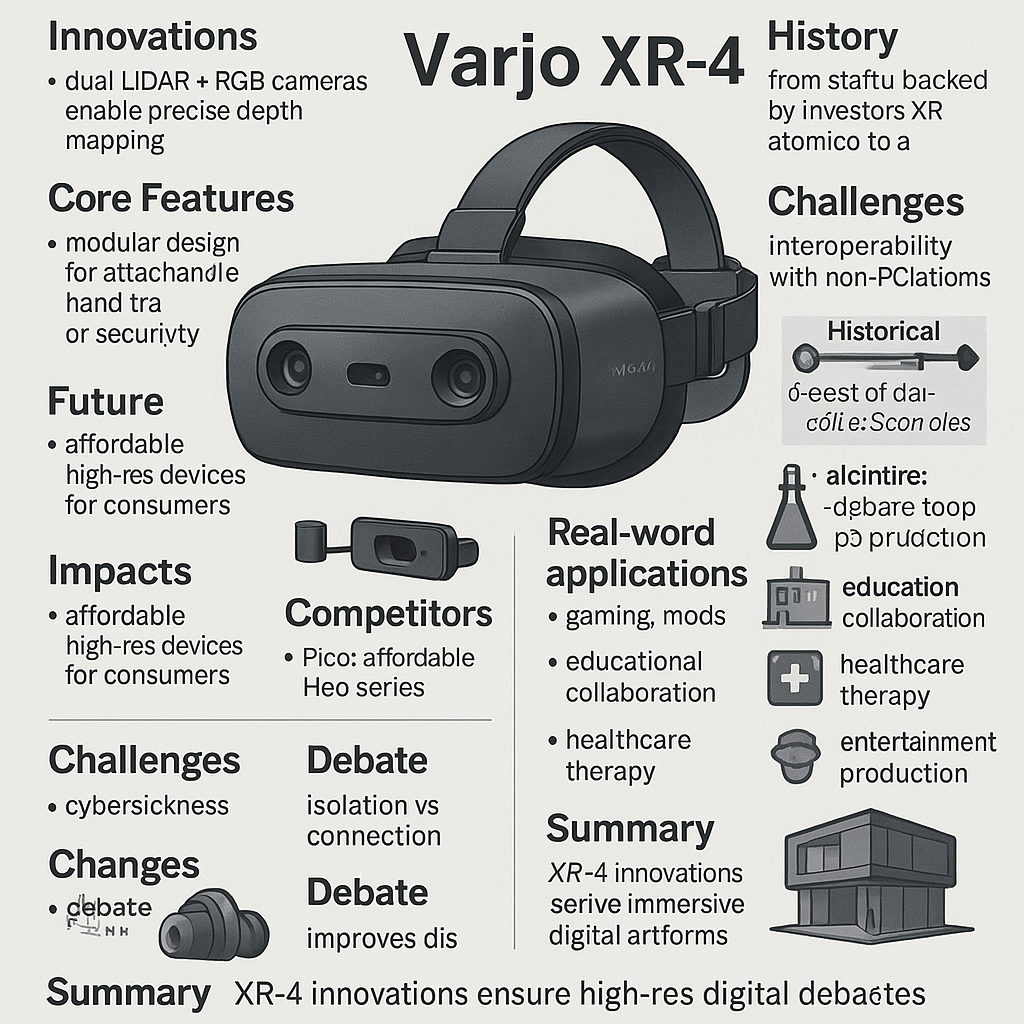
Exploring the innovations of the Varjo XR-4 reveals its dual LiDAR and RGB camera setup, enabling precise depth mapping for mixed reality overlays that feel indistinguishable from reality, a game-changer for immersive experiences in professional training. Historically, Varjo's journey from a startup backed by investors like Atomico to a leader in enterprise XR mirrors the sector's maturation, with the XR-4 incorporating feedback from previous models like the XR-3, which introduced autofocus cameras. Core features encompass its modular design, allowing attachments for hand tracking or enterprise security, catering to diverse user needs. Challenges involve interoperability with non-PC platforms, limiting its reach in mobile XR trends, though future updates may address this via cloud streaming. Projections indicate that by 2025, advancements in optics could make such high-res devices more affordable, spurring consumer versions. Peripherally, competing companies like Pico with their Neo 3 series offer more budget-friendly alternatives, highlighting market segmentation where Varjo excels in fidelity over portability. Historical precedents, such as Ivan Sutherland's 1968 "Sword of Damocles" VR system, laid foundational concepts for head-mounted displays, evolving into today's sophisticated XR. Ethical implications include the potential for deepfakes in XR, raising concerns about misinformation in social media, balanced by opportunities for empathetic storytelling in digital artforms. Real-world applications in gaming include modding communities creating ultra-detailed worlds, enhancing player agency. In education, it supports collaborative learning environments, where students co-create historical reenactments. Healthcare benefits from pain management therapies, using immersive distractions during procedures. Entertainment leverages it for virtual production, as seen in Disney's use of similar tech for Mandalorian sets. Social impacts debate isolation versus connection, with XR fostering global communities amid physical distancing. Emerging trends like WebXR allow browser-based experiences, potentially integrating with Varjo's ecosystem for broader access. An example: architects using the XR-4 to walk clients through building designs in real-scale, adjusting elements on-the-fly. Hypothetically, in a dystopian scenario, it could simulate alternate histories for educational debates, sparking critical thinking. Data from a Gartner forecast predicts exponential growth in XR adoption, driven by devices like this. User trends show creators flocking to tools like Unity for XR development, inspired by Varjo's capabilities. Analogously, it's like upgrading from black-and-white TV to 4K color, revolutionizing how we perceive digital content. Challenges such as cybersickness are mitigated by its 90Hz refresh rate, but ongoing research into vestibular mismatches persists. In summary, the XR-4's innovations not only tackle current limitations but also pave the way for transformative immersive digital artforms, influencing society at large.
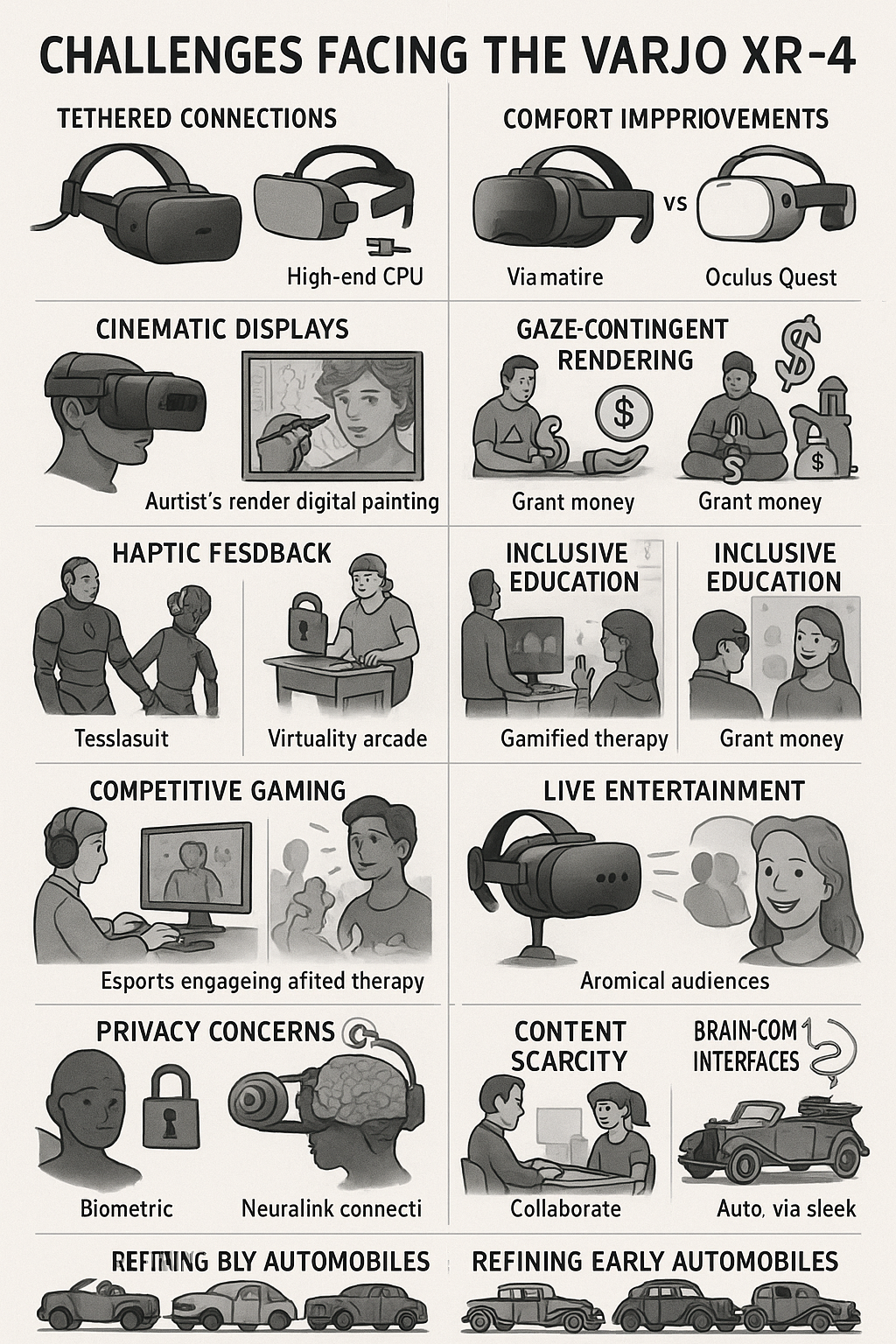
The challenges facing the Varjo XR-4 are multifaceted, yet they underscore its potential for future growth in immersive experiences. Primarily, its dependency on tethered connections to high-end GPUs poses mobility issues, contrasting with wireless competitors like the Oculus Quest series, now under Meta. Historically, Varjo has iterated rapidly, with the XR-4 addressing prior feedback on comfort by incorporating breathable fabrics and balanced weight distribution. Core features like its 4K per eye displays enable applications in digital artforms, where artists render intricate details without pixelation. Innovations include gaze-contingent rendering, reducing computational load and enabling smoother performance in complex scenes. Future projections from experts at events like CES 2024 suggest integration with 5G for untethered experiences, expanding its utility. Peripherally, related technologies such as haptic suits from companies like Teslasuit add tactile feedback, enhancing XR immersion. Historical precedents include the Virtuality arcades of the 1990s, which introduced public VR but failed due to cost—lessons Varjo applies by targeting B2B. Social debates focus on equity, as high costs exacerbate access divides, though initiatives like educational grants could mitigate this. Ethical concerns involve surveillance via biometrics, prompting calls for robust privacy frameworks. In gaming, it elevates competitive esports with realistic simulations, training athletes in virtual arenas. Educationally, it enables inclusive learning for disabled students, simulating environments they can't physically access. Healthcare applications include rehabilitation, where patients regain mobility through gamified XR therapies. Entertainment sees it in live events, blending AR overlays with concerts for hybrid audiences. Social media trends involve XR filters, evolving from Snapchat to full virtual meetups. Emerging trends like brain-computer interfaces, as explored by Neuralink, could interface with devices like the XR-4 for thought-controlled navigation. An analogy: overcoming these challenges is like refining early automobiles from clunky to sleek, making XR mainstream. Hypothetically, a therapist could use it to create personalized phobia treatments, gradually exposing patients in controlled settings. According to CES reports, Varjo's demos have garnered acclaim for realism. User trends indicate rising interest among indie developers, fostering a creative ecosystem. Challenges like content scarcity are being addressed through partnerships with software giants. Overall, navigating these hurdles will solidify the XR-4's role in advancing immersive digital artforms and societal integration.
Projecting into the future, the Varjo XR-4 is poised to influence widespread XR adoption, particularly in immersive digital artforms by setting benchmarks for quality that inspire downsized consumer variants. Core features such as its open-source compatible APIs encourage developer ecosystems, fostering innovations in user-generated content. Historically, Varjo's progression from niche prototypes to the XR-4 reflects the industry's shift from gimmick to essential tool, much like smartphones' evolution. Challenges remain in scaling production to reduce costs, but partnerships with chipmakers like Qualcomm hint at solutions. Innovations include adaptive lenses for prescription users, eliminating the need for glasses underneath. Future visions include holographic telepresence, revolutionizing remote work. Peripherally, competing studios like Epic Games with Unreal Engine provide tools that maximize the XR-4's potential, creating stunning virtual worlds. Historical precedents, such as the Sensorama machine from 1962, anticipated multisensory immersion now realized in modern XR. Social impacts could democratize art creation, allowing anyone to sculpt in VR without physical materials, though ethical issues like intellectual property in shared spaces arise. In gaming, it promises narrative-driven experiences with AI companions that adapt to player emotions. Educationally, it could simulate scientific experiments too dangerous or expensive in reality. Healthcare projections include mental health apps for virtual therapy sessions. Entertainment might see XR cinemas where audiences influence plots interactively. Social media could evolve into persistent virtual realms, enhancing connectivity. Emerging trends like sustainable XR, using energy-efficient displays, address environmental concerns. An example: museums using the XR-4 for virtual tours of artifacts, preserving culture digitally. Hypothetically, in a collaborative art project, global artists co-create a living sculpture that evolves with viewer interactions. Data from Epic Games' Unreal Engine updates show increasing XR optimizations. User trends lean towards hybrid work models, boosted by such devices. Analogously, it's like the internet's growth from academic tool to everyday essential, with XR following suit. Challenges in battery life for wireless modes are on the horizon for resolution. In summary, the XR-4's future holds promise for enriching immersive experiences across industries, driving cultural and technological shifts.
AI Generated. AI-Human Verified.