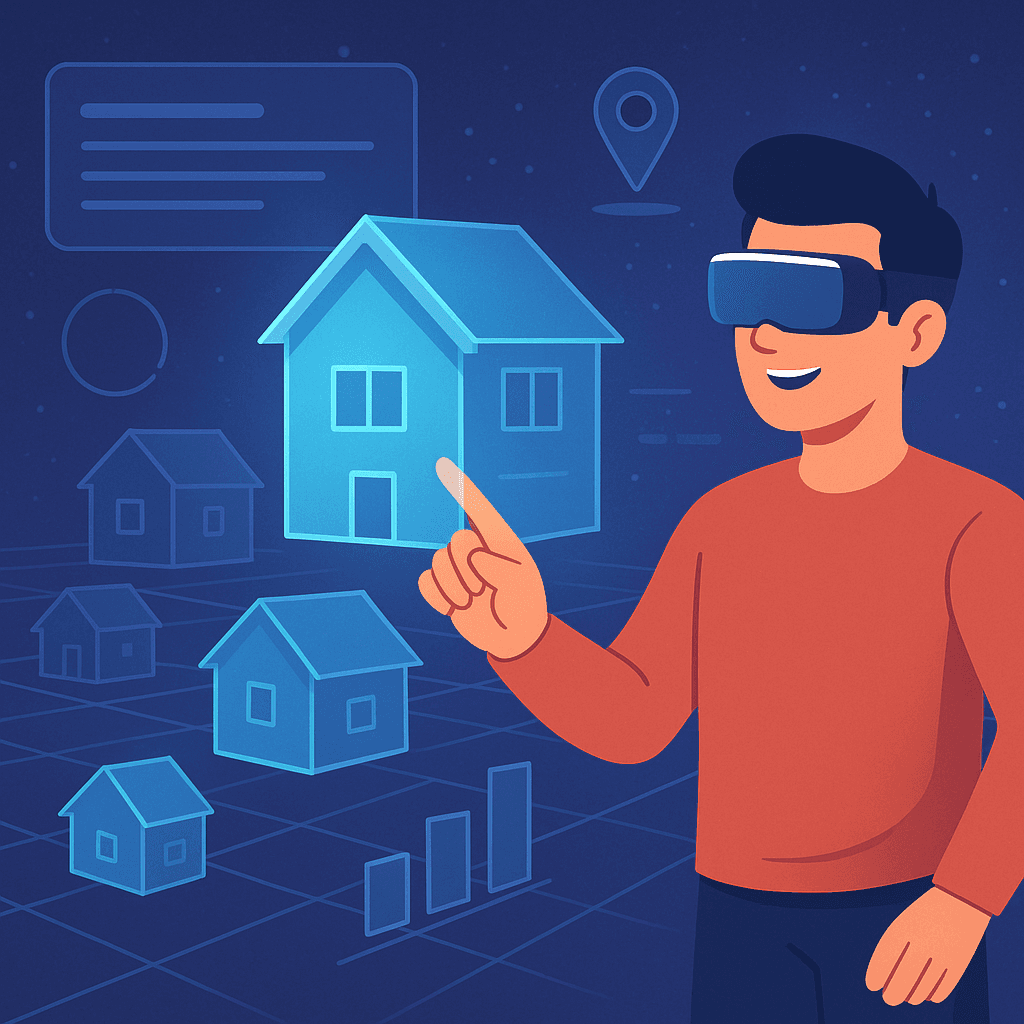
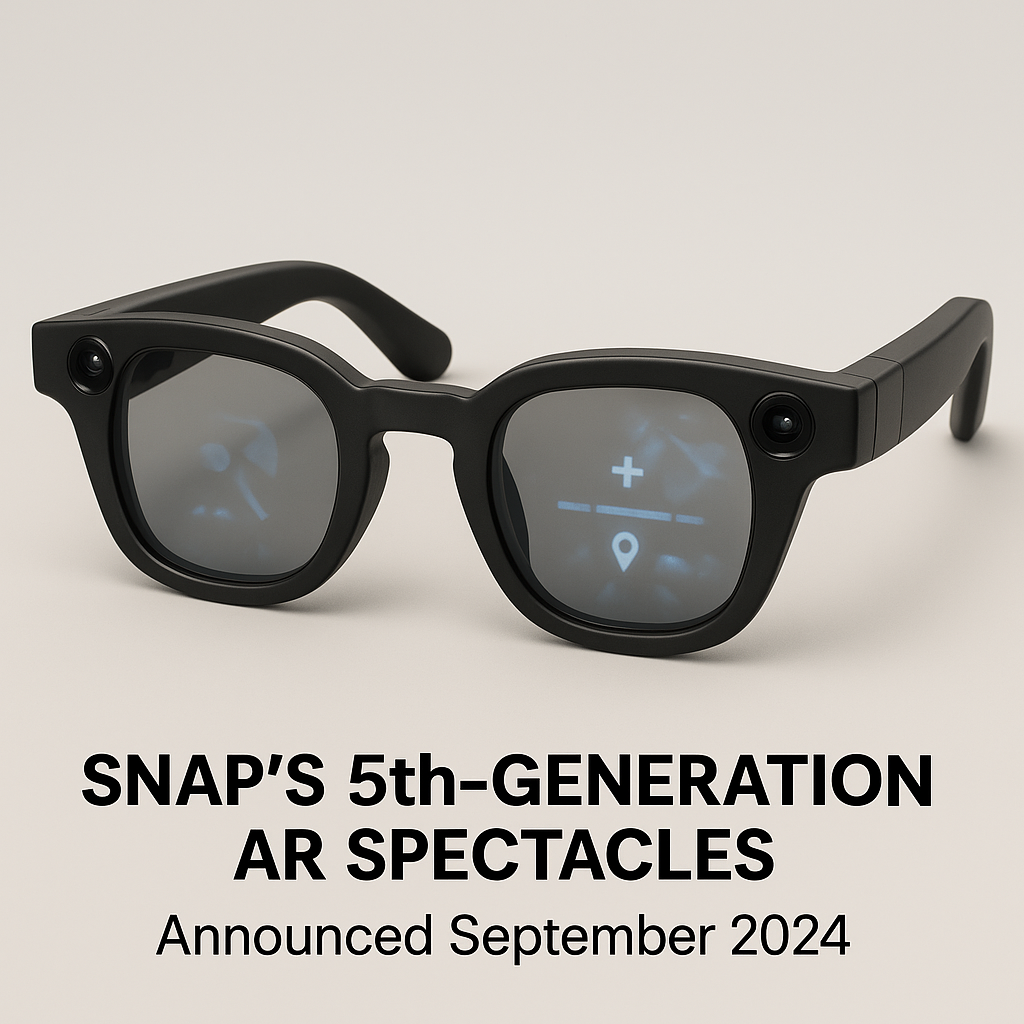
In the rapidly evolving landscape of extended reality (XR), I select Snap's fifth-generation AR Spectacles as the single most relevant development for today's tech-savvy audience. Announced in September 2024, these glasses represent a pivotal leap in making augmented reality accessible and integrated into daily life, fostering innovation in social interactions, gaming, and virtual real-estate overlays, backed by Snap's partnerships and a growing developer ecosystem that promises widespread adoption amid rising interest in immersive tech.
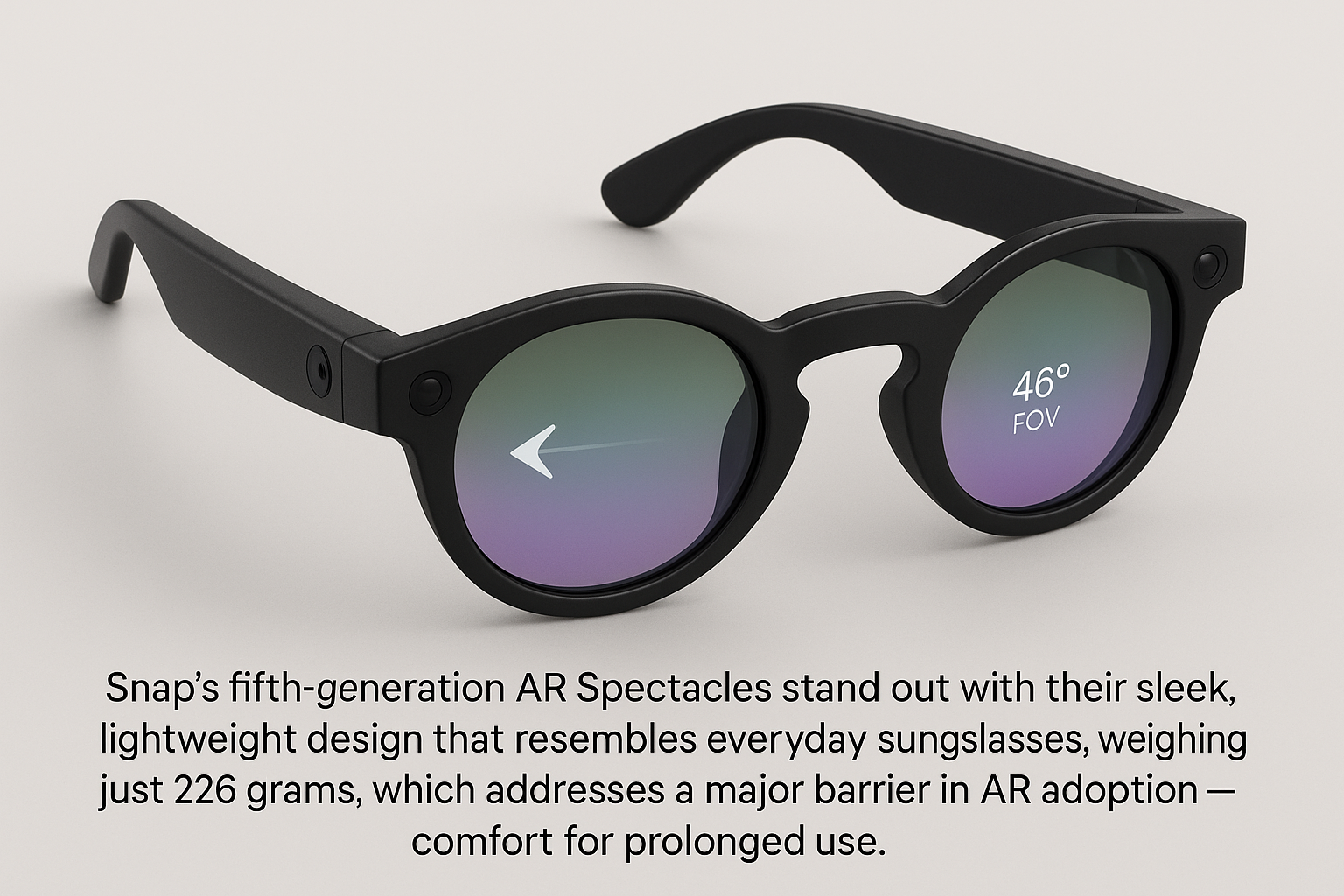
Snap's fifth-generation AR Spectacles stand out with their sleek, lightweight design that resembles everyday sunglasses, weighing just 226 grams, which addresses a major barrier in AR adoption—comfort for prolonged use. At the core, they feature dual waveguide displays providing a 46-degree field of view with vibrant, high-resolution overlays that blend digital elements seamlessly into the real world, powered by a custom Snap Spatial Engine for precise environmental mapping and object persistence. This allows users to interact with AR content using hand gestures, voice commands, and even gaze tracking, eliminating the need for controllers and making experiences intuitive. Historically, Snap has iterated on AR since its early filters in Snapchat, evolving from phone-based AR to dedicated hardware; the first Spectacles in 2016 were more novelty, but by 2021's fourth generation, they incorporated advanced AR for developers. The latest version innovates with improved battery life up to 45 minutes of continuous use, wireless charging, and integration with Snapdragon AR processors for low-latency rendering. Challenges include the limited battery, which Snap is tackling through optimizations, and the high cost of $99 per month for developers, potentially slowing consumer rollout. Future projections see these glasses expanding into mainstream markets by 2026, with potential for full consumer availability as production scales. To add context, competing devices like XREAL's Air 2 glasses focus on media consumption but lack the social AR depth of Snap's ecosystem. In virtual real-estate, imagine touring a property where AR overlays virtual furniture or renovations in real-time, enhancing buyer decisions—drawing from trends in apps like IKEA Place. Ethically, privacy concerns arise from always-on cameras, sparking debates similar to those with Google Glass, where data collection could infringe on personal spaces. In gaming, these spectacles enable multiplayer AR experiences, like overlaying Pokémon GO-style creatures in urban environments, boosting social engagement. Educationally, they could revolutionize learning by projecting interactive 3D models in classrooms, making abstract concepts tangible. Healthcare applications might include AR-guided surgeries or therapy sessions with virtual overlays for patient rehabilitation. Social media integration is seamless, allowing users to share AR-enhanced stories directly from the glasses, amplifying user-generated content. Emerging trends point to convergence with AI, where machine learning could personalize AR experiences, such as adaptive virtual real-estate tours based on user preferences. Historically, AR's roots trace back to Ivan Sutherland's 1968 head-mounted display, evolving through military applications to consumer tech. Market impact is evident in Snap's stock surge post-announcement, reflecting investor confidence in AR's growth to a $100 billion industry by 2030, per Statista reports. User trends show millennials and Gen Z favoring immersive social tools, with 70% of Snapchat users engaging with AR daily. Expert opinions, like those from AR pioneer Timoni West, praise the developer focus for fostering innovation. Challenges persist in accessibility, with efforts to reduce costs for broader adoption, especially in developing regions. Hypothetically, a creator could use these glasses to design virtual art installations in public spaces, blurring lines between physical and digital realms. In entertainment, think of AR concerts where holograms of artists perform alongside real crowds. Social impacts include bridging digital divides, though risks of addiction or reality distortion loom, prompting ethical discussions on mental health. Real-world applications extend to navigation, with AR directions overlaid on streets, competing with Google's AR Live View. Innovations like spatial audio enhance immersion, simulating sounds from virtual objects. Projections suggest integration with metaverses, allowing seamless transitions from AR to VR environments. To illustrate, analogy-wise, if smartphones democratized information, AR glasses like these could democratize augmented experiences, turning the world into an interactive canvas. Data from PwC indicates AR/VR could add $1.5 trillion to the global economy by 2030, underscoring economic potential. In summary, while peripherals enrich understanding, the Spectacles' core promise lies in making AR ubiquitous, inspiring creators and consumers alike.
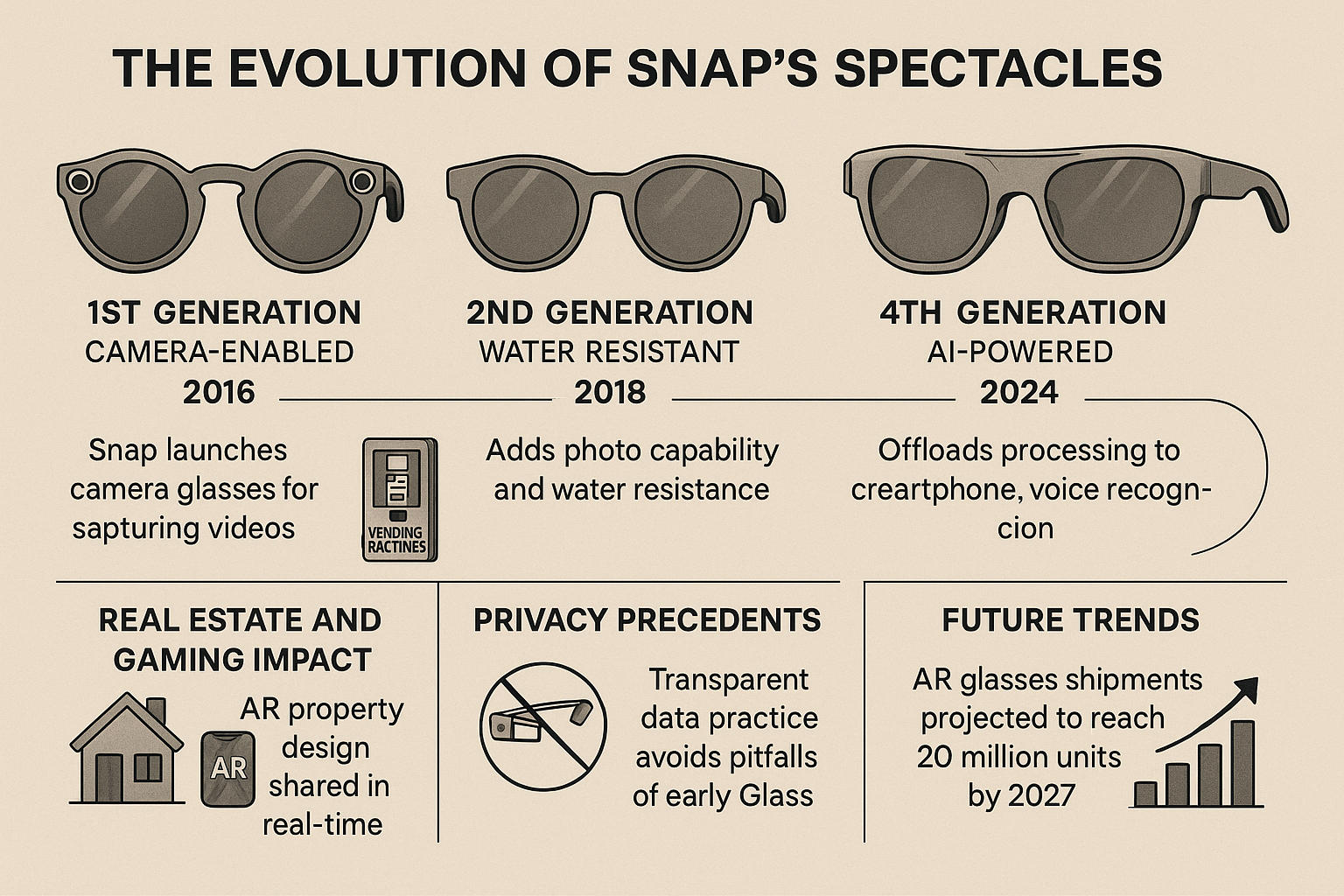
Delving deeper into the history of Snap's AR Spectacles reveals a trajectory marked by bold experimentation and iterative refinement, starting from the company's roots as a ephemeral messaging app in 2011 to becoming a frontrunner in AR hardware. The first Spectacles, launched in 2016, were essentially camera-equipped sunglasses for capturing Snapchat videos, selling out via quirky vending machines and generating buzz but limited AR functionality. By 2018, version two added water resistance and photo capabilities, yet it was the 2021 AR-enabled fourth generation that pivoted towards true XR, offering developers tools to build persistent AR worlds. The fifth generation, unveiled at the 2024 Snap Partner Summit, builds on this with enhanced optics from Lumus and a distributed computing model that offloads heavy processing to a paired smartphone, extending usability. Core features include multimodal inputs—combining gesture recognition with voice AI powered by OpenAI's tech for natural interactions—and a developer kit that supports Unity integration for rapid app creation. Innovations shine in areas like real-time collaboration, where multiple users can share AR spaces, ideal for virtual real-estate scenarios such as collaborative property design sessions. Challenges encompass not just technical hurdles like field-of-view limitations but also market saturation, with competitors like Microsoft's HoloLens dominating enterprise while Snap targets creative consumers. Future projections from analysts at Gartner forecast AR glasses shipments reaching 20 million units by 2027, with Snap potentially capturing a significant share through its social media stronghold. Peripherally, historical precedents like the failed Google Glass in 2013 highlight privacy pitfalls that Snap mitigates with transparent data policies. In gaming, the Spectacles enable experiences akin to Niantic's Lightship platform, where AR games overlay virtual economies, tying into virtual real-estate by allowing players to "own" digital plots in augmented spaces. Social impacts are profound, potentially reducing isolation through AR social events, though ethical debates rage over digital addiction, reminiscent of smartphone era concerns. Real-world applications in education include AR textbooks that come alive, enhancing accessibility for visual learners. In healthcare, surgeons could use overlays for precision guidance, as seen in pilot programs with similar tech. Entertainment evolves with AR filters for live streaming, boosting platforms like Twitch. Emerging trends involve blockchain integration for virtual real-estate NFTs, where AR glasses display ownership in physical locations. User trends indicate a 40% increase in AR app downloads in 2023, per Sensor Tower data. Expert opinions, such as from AR expert Cathy Hackl, emphasize the Spectacles' role in democratizing creation. Hypothetically, an educator might project historical events onto real-world sites, making history immersive. Analogies compare this to the iPhone's app ecosystem revolution, positioning Snap as an AR app store pioneer. Challenges include inclusivity for visually impaired users, with ongoing R&D in haptic feedback. Market impact is seen in partnerships with brands like LEGO for AR building experiences. Socially, it could exacerbate inequalities if access remains elite, prompting calls for subsidized models. In media, AR journalism might overlay data on news scenes. Projections suggest convergence with AI for predictive AR, like suggesting virtual decor in real-estate viewings. To expand, consider competing companies like Vuzix, whose blades offer enterprise AR but lack Snap's fun factor. Ethical implications involve data security, with potential for hacks disrupting AR realities. Innovations in battery tech, like solid-state options, could double usage time soon. Overall, this elaboration underscores how Snap's evolution mirrors XR's broader maturation, inspiring informed engagement.
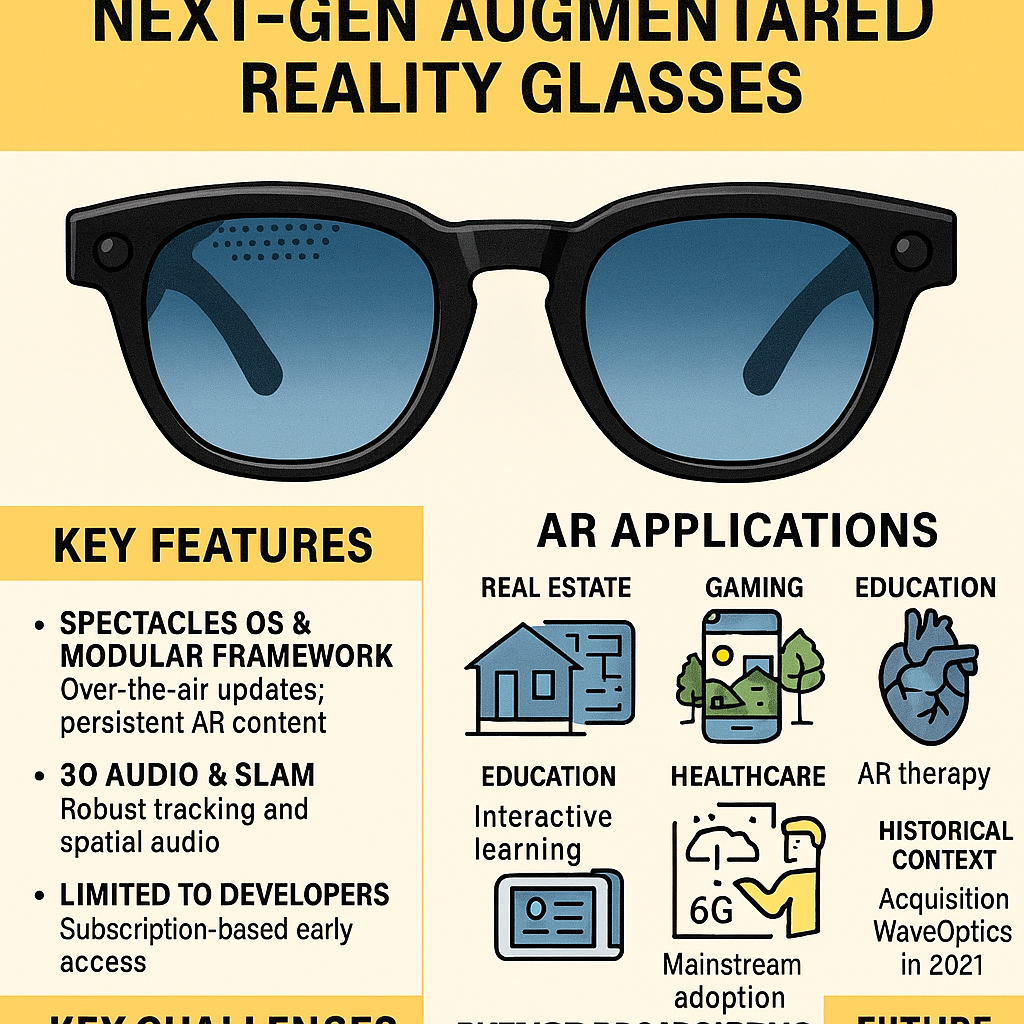
Examining the innovations within Snap's fifth-generation AR Spectacles highlights their role as a catalyst for XR breakthroughs, particularly in spatial computing that rivals high-end systems but at a more accessible scale. Key innovations include the proprietary operating system, Spectacles OS, which supports over-the-air updates and a modular app framework, enabling developers to create experiences that persist across sessions—think leaving a virtual note in a physical location that others can discover later. The glasses boast stereoscopic 3D audio and advanced SLAM (Simultaneous Localization and Mapping) for robust tracking even in dynamic environments, reducing motion sickness that plagued earlier AR devices. History-wise, this builds on Snap's acquisition of key tech firms like WaveOptics in 2021, enhancing waveguide expertise. Challenges involve scaling production, with current limited availability to developers via a subscription model, but Snap plans broader releases. Future projections envision integration with 6G networks for seamless cloud rendering, potentially making AR as commonplace as smartphones by 2030. Peripherally, related technologies like LiDAR sensors, similar to those in iPhones, enhance depth perception for virtual real-estate applications, allowing precise overlays of property blueprints on actual sites. Competing devices, such as Magic Leap 2, target industrial uses but lack the social integration that makes Snap's offering culturally significant. Historical precedents include the 1990s VR hype cycle, which crashed due to tech limitations, informing current cautious optimism. Social debates center on AR's potential to distort reality, with ethicists warning of "augmented inequality" where only the affluent access enhanced perceptions. In gaming, Spectacles could power location-based titles that blend with virtual real-estate, like buying digital land in AR worlds. Educationally, they facilitate collaborative learning, such as virtual dissections without physical resources. Healthcare applications include AR therapy for phobias, overlaying calming scenarios in real environments. Entertainment sees AR-enhanced films where viewers interact with scenes. Emerging trends point to metaverse interoperability, where AR assets transfer to VR platforms like Horizon Worlds. User data from Snap shows 300 million monthly AR users, driving adoption. Expert views, like those in Wired articles, laud the developer-first approach. Hypothetically, a real-estate agent could use the glasses to stage homes virtually during tours, saving costs and time. Analogies liken this to the internet's evolution from clunky modems to ubiquitous Wi-Fi. Challenges include environmental impact from manufacturing, pushing for sustainable materials. Market-wise, AR's projected $198 billion valuation by 2025 per Grand View Research underscores potential. Socially, it fosters global connections, though privacy risks from facial recognition loom. In media, AR ads could personalize billboards. Projections include haptic gloves as accessories for tactile AR. To contextualize, studios like Niantic pioneer AR mapping, complementing Snap's hardware. Ethical implications involve consent in shared AR spaces. Innovations in AI-driven content generation could automate virtual real-estate designs. Overall, these elements paint a picture of transformative potential, engaging audiences with practical insights.
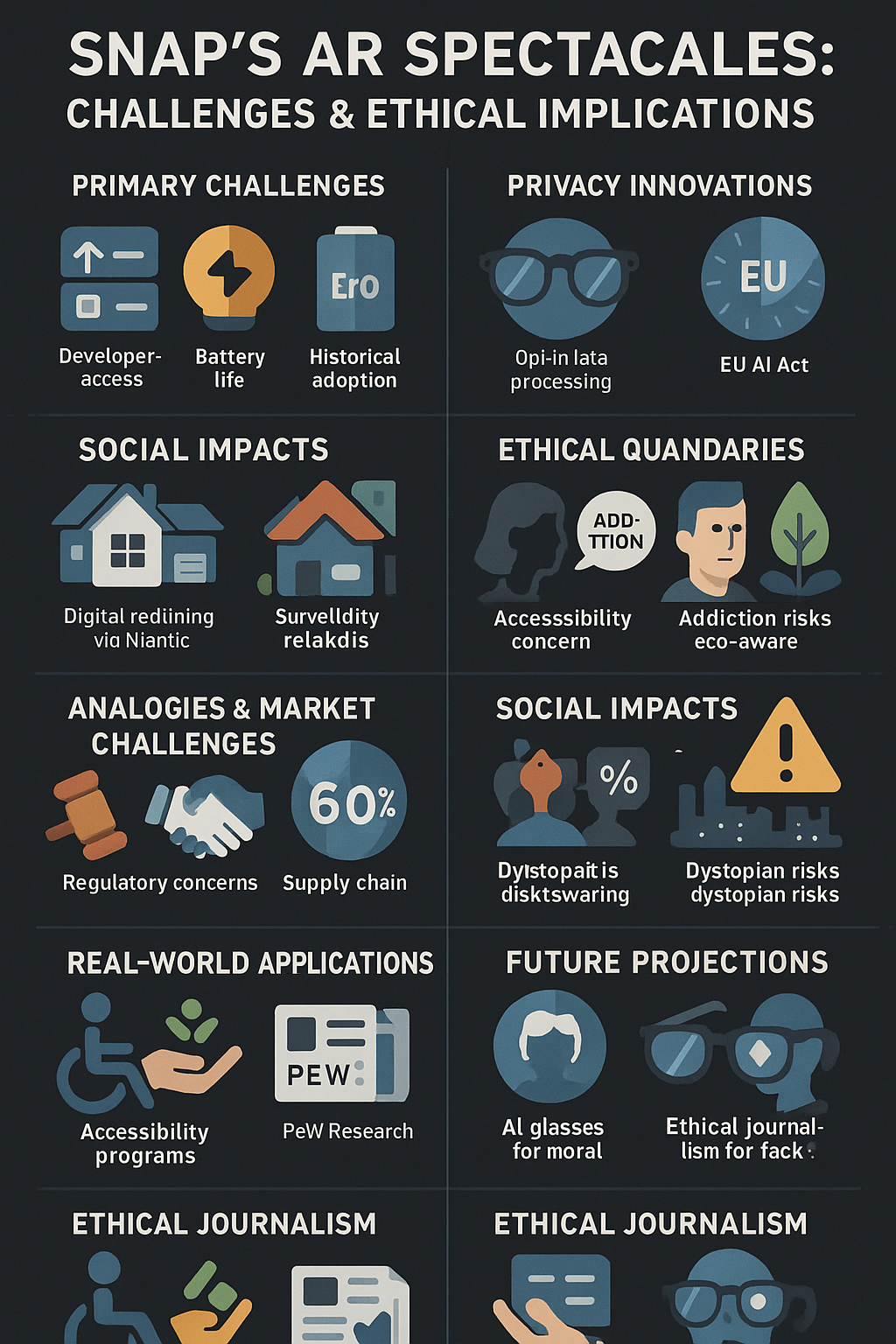
The challenges and ethical implications surrounding Snap's AR Spectacles provide a nuanced view of their place in XR, balancing excitement with cautionary tales from tech history. Primary challenges include the device's current developer-only access, which limits real-world testing and feedback, potentially delaying consumer versions amid competition from more established players. Battery life, while improved, still constrains usage, a hurdle Snap addresses through efficient chipsets and future wireless power innovations. Historically, AR has faced adoption barriers, as seen with Google Glass's 2015 discontinuation due to privacy backlash, lessons Snap incorporates via opt-in data sharing. Innovations counter these with privacy-focused features like on-device processing to minimize cloud vulnerabilities. Future projections anticipate ethical frameworks evolving, perhaps through regulations like the EU's AI Act, ensuring responsible AR deployment. Peripherally, social impacts extend to virtual real-estate, where AR could democratize property viewing but raise concerns over digital redlining, excluding low-income areas from virtual enhancements. Competing companies like Niantic with its AR platforms emphasize community mapping, highlighting collaborative potentials. Historical debates echo the 1980s cyberpunk literature warning of tech-induced alienation, relevant today as AR blurs reality. Ethical quandaries include addiction risks, with studies from the American Psychological Association linking immersive tech to escapism. In gaming, Spectacles enable ethical gameplay like eco-aware AR hunts promoting sustainability. Education benefits from inclusive AR tools, though accessibility for disabled users remains a challenge. Healthcare ethics involve patient data security in AR diagnostics. Entertainment could see AR piracy issues, prompting digital rights discussions. Emerging trends in bioethics question AR's role in human augmentation, like enhancing cognition. User trends show 60% concern over privacy in AR surveys by Pew Research. Expert opinions, such as from philosopher Sherry Turkle, critique diminished human connections. Hypothetically, an AR-overlaid city might foster surveillance states, illustrating dystopian risks. Analogies compare AR ethics to social media's evolution, from innovation to regulation. Market challenges include supply chain disruptions, impacting global adoption. Socially, AR could bridge cultural gaps via translated overlays. In media, ethical journalism might use AR for fact-checking visualizations. Projections foresee ethical AI companions in glasses for moral guidance. To expand, real-world applications in transportation include AR navigation, but ethical issues arise in data sharing with authorities. Innovations like emotion-sensing cameras raise consent debates. Challenges in education involve equitable access, with programs like Snap's grants aiming to help. Overall, this discussion underscores the need for balanced progress, informing audiences on responsible engagement.
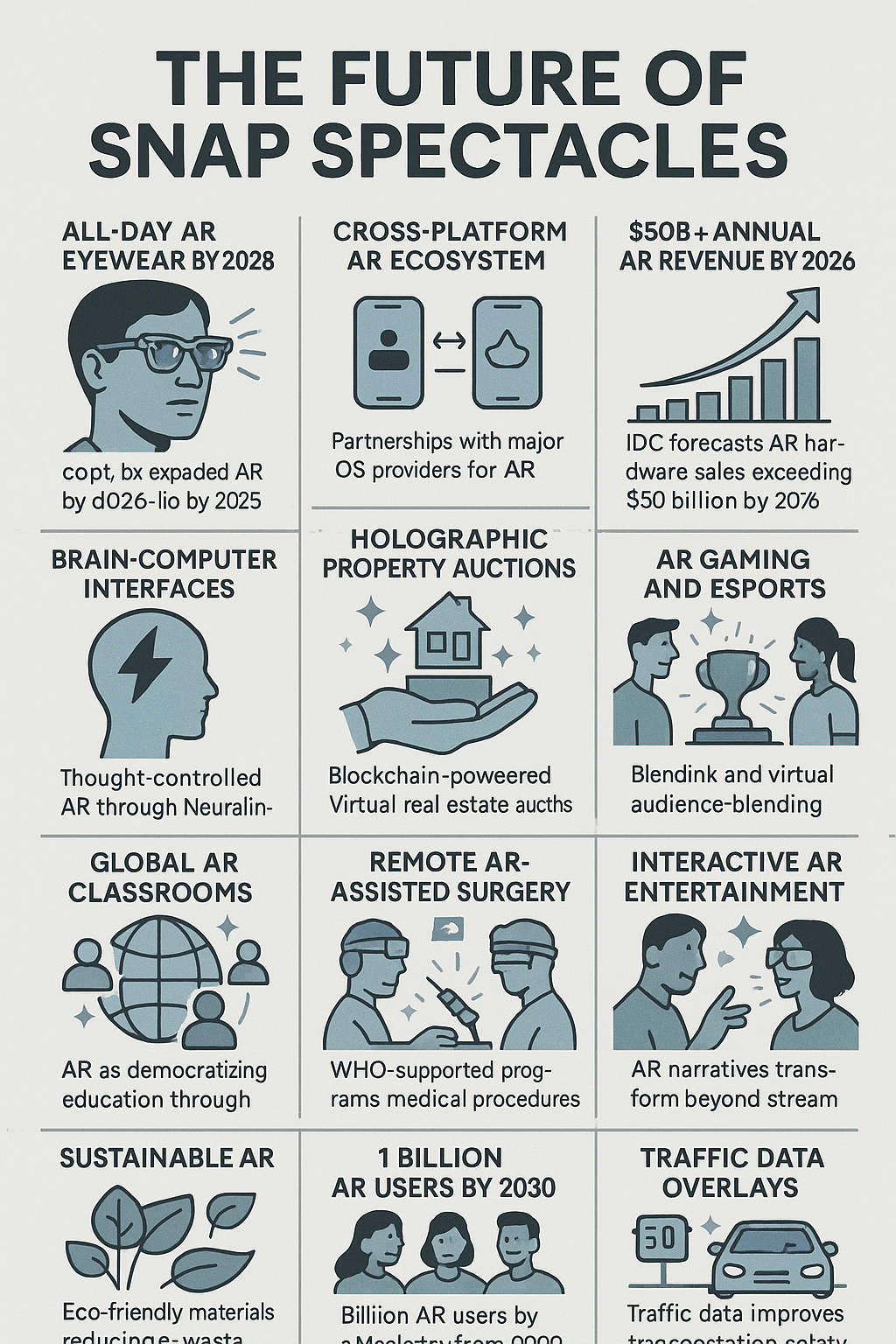
Looking ahead to future projections for Snap's AR Spectacles illuminates a horizon where XR becomes integral to daily life, driven by advancements that address current limitations and expand applications. Projections suggest that by 2028, improved versions could offer all-day battery life through micro-LED displays and energy-harvesting tech, enabling seamless integration into workflows. Core to this is the evolution of Snap's ecosystem, potentially partnering with major OS providers for cross-platform compatibility, fostering a unified AR landscape. Historically, XR projections have often overstated timelines, like the unmet hype of 2010s VR, but current data from IDC predicts AR hardware revenue hitting $50 billion by 2026, bolstered by Snap's momentum. Innovations may include brain-computer interfaces for thought-controlled AR, building on Neuralink-like tech. Challenges lie in regulatory hurdles, such as spectrum allocation for AR's data demands. Peripherally, in virtual real-estate, future AR could enable holographic property auctions, transforming industries with blockchain-verified ownership. Competing studios like Epic Games with Unreal Engine push AR content creation, complementing Snap's hardware. Historical precedents in augmented tech, from military heads-up displays to consumer shifts, inform scalable models. Social impacts project enhanced empathy through AR role-playing, though debates on information overload persist. Ethical implications involve ensuring AR doesn't widen societal divides, with initiatives for affordable access. In gaming, projections see AR esports arenas blending physical and virtual crowds. Education could feature global AR classrooms, democratizing knowledge. Healthcare envisions AR for remote surgeries, as piloted in WHO-supported programs. Entertainment might evolve to interactive AR narratives, rivaling streaming giants. Emerging trends include sustainable AR, with eco-friendly materials reducing e-waste. User trends forecast 1 billion AR users by 2030, per eMarketer. Expert projections from futurists like Ray Kurzweil emphasize singularity-like merges of human and tech. Hypothetically, daily commutes could feature AR productivity overlays, boosting efficiency. Analogies liken this to electricity's ubiquity, transforming societies. Market impacts include job creation in AR design fields. Socially, AR could combat loneliness via virtual companions. In media, personalized AR news feeds raise filter bubble concerns. Projections include quantum computing for ultra-realistic simulations. To contextualize, applications in transportation might overlay traffic data, enhancing safety. Innovations in haptic feedback could simulate textures in virtual real-estate tours. Challenges encompass cybersecurity, with AR-specific defenses needed. Overall, these projections inspire optimism, equipping audiences with forward-thinking insights.
AI Generated. AI-Human Verified.