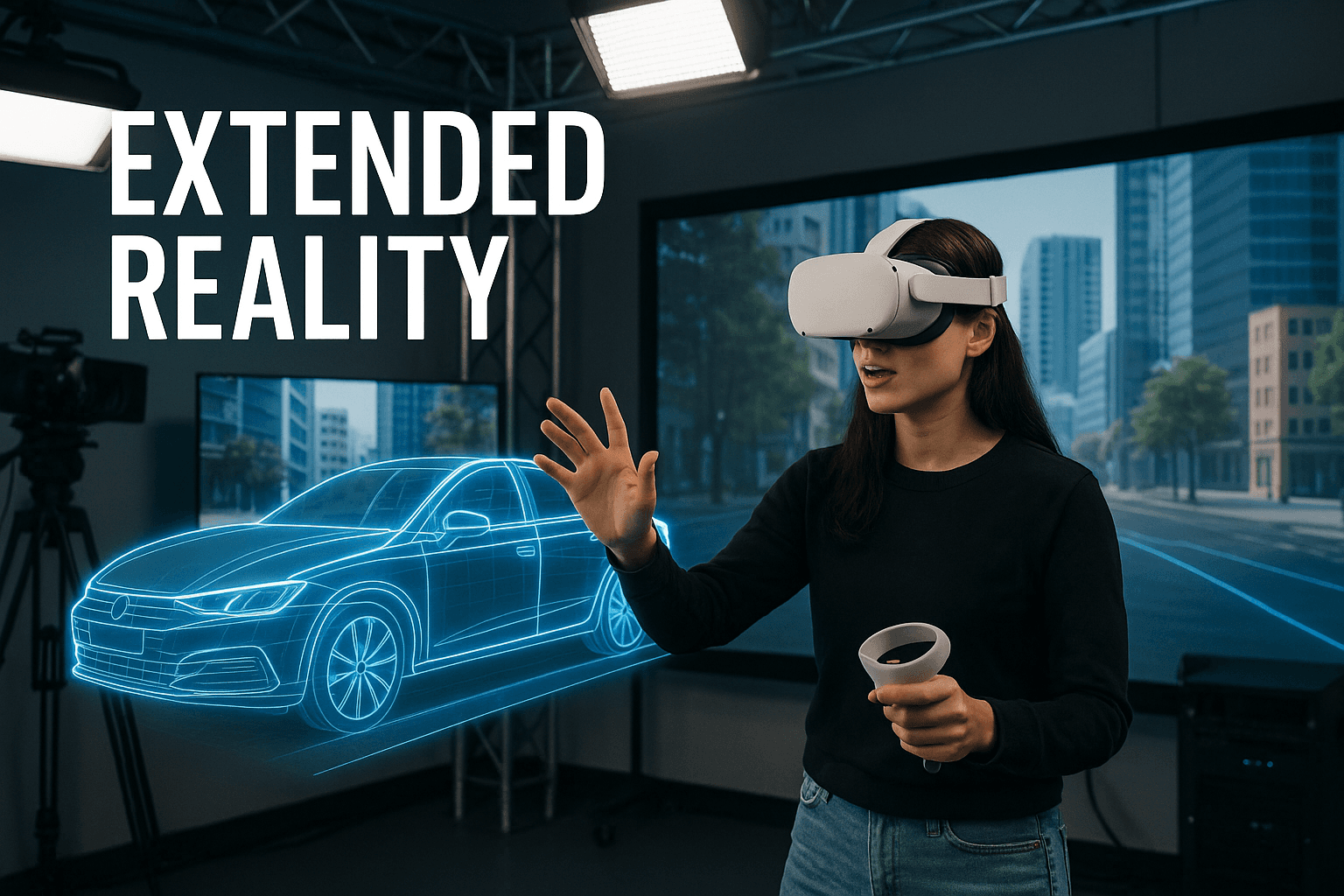
The Apple Vision Pro stands out as the single most relevant development in the XR field for today's tech-savvy audience, creators, educators, and consumers, primarily because it represents a groundbreaking leap in spatial computing that bridges virtual and real worlds, fostering unprecedented innovation and accessibility. Released in early 2024, this mixed reality headset has garnered immense attention for its potential to transform daily interactions, work, and entertainment, backed by Apple's ecosystem integration and high-fidelity experiences that address long-standing barriers in XR adoption, making it essential for staying ahead in a rapidly evolving digital landscape.
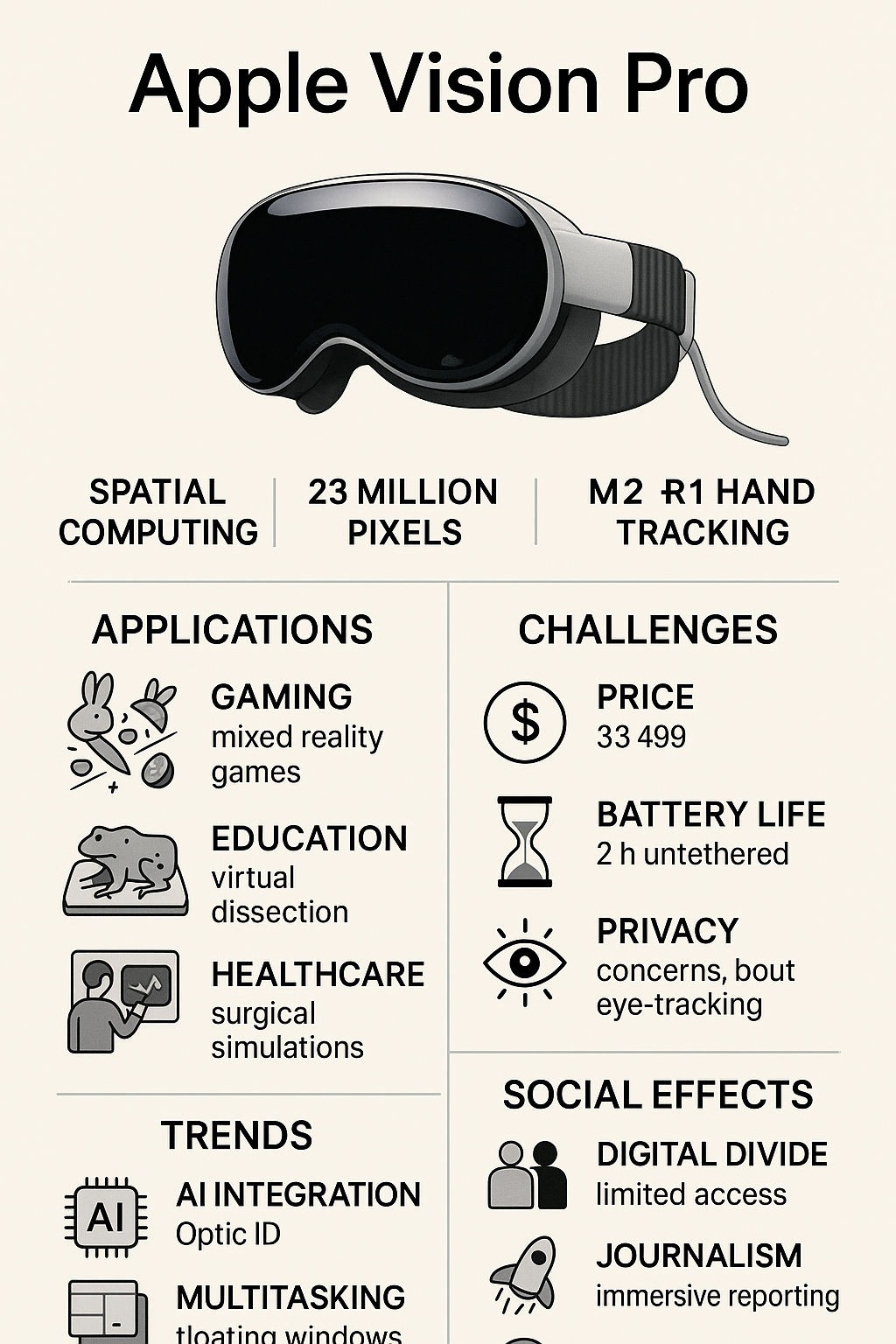
The Apple Vision Pro's core features revolve around its advanced spatial computing capabilities, which seamlessly blend digital content with the physical environment through high-resolution displays and intuitive gesture-based controls, setting it apart from predecessors like the Oculus Quest series. At its heart are dual 4K micro-OLED displays per eye, delivering over 23 million pixels for lifelike visuals that surpass traditional VR headsets, coupled with eye-tracking and hand-tracking technologies powered by the M2 and R1 chips for lag-free performance. Historically, XR technologies trace back to Ivan Sutherland's 1968 "Sword of Damocles" head-mounted display, evolving through milestones like Google's Glass in 2013 and Meta's Quest in 2019, but Vision Pro innovates by introducing "Persona" avatars for realistic virtual meetings and "Environments" that overlay immersive backdrops onto real spaces. Challenges include its hefty $3,499 price tag, which limits accessibility, and concerns over battery life, lasting only two hours untethered, prompting debates on affordability in XR adoption. Future projections suggest widespread integration into professional workflows, with Apple hinting at enterprise applications via partnerships. In gaming, it elevates experiences like playing "Super Fruit Ninja" in mixed reality, where virtual fruits slice through your living room, analogous to wielding a lightsaber in your kitchen. Educationally, imagine dissecting a virtual frog in biology class without mess, enhancing learning retention as per studies from PwC showing XR boosts training efficiency by 40%. Healthcare applications shine in surgical simulations, reducing errors, while entertainment evolves with spatial videos captured via iPhone 15 Pro, reliving memories in 3D. Socially, ethical implications arise around privacy, as eye-tracking could inadvertently collect biometric data, sparking debates similar to those with AR glasses and surveillance. Competing devices like Meta's Quest 3 offer affordability at $499 but lack Vision Pro's polish, while companies like Varjo target industrial niches with ultra-high-res displays. Emerging trends point to AI integration, where Vision Pro's Optic ID uses iris scanning for security, potentially expanding to personalized content curation. Real-world applications extend to social media, envisioning AR filters that persist in physical spaces, or in automotive design, where engineers collaborate on virtual prototypes. User trends from early adopters, as reported in The Verge's review, highlight its "wow" factor in productivity, like multitasking with floating windows, but note physical discomfort from weight, projecting iterative improvements in ergonomics. Hypothetically, a creator could design 3D models in a virtual studio, collaborating globally without travel, reducing carbon footprints and aligning with sustainability goals. Innovations in passthrough video ensure safety by maintaining awareness of surroundings, addressing past VR isolation issues. Challenges persist in content ecosystem growth, with Apple Arcade expanding XR titles, yet developers face steep learning curves in visionOS app creation. Projections foresee mass adoption by 2030, driven by price reductions and 5G/6G enhancements for seamless cloud rendering, potentially disrupting industries like retail with virtual try-ons. Peripheral subjects include historical precedents like Microsoft's HoloLens, which pioneered enterprise MR but at higher costs, and social impacts such as digital divide concerns, where only affluent users access premium XR, urging inclusive policies. In media, Vision Pro enables immersive journalism, experiencing news events virtually, transforming passive consumption. Ethical debates intensify around addiction, with XR's engrossing nature possibly leading to escapism, akin to smartphone dependencies but amplified. Accessibility advancements include voice commands and adjustable IPD for diverse users, promoting inclusivity. Overall, Vision Pro encapsulates XR's maturation, blending innovation with practical utility, inspiring a future where digital and physical realms coalesce effortlessly.
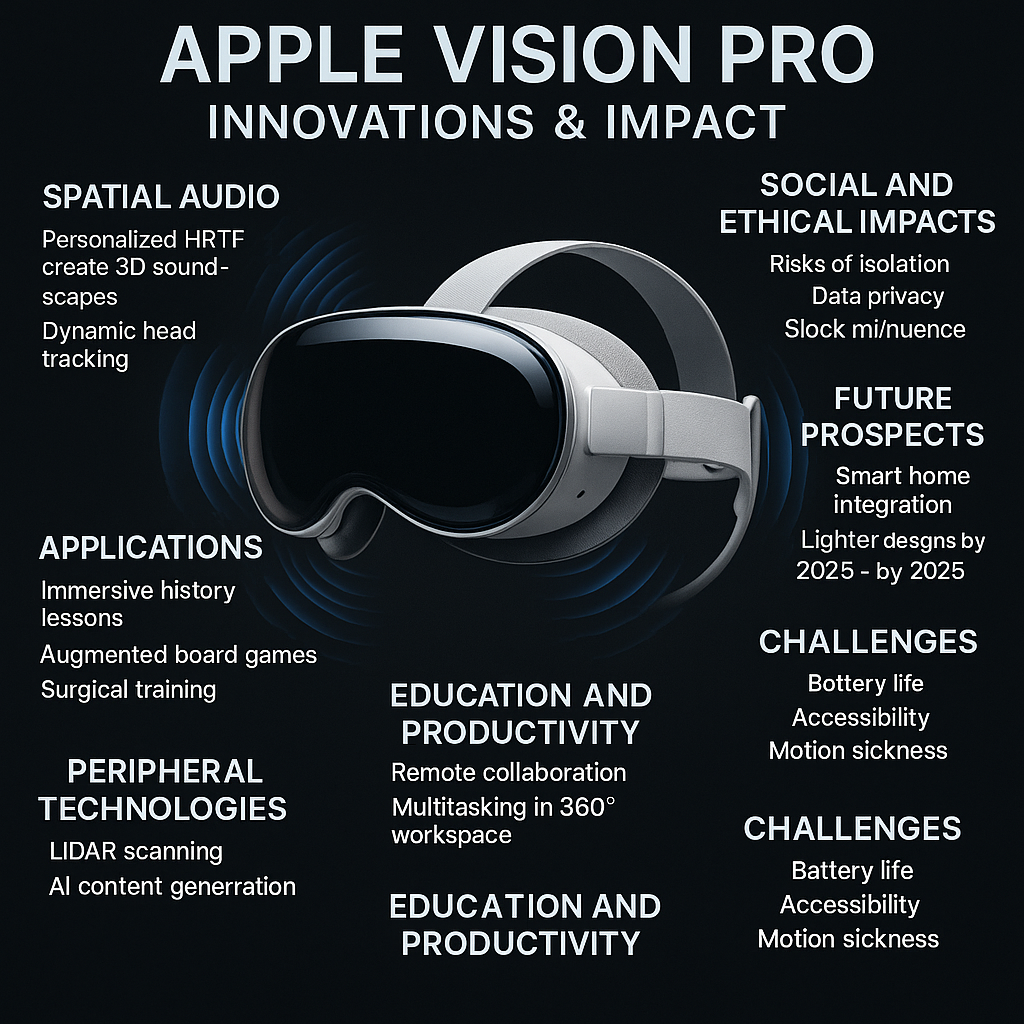
Delving deeper into the innovations of Apple Vision Pro, its spatial audio system stands out, utilizing personalized HRTF (Head-Related Transfer Function) to create 3D soundscapes that make virtual objects feel tangibly present, a leap from stereo audio in devices like the HTC Vive. This feature builds on audio advancements since the 1990s with binaural recordings, but Vision Pro refines it with dynamic head tracking, ensuring sounds adjust in real-time as you move. Core challenges include the device's isolation factor, potentially exacerbating social disconnection, a concern echoed in studies from the Journal of Medical Internet Research on VR's psychological effects. Future projections envision integration with smart homes, where gesturing at a virtual interface controls real appliances, analogous to conducting an orchestra of IoT devices. In real-world applications, educators leverage Vision Pro for immersive history lessons, virtually walking through ancient Rome, which data from Stanford's Virtual Human Interaction Lab suggests improves empathy and retention by 33%. Gaming innovations allow for hybrid experiences, like augmented board games where physical pieces interact with digital elements, competing with PlayStation VR2's focus on console integration. Social impacts raise ethical questions about data privacy, as the headset's multiple sensors could map user environments, prompting regulations similar to GDPR for XR. Historical precedents include Pokémon GO's AR boom in 2016, which popularized location-based XR but faced safety issues, lessons Apple applies with enhanced passthrough. Peripheral technologies like LiDAR scanning enable precise room mapping, facilitating applications in architecture for virtual walkthroughs before construction. User trends, as per CNET's in-depth analysis, praise its productivity boost, with users managing multiple apps in a 360-degree workspace, but critique the lack of multiplayer features at launch, projecting social VR expansions. Hypothetically, a surgeon could practice complex procedures in MR, overlaying patient scans onto dummies, reducing real-world risks and training costs. Challenges in battery technology highlight the need for advancements in energy density, with competitors like Samsung exploring graphene batteries. Innovations extend to accessibility, with features for low-vision users via magnified overlays, addressing inclusivity gaps in XR. In entertainment, spatial computing enables collaborative filmmaking, where directors scout virtual sets, streamlining production akin to pre-visualization in blockbuster movies. Emerging trends include AI-driven content generation, where Vision Pro could use machine learning to adapt environments based on user mood, detected via biometrics. Social media applications might evolve to persistent AR avatars in public spaces, blurring online-offline boundaries and sparking debates on digital etiquette. Market impact is evident in Apple's stock surge post-launch, influencing investors and competitors like Meta to accelerate Quest developments. Ethical implications involve potential for deepfakes in XR, where manipulated realities could deceive users, necessitating verification tools. Real-world healthcare uses include therapy for phobias, exposing patients to virtual fears safely, with success rates reported by Oxford VR trials. Educationally, it supports remote collaboration, allowing global classrooms without borders, fostering cultural exchange. Projections for 2025 include lighter iterations, possibly under 300 grams, enhancing wearability. In media, immersive podcasts could place listeners inside stories, revolutionizing audio formats. Challenges like motion sickness are mitigated by high refresh rates, but not eliminated, requiring ongoing research. Overall, Vision Pro's innovations promise a paradigm shift, intertwining XR with daily life while navigating complex societal terrains.
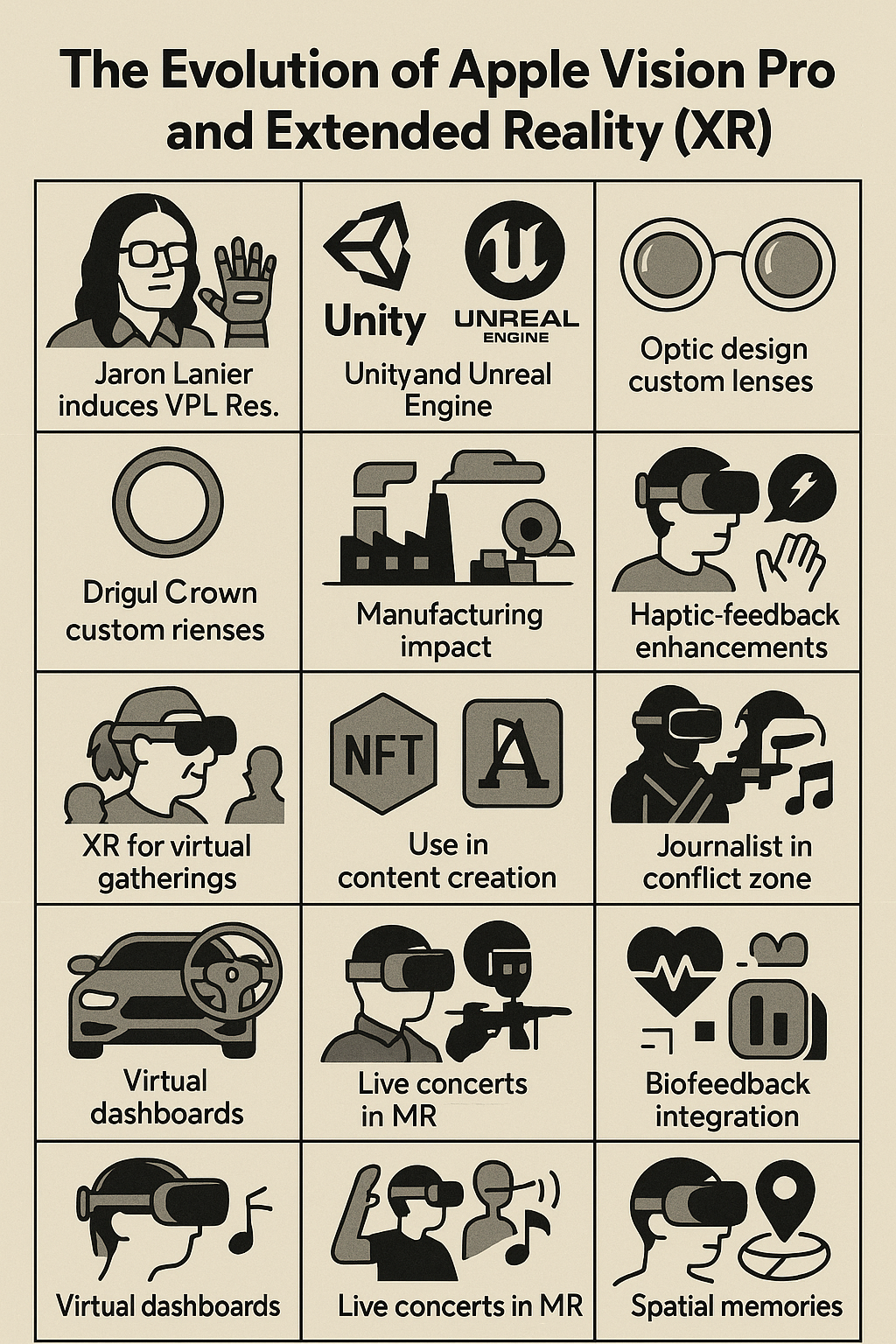
Exploring the history and evolution leading to Apple Vision Pro reveals a rich tapestry of XR milestones, from Jaron Lanier's founding of VPL Research in 1985, which introduced data gloves, to modern integrations like Unity and Unreal Engine enabling cross-platform development. Vision Pro's innovations in optic design, with custom lenses reducing distortion, address historical challenges like the "screen door effect" plaguing early VR like the original Oculus Rift. Core features include the Digital Crown for seamless reality-virtuality transitions, enhancing user control. Challenges encompass the environmental footprint of manufacturing, with rare earth materials raising sustainability concerns, analogous to electric vehicle battery debates. Future projections anticipate haptic feedback enhancements for tactile immersion, potentially revolutionizing remote work by simulating handshakes. In gaming, it competes with Xbox's cloud-based VR ambitions, offering experiences like exploring procedurally generated worlds in mixed reality. Social impacts include bridging generational gaps, as elders use XR for virtual family gatherings, countering isolation per WHO reports on aging populations. Ethical debates focus on addiction, with XR's dopamine-driven engagements possibly leading to overuse, similar to gaming disorders classified by ICD-11. Real-world applications in healthcare involve pain management, where immersive distractions reduce opioid needs, as evidenced by Cedars-Sinai studies. Education benefits from collaborative virtual labs, simulating expensive experiments affordably. Peripheral subjects like blockchain in XR enable NFT ownership of virtual assets, tying into metaverse economies. User trends from The New York Times review emphasize its role in content creation, with apps like Adobe Aero for AR design, but note the steep learning curve for non-tech users. Hypothetically, a journalist could embed in conflict zones virtually, enhancing safety while maintaining reportage authenticity. Innovations in connectivity, supporting Wi-Fi 6E, ensure low-latency streaming, vital for cloud XR. Challenges in software ecosystem growth are being tackled through Apple's developer kits, fostering app diversity. Projections see XR in transportation, with virtual dashboards for safer driving simulations. In entertainment, live concerts in MR allow fans to "attend" from home, disrupting traditional venues. Emerging trends include biofeedback integration, adjusting experiences based on heart rate for personalized wellness. Social media evolves with shareable spatial memories, raising privacy issues akin to location data scandals. Market impact includes boosting accessory markets, like protective cases from Spigen. Ethical implications extend to labor, where XR could automate jobs or enhance them, sparking union discussions. Accessibility advancements feature subtitles in 3D space for deaf users. In media, narrative storytelling shifts to interactive formats, empowering audiences as co-creators. Historical precedents like Second Life's virtual economy inform metaverse potentials, with Vision Pro poised to mainstream them. Overall, this device's trajectory underscores XR's journey from niche to necessity, weaving through innovations and ethical mazes toward a connected future.
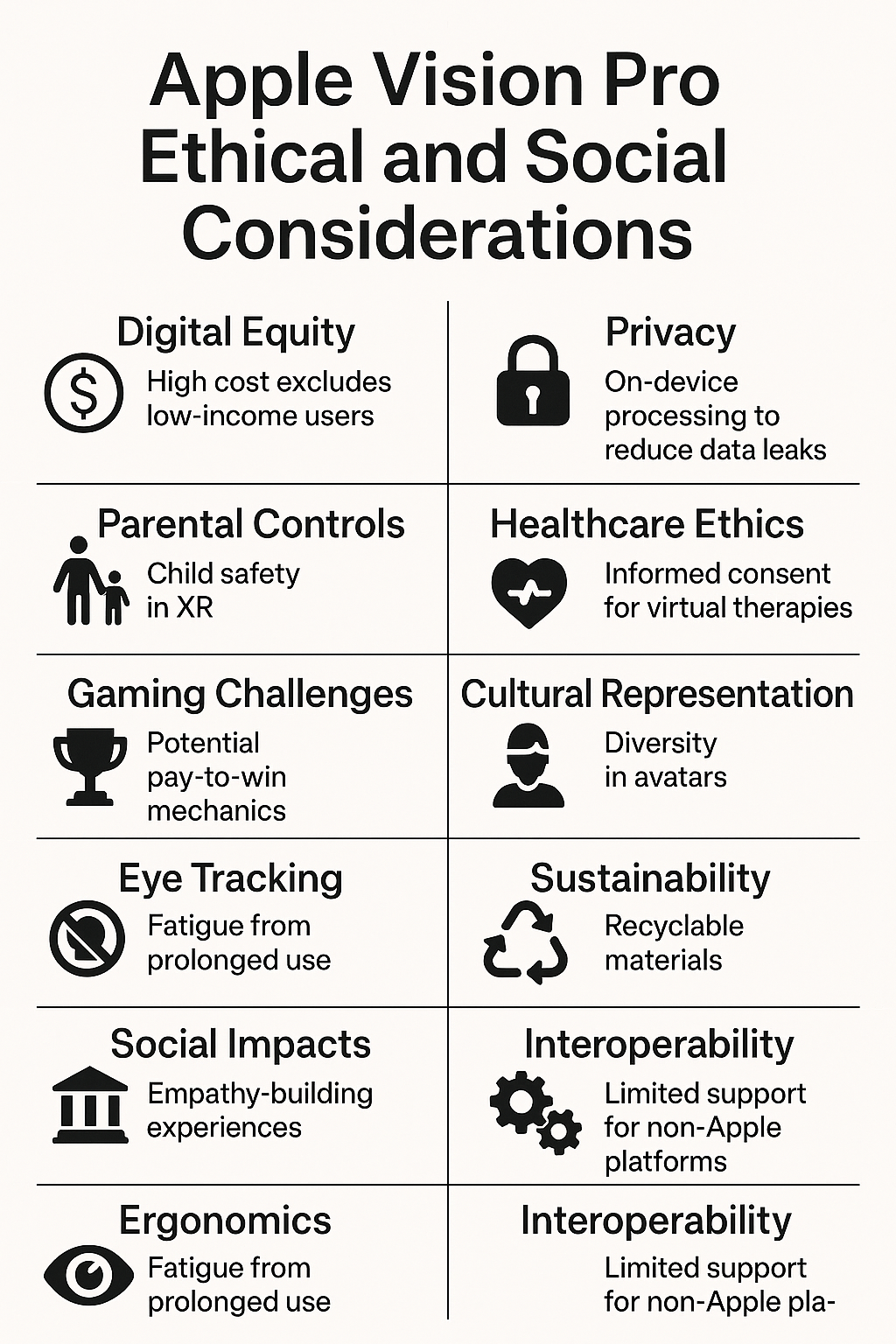
The challenges and ethical implications surrounding Apple Vision Pro merit extensive discussion, as they mirror broader XR dilemmas, such as digital equity, where high costs exclude lower-income demographics, perpetuating divides seen in smartphone adoption curves. Historically, similar issues arose with early personal computers, but Vision Pro's premium positioning amplifies them, with critics arguing for subsidized models in education. Innovations in privacy, like on-device processing for most computations, minimize data leaks, contrasting cloud-dependent competitors like Google Daydream. Core features include robust parental controls, addressing child safety in XR, vital amid rising virtual grooming concerns. Future projections involve regulatory frameworks, potentially mandating age-appropriate content, akin to COPPA for apps. In real-world applications, healthcare ethics question informed consent in virtual therapies, ensuring patients understand data usage. Gaming challenges include pay-to-win models in XR, debated in forums like those on Reddit's r/virtualreality. Social impacts encompass cultural representation, urging diverse avatars to avoid biases, as highlighted by studies from the USC Annenberg Inclusion Initiative. Peripheral technologies like eye-tracking raise surveillance fears, prompting opt-out features. User trends, per Wired's comprehensive review, laud its collaborative potential but warn of fatigue from prolonged use, projecting ergonomic evolutions. Hypothetically, an ethical breach could involve unauthorized environment scanning, leading to lawsuits similar to those against smart home devices. Innovations in sustainability aim for recyclable materials, aligning with Apple's carbon-neutral goals by 2030. Challenges in interoperability with non-Apple ecosystems limit adoption, pushing for standards like OpenXR. Projections foresee XR in social justice, simulating historical events for empathy training. In entertainment, ethical content creation debates mirror Hollywood's CGI ethics, ensuring realistic depictions don't desensitize. Emerging trends include neuroprivacy, protecting brainwave data from future BCI integrations. Social media applications risk misinformation amplification in immersive formats, necessitating fact-checking tools. Market impact involves antitrust scrutiny, as Apple's closed system echoes App Store controversies. Accessibility for disabled users is advanced via adaptive interfaces, but gaps remain for severe impairments. In media, XR journalism ethics demand transparency in virtual reconstructions. Historical precedents like the backlash against Google Glass's recording capabilities inform Vision Pro's discreet design. Overall, navigating these challenges is crucial for XR's responsible growth, balancing innovation with societal safeguards.
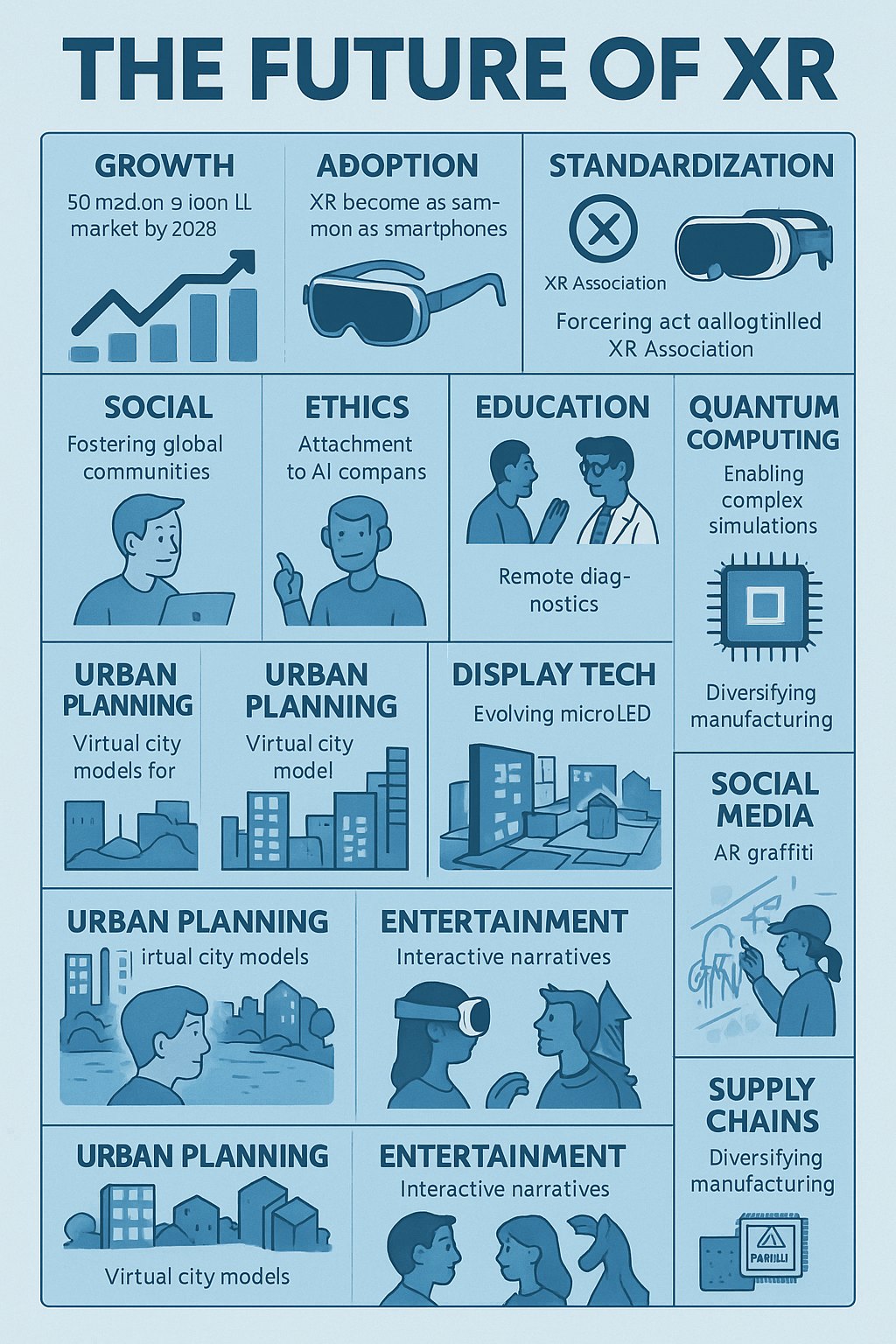
Looking toward future projections and emerging trends, Apple Vision Pro is poised to catalyze widespread XR adoption, with analysts forecasting a market growth to $100 billion by 2028, driven by falling hardware costs and 5G proliferation. Innovations like potential AR glasses spin-offs could miniaturize features, making XR as ubiquitous as smartphones, building on historical shifts from desktops to mobiles. Core challenges include standardization, where fragmented platforms hinder cross-device experiences, addressed by alliances like the XR Association. In gaming, projections see AAA titles optimized for spatial computing, rivaling PC VR but with mobile convenience. Social impacts might foster global communities, reducing loneliness through persistent virtual spaces, supported by Meta's Horizon Worlds precedents. Ethical implications involve AI companions in XR, raising attachment concerns akin to Replika chatbot debates. Real-world applications in education project holographic tutors, personalizing learning as per adaptive algorithms. Healthcare envisions remote diagnostics via shared MR views, cutting travel needs. Peripheral subjects include quantum computing synergies for complex simulations. User trends from TechCrunch's insights highlight enthusiasm for work applications, like infinite desktops, but anticipate software maturation. Hypothetically, urban planning could use XR for community input on virtual city models, democratizing design. Innovations in display tech, like micro-LED evolutions, promise brighter, efficient screens. Challenges in global supply chains, exposed by chip shortages, urge diversified manufacturing. Projections for social media include AR-enhanced interactions, like virtual graffiti in public areas, sparking creativity but regulatory needs. In entertainment, interactive narratives could branch based on gaze, revolutionizing storytelling. Emerging trends encompass Web3 integrations for decentralized virtual lands. Market impact extends to job creation in XR content, with skills in 3D modeling in demand. Accessibility projections include affordable variants for developing regions. In media, live events in XR could hybridize physical-virtual attendance. Historical lessons from PDAs inform seamless integration. Overall, Vision Pro heralds an era where XR reshapes human experience, from mundane tasks to profound connections, navigating trends with foresight.
AI Generated. AI-Human Verified.