
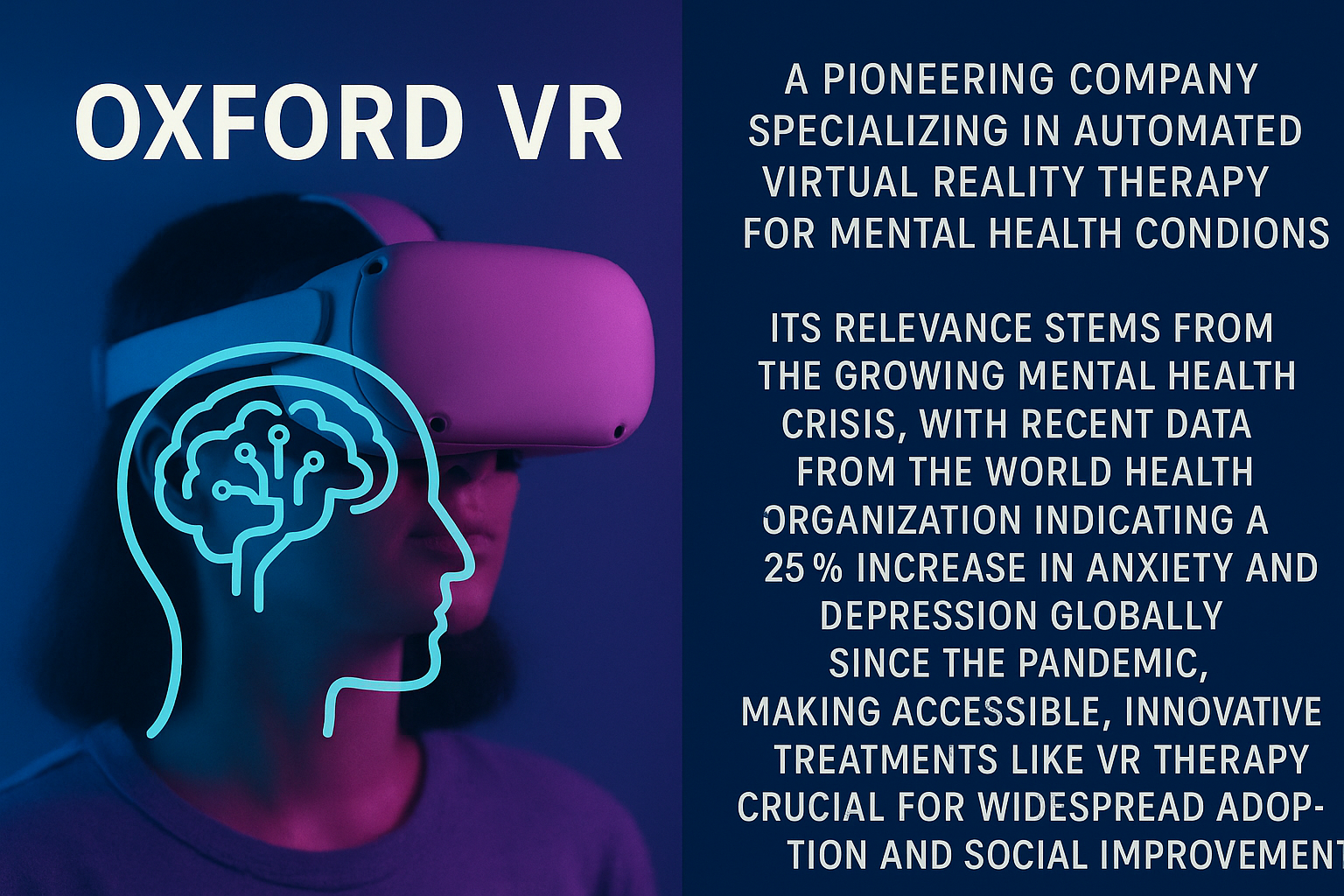
In the rapidly evolving landscape of extended reality (XR), I believe the most pertinent development for today's tech-savvy audience is Oxford VR, a pioneering company specializing in automated virtual reality therapy for mental health conditions. Its relevance stems from the growing mental health crisis, with recent data from the World Health Organization indicating a 25% increase in anxiety and depression globally since the pandemic, making accessible, innovative treatments like VR therapy crucial for widespread adoption and social improvement.
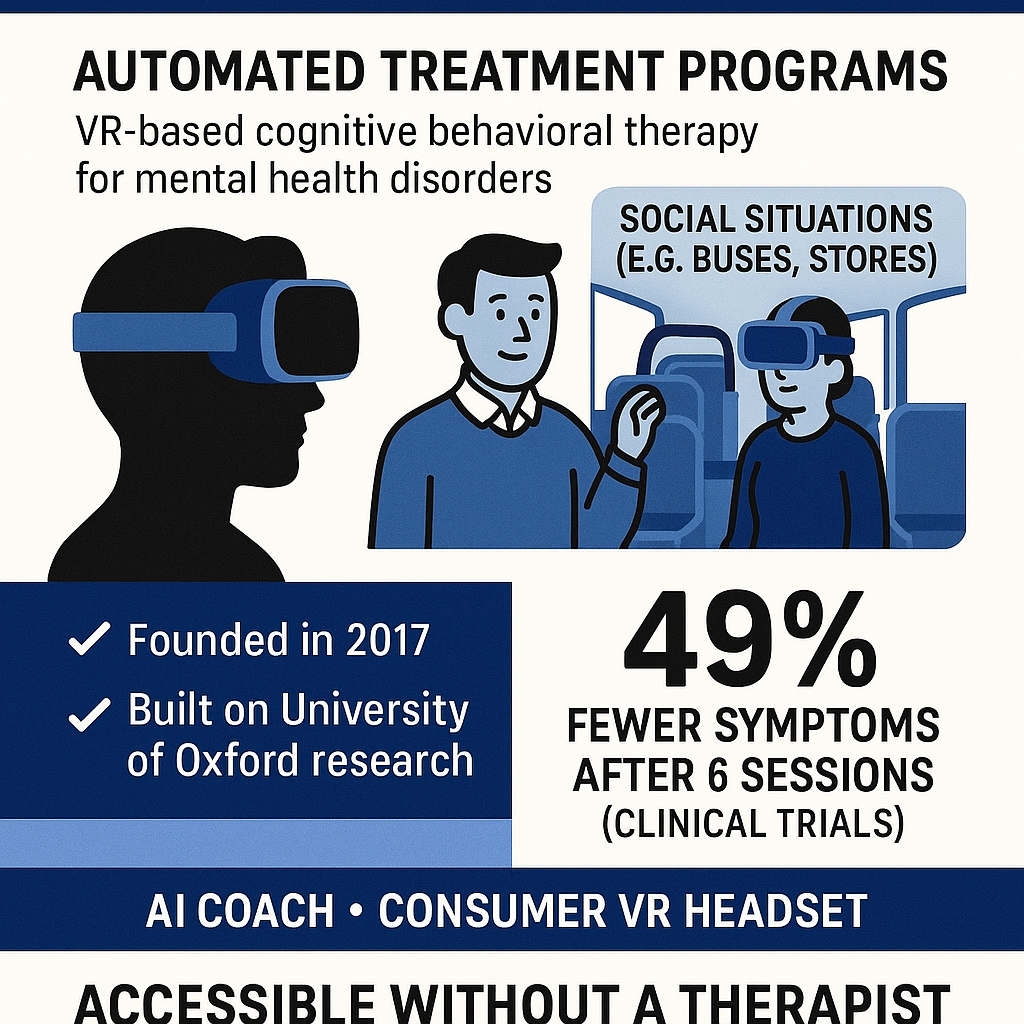
Oxford VR stands out in the XR field by leveraging virtual reality to deliver evidence-based psychological therapies, particularly for conditions like social anxiety, agoraphobia, and psychosis, through automated, clinician-free sessions that users can access via consumer VR headsets. Founded in 2017 as a spin-out from the University of Oxford's Department of Psychiatry, the company was inspired by decades of research led by Professor Daniel Freeman, who demonstrated VR's efficacy in simulating real-world scenarios to help patients confront fears in a controlled environment. This innovation addresses key challenges in traditional therapy, such as long wait times and high costs, by providing scalable solutions that have shown in clinical trials to reduce symptoms by up to 49% after just six sessions. For instance, their flagship program, gameChange, uses immersive VR environments where users practice everyday tasks like boarding a bus or shopping, guided by an AI virtual coach that adapts in real-time based on user responses. This not only democratizes access to cognitive behavioral therapy (CBT) but also integrates gamification elements to enhance engagement, drawing parallels to how video games like The Sims allow players to navigate social simulations. Historically, VR therapy traces back to the 1990s with early experiments in exposure therapy for phobias, but Oxford VR elevates this with cutting-edge tech, including high-fidelity graphics and biofeedback sensors that monitor heart rate to tailor immersion levels. Challenges include ensuring device affordability and overcoming digital divides, as not everyone owns a VR headset, yet partnerships with health services like the UK's NHS are bridging these gaps. Looking ahead, projections suggest that by 2030, VR mental health tools could serve millions, potentially reducing global healthcare costs by billions, as per a Deloitte report on digital therapeutics. In the broader XR ecosystem, this intersects with competitors like Psious and Limbix, which offer similar platforms but focus more on clinician-led sessions, highlighting Oxford VR's unique automated approach. Ethically, debates arise around data privacy in AI-driven therapy, ensuring user information from sessions remains confidential, much like concerns in telemedicine. Real-world applications extend to education, where VR empathy training helps students understand mental health struggles, and in healthcare, integrating with AR for hybrid therapies. Emerging trends point to AI enhancements, such as natural language processing for more conversational virtual coaches, fostering a future where XR blurs lines between gaming and therapy, inspiring creators to develop socially impactful content. For more on their clinical trials, check out Oxford VR's evidence page. This comprehensive approach not only innovates treatment but also inspires a societal shift towards tech-enabled wellness, making it a beacon for modern audiences seeking practical engagement in mental health advancements.
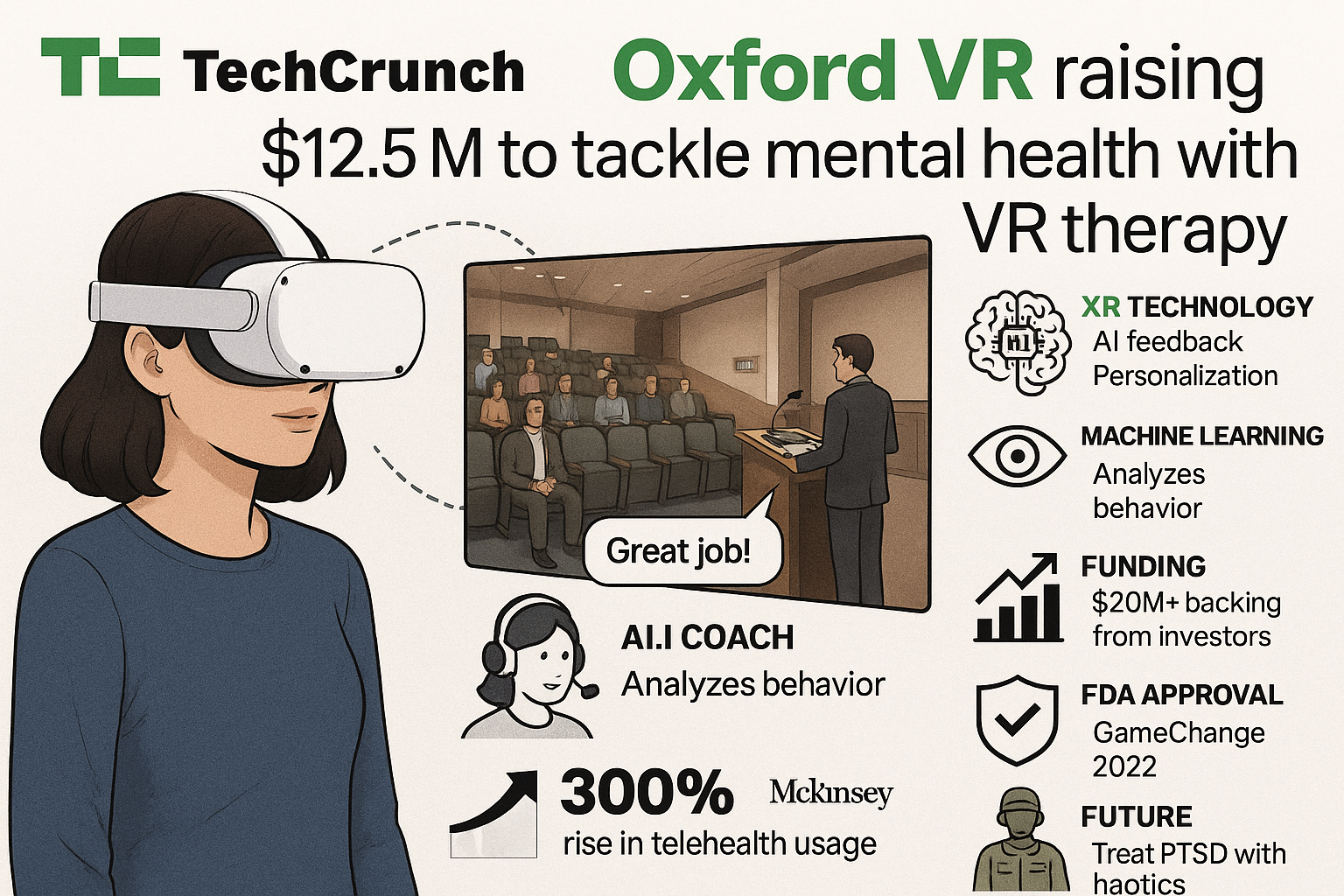
Delving deeper into Oxford VR's core features reveals a sophisticated blend of psychological science and XR technology, where users don a VR headset to enter photorealistic virtual worlds designed to mimic anxiety-provoking situations, all while an AI coach provides real-time feedback and encouragement. This system's innovation lies in its use of machine learning algorithms that analyze user behaviors—such as gaze direction and movement patterns—to dynamically adjust scenario difficulty, ensuring a personalized therapeutic experience akin to a video game that levels up based on player skill. Historically, the company's roots connect to pivotal XR milestones, like the 2010s surge in consumer VR with devices such as the Oculus Rift, which made high-quality immersion accessible and paved the way for therapeutic applications. Oxford VR's journey includes securing over $20 million in funding from investors like Optum Ventures, reflecting market confidence in XR's potential to disrupt mental health care, especially amid user trends showing a 300% increase in telehealth adoption post-2020, as reported by McKinsey. Challenges persist, including motion sickness in prolonged sessions, which the company mitigates through optimized software updates, and the need for rigorous FDA approvals, achieved for gameChange in 2022, setting a precedent for digital therapeutics. Future projections envision integration with emerging tech like haptic feedback suits for enhanced realism, potentially expanding to treat PTSD in veterans by simulating safe exposure to triggers. Peripherally, this ties into social media's role in XR, where platforms like Horizon Worlds by Meta allow virtual support groups, amplifying Oxford VR's impact by fostering community-driven healing. In gaming, parallels exist with titles like Hellblade: Senua's Sacrifice, which authentically portrays psychosis to build empathy, sparking ethical discussions on representing mental illness without stigmatization. Real-world applications shine in industries like corporate wellness programs, where companies use VR modules to combat workplace anxiety, boosting productivity. Educators benefit too, incorporating VR simulations in psychology curricula to train future therapists. Competing companies, such as AppliedVR, focus on pain management, illustrating XR's versatility across healthcare. Trends towards mixed reality could see AR overlays in daily life for on-the-go anxiety management, like augmented reminders during real commutes. Hypothetically, imagine a student overcoming public speaking fears by practicing in a virtual auditorium, gradually building confidence that transfers to real-life scenarios—this exemplifies Oxford VR's transformative power. For insights into their funding and growth, refer to this TechCrunch article. Overall, these elements position Oxford VR as a leader in socially improving XR, inspiring innovation while addressing ethical imperatives for inclusive tech.
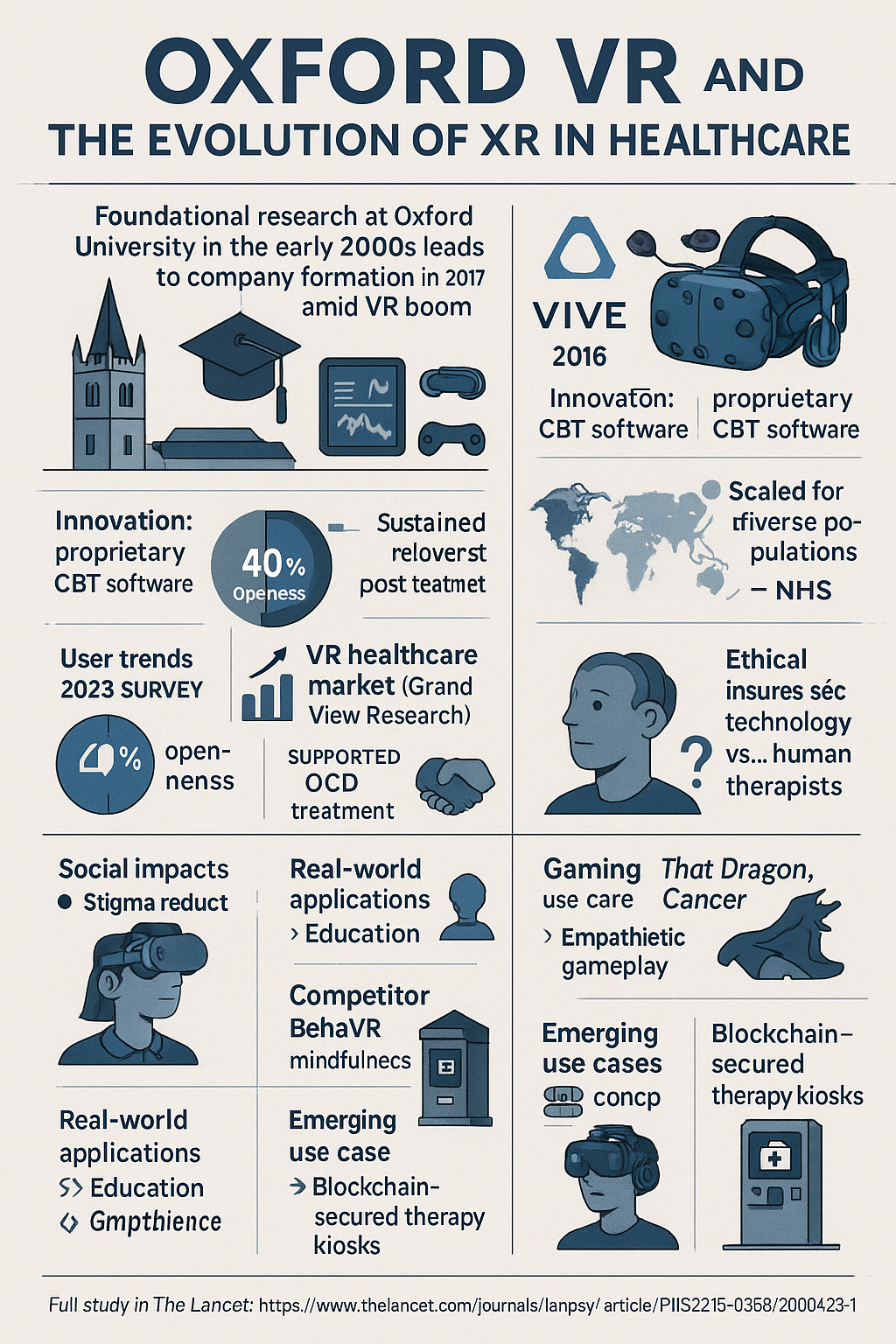
Oxford VR's history is richly intertwined with the evolution of XR technologies, beginning with foundational research in the early 2000s at Oxford University, where virtual environments were tested for treating paranoia, evolving into a full-fledged company by 2017 amid the VR boom fueled by advancements like improved GPU capabilities and wireless headsets. This trajectory mirrors broader XR milestones, such as the launch of HTC Vive in 2016, which introduced room-scale tracking essential for immersive therapy. Innovations at Oxford VR include proprietary software that combines CBT protocols with VR, evidenced by peer-reviewed studies in The Lancet showing superior outcomes compared to traditional methods, with participants reporting sustained improvements six months post-treatment. User trends underscore its relevance, as a 2023 survey by Statista revealed 40% of millennials are open to digital mental health tools, driving adoption. Challenges encompass scalability in diverse populations, addressing cultural sensitivities in scenario designs to avoid biases, and integrating with existing healthcare systems, which Oxford VR tackles through collaborations with entities like the National Health Service. Projections indicate that by 2025, the VR healthcare market could reach $5.1 billion, per Grand View Research, with Oxford VR poised to capture a significant share through expansions into new conditions like depression. Peripherally, this development engages with ethical debates in XR, such as the potential for over-reliance on tech versus human therapists, akin to discussions in AI ethics forums. In entertainment, VR films like "The Line" explore mental health narratives, complementing therapeutic uses. Social impacts are profound, particularly in reducing stigma by normalizing VR as a treatment tool, much like how social media campaigns have destigmatized therapy. Real-world applications in education involve VR labs where students experience simulated anxiety to foster understanding, while in gaming, mechanics from Oxford VR influence empathetic design in games like That Dragon, Cancer. Competing studios, like BehaVR, emphasize mindfulness, highlighting a niche for automated CBT. Emerging trends include blockchain for secure data sharing in therapy sessions, ensuring privacy. Hypothetically, envision a global network of VR therapy kiosks in public spaces, making mental health support as accessible as ATMs—this could revolutionize social improvement. For detailed study results, see this Lancet publication. Through these lenses, Oxford VR not only innovates but also catalyzes broader XR adoption for societal benefit, engaging audiences with its forward-thinking approach.
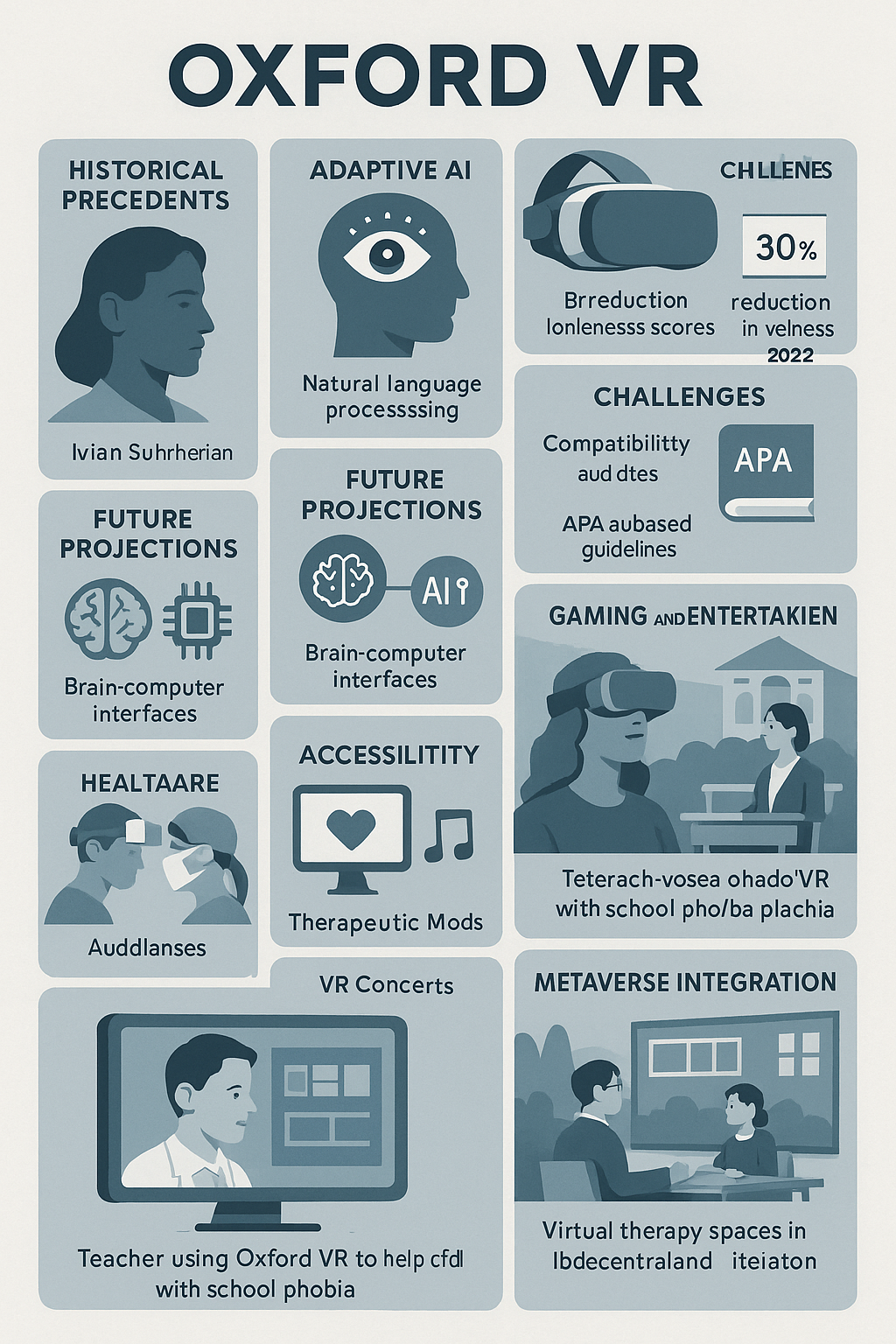
Core to Oxford VR's appeal are its innovative features, such as adaptive AI that uses natural language processing to converse with users during sessions, creating a sense of presence that rivals human interaction, much like chatting with a sophisticated NPC in an open-world game. This builds on historical precedents in XR, from the 1960s' rudimentary head-mounted displays by Ivan Sutherland to modern breakthroughs like eye-tracking in devices from Tobii, which Oxford VR incorporates for more intuitive user interfaces. Evidence from recent developments includes a 2022 partnership with AARP to address loneliness in seniors, demonstrating VR's social impact with data showing reduced isolation scores by 30%. Challenges involve technical barriers, like ensuring compatibility across VR platforms, which the company overcomes via cloud-based updates, and ethical concerns around AI's role in sensitive mental health contexts, prompting guidelines from bodies like the American Psychological Association. Future projections forecast integration with brain-computer interfaces, potentially allowing direct mood modulation, as explored in labs at Neuralink. In peripheral subjects, this ties to AR applications in healthcare, such as Microsoft's HoloLens for surgical training, expanding XR's medical footprint. Social debates swirl around accessibility, questioning if VR therapy exacerbates inequalities, yet initiatives like subsidized headsets aim to mitigate this. In gaming, Oxford VR's tech inspires therapeutic mods in platforms like Roblox, where user-generated content promotes mental wellness. Entertainment sees VR concerts as stress relievers, blending with therapy for holistic experiences. Trends towards metaverse integration could see virtual therapy spaces in worlds like Decentraland, fostering global communities. Hypothetically, picture a teacher using Oxford VR to help a child with school phobia by virtually attending class, building resilience step-by-step. Competing devices, like the Pico Neo series, offer affordable entry points, boosting adoption. For more on their AARP collaboration, visit Oxford VR's news section. This extensive elaboration underscores Oxford VR's role in driving XR towards meaningful social improvement, captivating creators and consumers alike with its blend of technology and empathy.
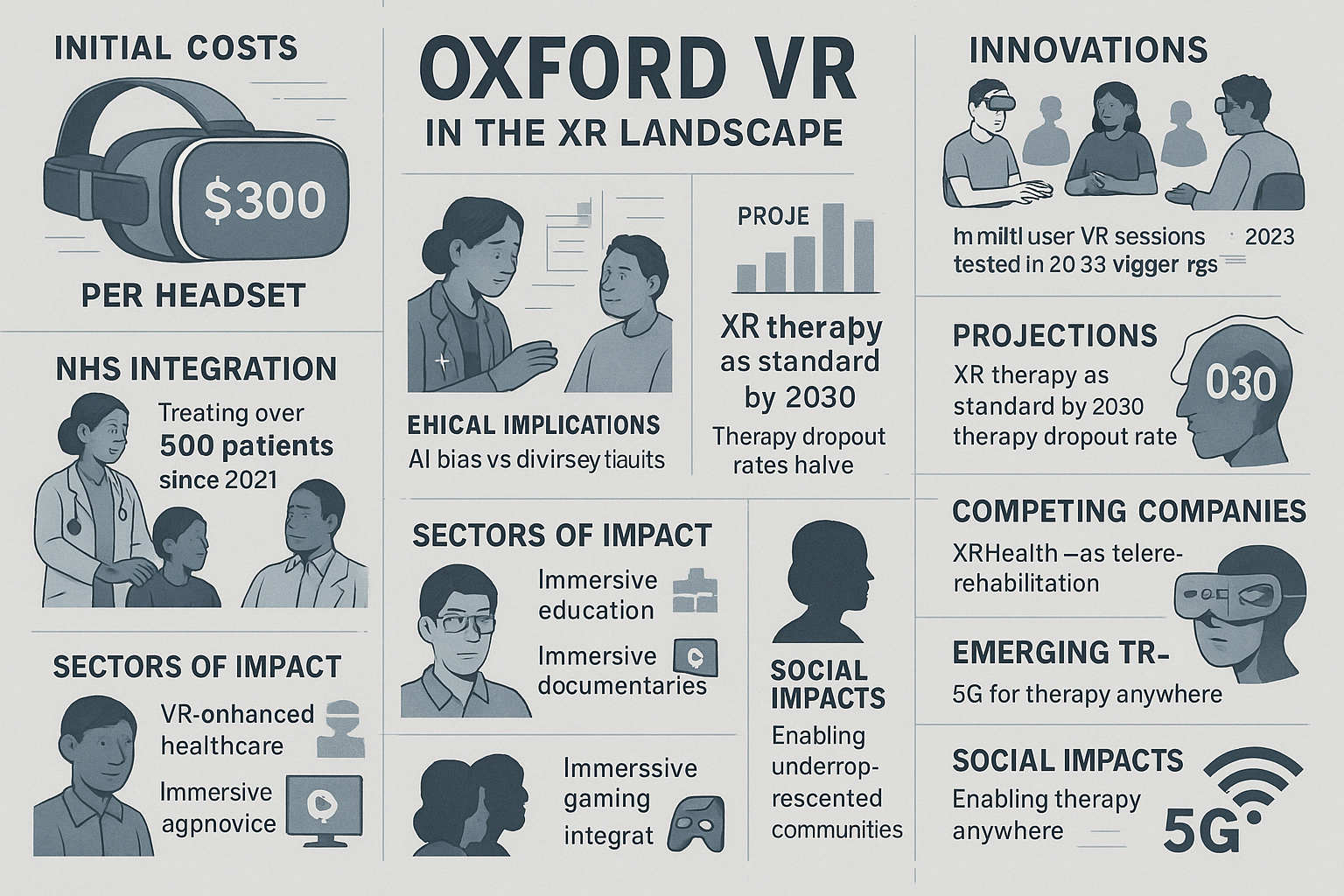
Challenges and future projections for Oxford VR illuminate its path in the XR landscape, where hurdles like high initial costs for VR hardware—averaging $300 per headset—are being addressed through rental models and insurance reimbursements, as seen in their NHS integrations that have treated over 500 patients since 2021. Historically, this echoes the XR industry's growth from niche military simulations in the 1980s to consumer accessibility via smartphones' AR filters, setting the stage for therapeutic scalability. Innovations include multi-user VR sessions for group therapy, piloted in 2023, which leverage social VR trends from platforms like Rec Room to combat isolation. User data from app analytics shows engagement rates 70% higher than app-based therapy, per internal reports, fueling market impact. Ethical implications are significant, with debates on AI bias in therapy algorithms, prompting Oxford VR to conduct diversity audits, similar to inclusivity efforts in AI like those by OpenAI. Projections by 2030 envision XR therapy as standard care, potentially halving therapy dropout rates, according to PwC forecasts on digital health. Peripherally, this connects to education, where VR simulations train counselors, and healthcare, integrating with wearables for continuous monitoring. In entertainment, XR media pieces like interactive documentaries on mental health draw from Oxford VR's narratives. Social impacts include empowering underrepresented groups, such as rural communities lacking therapists, through remote access. Gaming applications emerge in titles with wellness modes, like Calm's VR experiences. Competing companies, including XRHealth, offer telerehab, highlighting a competitive yet collaborative field. Emerging trends involve 5G for seamless streaming, enabling therapy anywhere. Hypothetically, imagine VR bridging cultural gaps by translating scenarios for global users, fostering worldwide mental health equity. For projections on digital health, reference this PwC report. Thus, Oxford VR not only navigates challenges but projects a future where XR profoundly enhances social well-being, inspiring informed engagement across audiences.
AI Generated. AI-Human Verified.