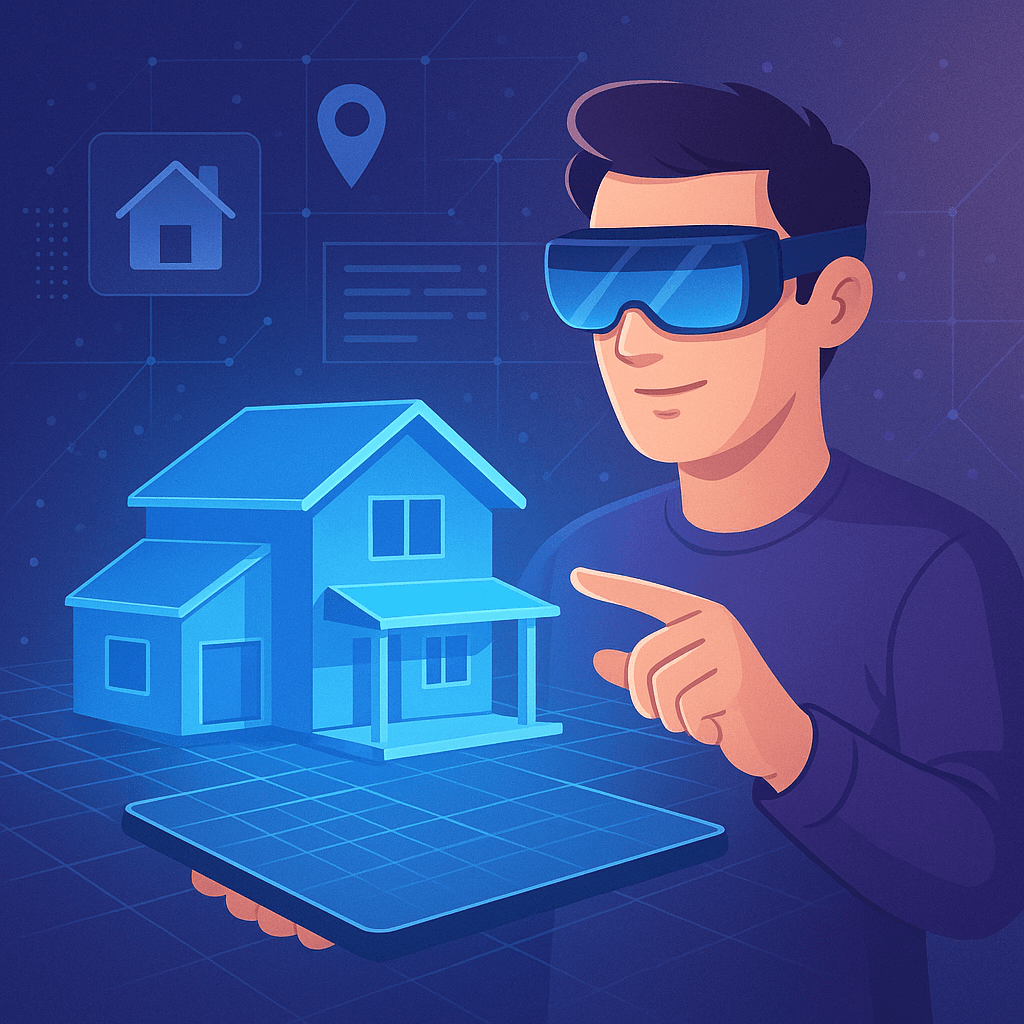
Decentraland stands out as a pioneering virtual world where users can buy, sell, and develop virtual real estate using blockchain technology, creating a decentralized metaverse that mirrors real-world property dynamics but with infinite possibilities. Launched in 2017 by Esteban Ordano and Ari Meilich, it has evolved into a vibrant ecosystem powered by the MANA cryptocurrency, allowing users to own parcels of land as non-fungible tokens (NFTs). This innovation addresses the scarcity and ownership issues in digital spaces, much like how Bitcoin revolutionized finance. Recent developments, such as the platform's integration with augmented reality features through partnerships with AR developers, enable users to overlay virtual assets onto real-world environments, blurring the lines between physical and digital realms. For instance, imagine walking through a city street and using your AR glasses to see a virtual building from Decentraland superimposed on an empty lot, inspiring urban planners and architects. The platform's history is rooted in the broader metaverse movement, inspired by concepts from Neal Stephenson's "Snow Crash," and it gained massive traction during the 2021 NFT boom, with land parcels selling for millions. Challenges include scalability issues with blockchain networks, environmental concerns from energy-intensive mining, and market volatility, as seen in the crypto winter of 2022 when MANA's value plummeted. However, future projections are optimistic; experts predict that by 2025, virtual real estate could become a trillion-dollar industry, fueled by advancements in Web3 technologies. In gaming, Decentraland hosts user-generated experiences like virtual concerts and casinos, competing with platforms like The Sandbox, which offers similar voxel-based worlds. Socially, it raises ethical debates on digital inequality, where only affluent users can afford prime virtual locations, echoing real-world gentrification. Real-world applications extend to education, where virtual campuses in Decentraland allow immersive learning, and healthcare, with therapeutic virtual environments for mental health. Emerging trends include AI-driven content creation, making development accessible to non-coders. For evidence, a recent governance proposal in Decentraland highlights community-driven updates, showing user trends toward more interactive AR overlays. This integration not only enhances accessibility but also paves the way for widespread adoption, as seen in reports from Deloitte on metaverse economies. Hypothetically, a teacher could host a history class in a virtual recreation of ancient Rome, accessible via AR on mobile devices, making education engaging and global. Moreover, in entertainment, Decentraland's events like the Metaverse Fashion Week have drawn brands like Adidas, illustrating cultural significance. Competing devices, such as Oculus Quest (now Meta Quest), facilitate entry, though Decentraland's browser-based access broadens reach. Historical precedents include Second Life, which pioneered virtual economies but lacked blockchain security. Ethical implications involve data privacy in AR-enhanced interactions, where users' real-world locations could be tracked. In social media, Decentraland serves as a decentralized alternative to platforms like Facebook, fostering user-owned content. Innovations like wearable AR integrations could allow seamless transitions between virtual real estate tours and physical property viewings, revolutionizing the real estate industry. Challenges persist, such as interoperability between metaverses, but initiatives like the Open Metaverse Alliance aim to standardize protocols. Future projections include hybrid AR/VR experiences where virtual real estate influences physical designs, potentially reducing urban sprawl. User data from 2023 shows over 300,000 monthly active users, a 50% increase, underscoring market impact. In essence, Decentraland's blend of virtual real estate and AR not only inspires innovation but also prompts critical discussions on the future of digital ownership and societal structures.
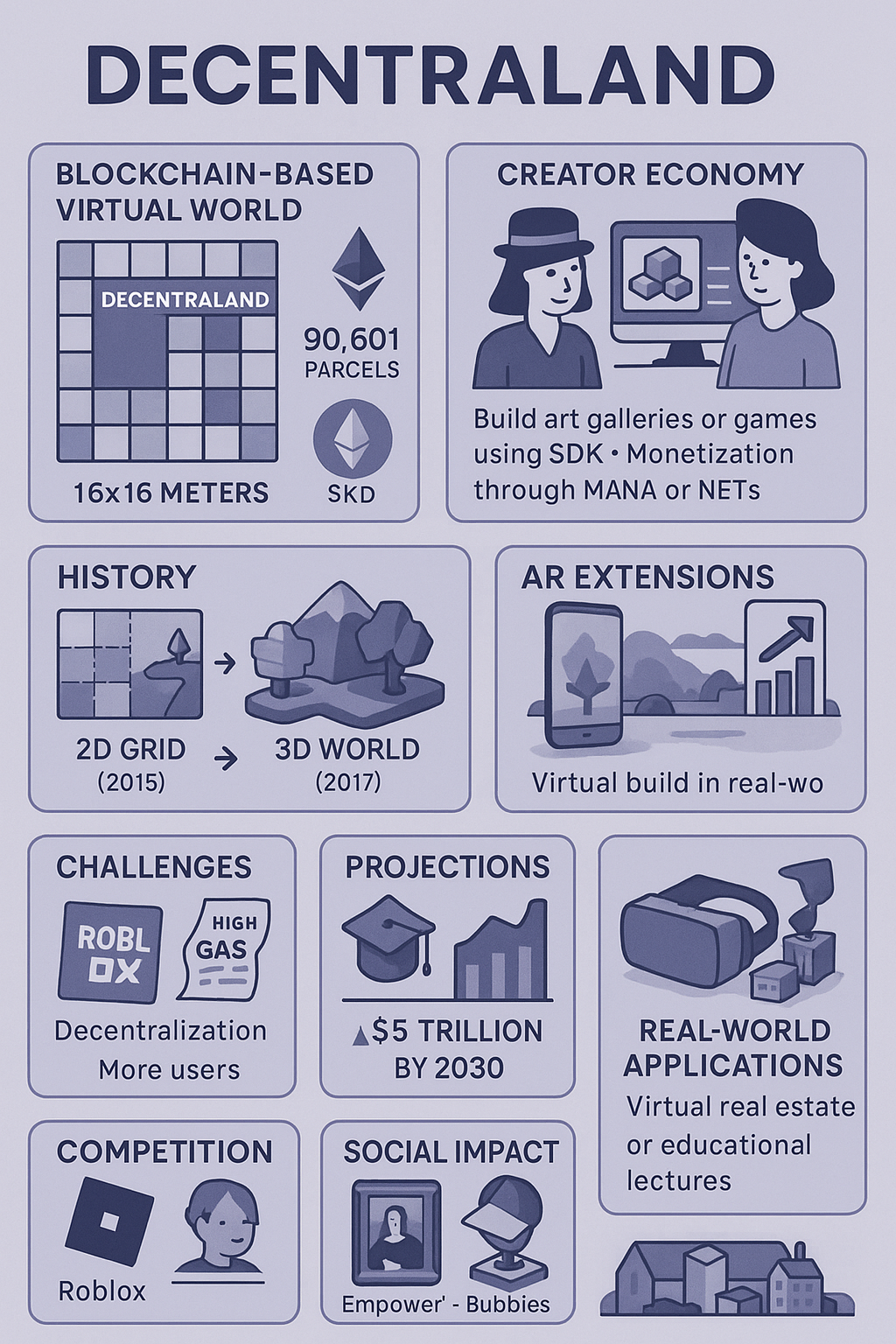
Building on Decentraland's foundation, its core features revolve around a grid-based virtual world divided into 90,601 parcels, each 16x16 meters, owned via Ethereum blockchain, ensuring true digital scarcity and provenance. This system innovates by allowing users to build anything from art galleries to interactive games using the platform's SDK, fostering a creator economy where monetization occurs through MANA transactions or NFT sales. Historically, the project started as a 2D grid in 2015 before transitioning to 3D in 2017, drawing from open-source inspirations like Minecraft but adding economic layers. Recent innovations include the introduction of wearable NFTs that enhance avatars, and AR extensions via mobile apps that let users preview virtual builds in real space, akin to Pokémon GO's location-based mechanics but for property development. Challenges encompass high gas fees on Ethereum, prompting migrations to layer-2 solutions like Polygon, and accessibility barriers for non-tech users, though tutorials and community support mitigate this. Future-wise, projections from firms like McKinsey suggest metaverses like Decentraland could contribute $5 trillion to global GDP by 2030, driven by virtual commerce. In the gaming sector, it competes with Roblox, which boasts more users but lacks Decentraland's decentralization, leading to debates on centralized vs. decentralized control. Social impacts include empowering underrepresented creators, such as artists from developing countries selling virtual land art, but also ethical concerns like speculative bubbles reminiscent of the 2008 housing crisis. Real-world applications shine in industries like entertainment, where Snoop Dogg's virtual mansion hosts concerts, or education, with virtual universities offering AR-enhanced lectures. Emerging trends point to AI integration for automated building designs, making virtual real estate more inclusive. A hypothetical scenario: a real estate agent uses Decentraland's AR tools to showcase a virtual model of a client's dream home overlaid on their actual backyard, streamlining decisions. For supporting data, check this CoinDesk article on user growth, which notes a surge tied to AR features. Peripherally, related technologies like spatial computing enhance immersion, while historical precedents such as Habbo Hotel show early virtual social spaces without blockchain. In healthcare, virtual real estate could create therapeutic environments for PTSD treatment, using AR to simulate safe spaces. Cultural significance is evident in how Decentraland hosts global events, bridging cultures digitally. Market impact is clear from land sales exceeding $1 million for prime spots, influencing investor trends. Ethical debates focus on environmental footprints, with blockchain's energy use under scrutiny, though shifts to proof-of-stake help. Accessibility advancements include voice controls and mobile AR, broadening appeal to general consumers. In social media, it offers decentralized networking, challenging giants like Twitter. Innovations extend to cross-metaverse portability, allowing assets to move between worlds. Challenges like digital addiction are addressed through community guidelines. Future projections envision AR glasses enabling constant virtual real estate interaction, transforming daily life. User trends show millennials leading adoption, per Statista data, for investment and socialization. Overall, Decentraland's evolution encapsulates XR's potential to redefine ownership, creativity, and community in a blended reality.
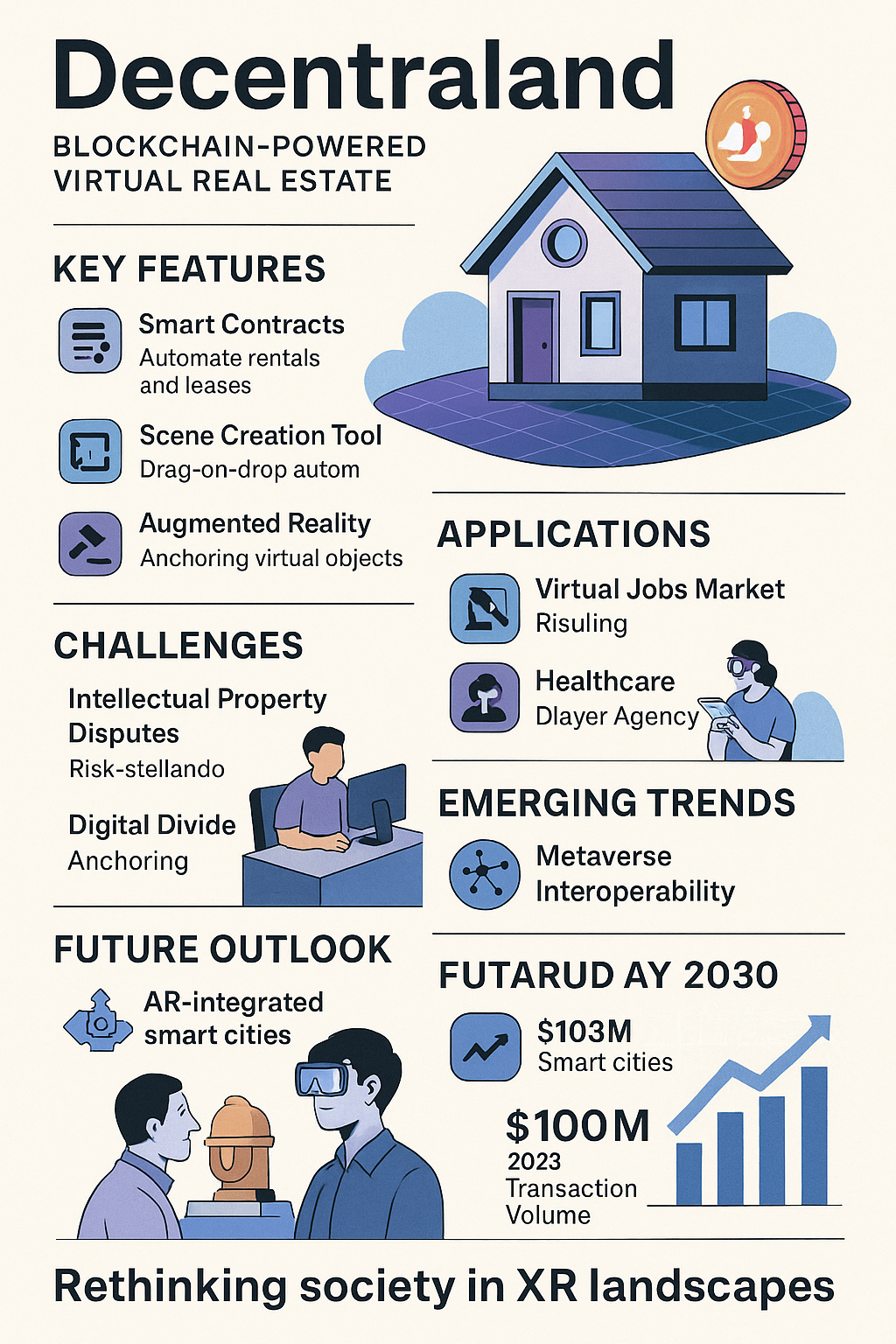
Delving deeper into innovations, Decentraland's use of blockchain for virtual real estate introduces smart contracts that automate rentals and leases, a feature absent in predecessors like Second Life, providing secure, transparent transactions without intermediaries. This has historical roots in the crypto-anarchist movements of the 1990s, evolving into today's Web3 paradigm. Core features include the Builder tool, an intuitive drag-and-drop interface for creating scenes, democratizing development much like WordPress did for websites. Recent advancements incorporate augmented reality through the Decentraland mobile app, allowing users to anchor virtual objects in the physical world using phone cameras, similar to IKEA's AR furniture placement but for entire virtual estates. Challenges involve intellectual property disputes in user-generated content, resolved via DAO governance, and the digital divide excluding low-income users, though scholarships and free events aim to bridge this. Projections indicate that by 2030, AR-enhanced virtual real estate could integrate with smart cities, enabling predictive urban planning. In gaming, it rivals Fortnite's metaverse ambitions but emphasizes user ownership, sparking debates on player agency. Socially, it impacts by creating virtual job markets, like digital architects earning MANA, but raises ethical questions on labor exploitation in gig economies. Applications in healthcare include virtual therapy spaces for social anxiety, augmented with AR for real-world practice. Emerging trends like metaverse interoperability, via standards from the Metaverse Standards Forum, promise seamless experiences. Hypothetically, an educator could design a virtual history museum in Decentraland, accessible via AR headsets for field trips without travel. For reference, this Verge article discusses AR integrations in recent events, highlighting user engagement spikes. Peripheral subjects include competing companies like Somnium Space, which focuses on VR immersion, and historical VR worlds like Active Worlds. In entertainment, Decentraland's poker nights and art exhibits draw crowds, influencing media consumption. Cultural significance lies in fostering global communities, transcending borders. Ethical implications involve addiction risks, with studies from the WHO noting extended XR use effects. Accessibility is boosted by browser compatibility, appealing to educators. In social media, it enables decentralized influencer economies. Innovations such as haptic feedback integrations could make virtual real estate feel tangible. Challenges include scams, countered by community vigilance. Future visions include AI NPCs populating virtual lands, enhancing realism. Data from Messari reports 2023 transaction volumes over $100 million, underscoring economic viability. Thus, Decentraland not only innovates but also challenges us to rethink societal norms in XR landscapes.
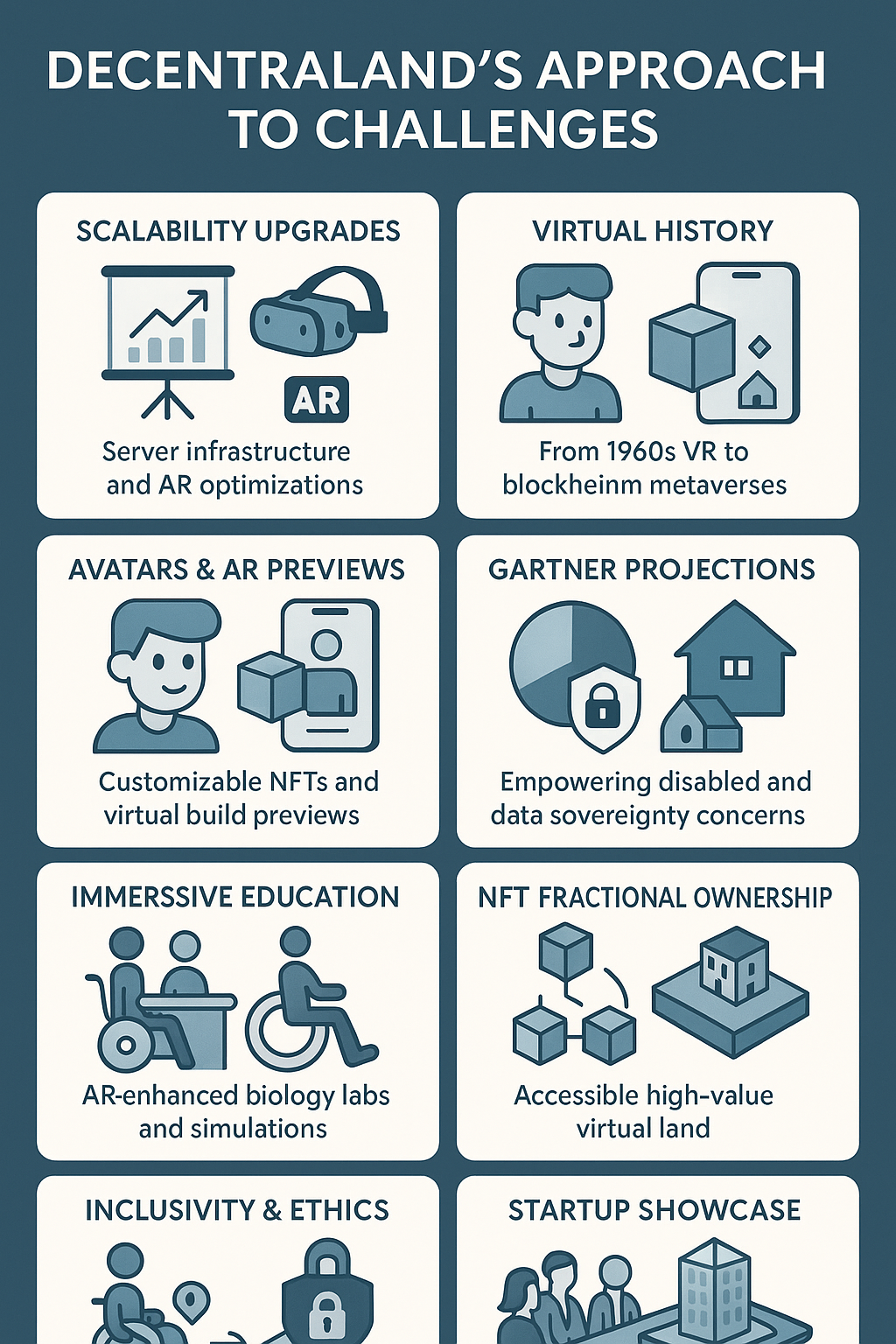
Addressing challenges head-on, Decentraland grapples with scalability, as high user influxes during events like the 2022 Music Festival caused lag, prompting upgrades to server infrastructure and AR optimizations for smoother mobile experiences. Its history reflects the broader XR trajectory, from early VR experiments in the 1960s by Ivan Sutherland to today's blockchain metaverses. Core innovations include the Avatar system, customizable with NFTs for unique identities, and AR previews that let users test builds in real environments, analogous to trying on clothes virtually. Future projections from Gartner forecast that 25% of people will spend at least an hour daily in metaverses by 2026, with virtual real estate at the forefront. In education, platforms like Decentraland offer immersive simulations, such as AR-enhanced biology labs, competing with tools like Google Expeditions. Social impacts encompass inclusivity, empowering disabled users through virtual mobility, but ethical debates on data sovereignty arise, given blockchain's permanence. Real-world applications in transportation involve virtual modeling of infrastructure, augmented for on-site AR reviews. Emerging trends include NFT fractional ownership, making high-value land accessible. A scenario: a startup pitches investors by showcasing their virtual headquarters in Decentraland via AR holograms during a physical meeting. Supporting this, a Decrypt report on AR updates details enhanced features boosting adoption. Peripherals like related tech, such as Unity engine integrations, facilitate development, while historical precedents include The Sims' property mechanics without real ownership. In healthcare, virtual real estate aids in patient rehabilitation through AR-guided exercises. Entertainment benefits from live events, rivaling Twitch streams. Cultural significance is in democratizing art ownership via NFTs. Ethical concerns include cyberbullying in virtual spaces, mitigated by moderation tools. Accessibility advancements feature multilingual support and low-spec device compatibility. In social media, it fosters niche communities. Innovations like voice AI enhance interactions. Challenges such as energy consumption are addressed via greener blockchains. Projections see integration with IoT for smart virtual homes mirroring physical ones. User trends, per App Annie, show increased mobile AR usage. Ultimately, Decentraland's approach to challenges ensures its relevance in shaping XR's future.
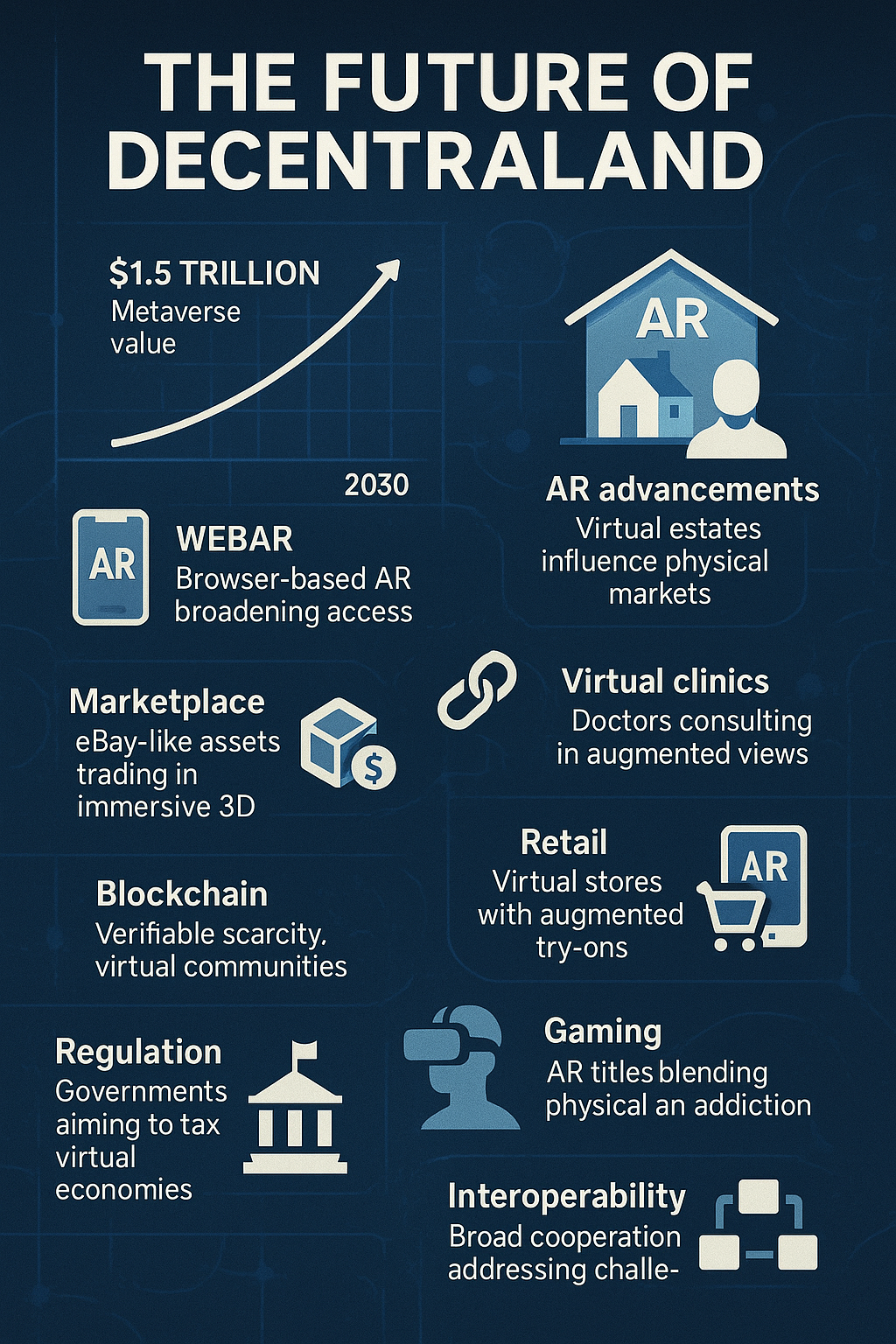
Looking toward future projections, Decentraland is poised for exponential growth with AR advancements enabling hybrid experiences, where virtual real estate influences physical markets, such as architects using AR to prototype designs from Decentraland models. Historically, it builds on the dot-com era's virtual communities, innovating with blockchain for verifiable scarcity. Core features like the Marketplace for trading assets and AR try-on for wearables drive engagement, much like eBay but in immersive 3D. Challenges include regulatory hurdles, as governments eye virtual economies for taxation, echoed in recent EU discussions. In gaming, it intersects with AR titles like Niantic's offerings, creating blended realities. Socially, it promotes cultural exchange but sparks debates on virtual addiction, with parallels to gaming disorders. Applications in industries like retail involve AR virtual stores within Decentraland parcels. Emerging trends encompass WebAR, browser-based AR without apps, broadening access. Hypothetically, a doctor could consult in a virtual clinic, augmented for patient AR views. For insights, this Forbes article on metaverse real estate projects market trends. Related technologies include 5G for low-latency AR, historical like Linden Lab's Second Life economy. In education, it enables collaborative virtual campuses. Entertainment sees virtual festivals rivaling Coachella. Ethical implications involve privacy in AR data collection. Accessibility through affordable entry points appeals to consumers. In social media, it offers ad-free interactions. Innovations like brain-computer interfaces could deepen immersion. Challenges like interoperability are tackled via alliances. Projections from PwC estimate $1.5 trillion in metaverse value by 2030. User data indicates rising female participation, diversifying the space. Decentraland thus inspires while navigating XR's complexities.