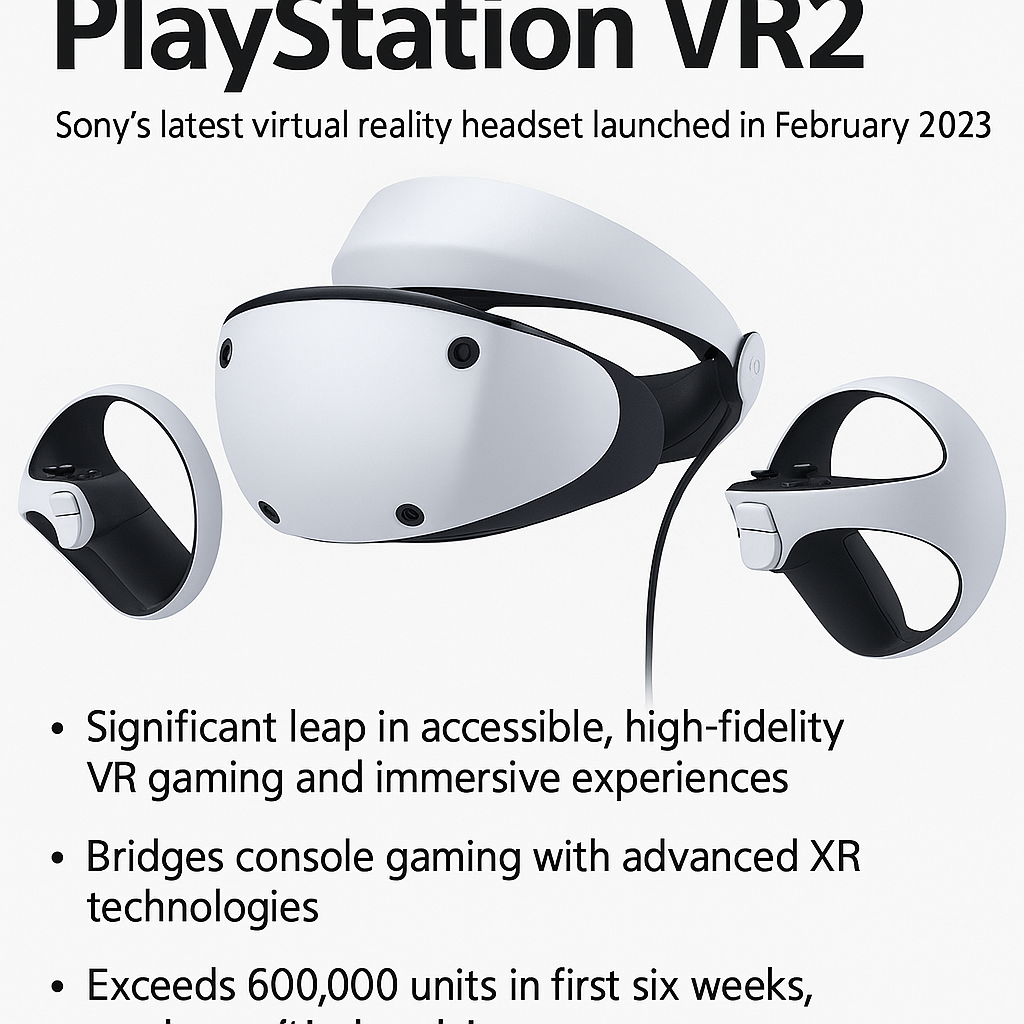
The single most relevant development in the XR field for today's tech-savvy audience is the PlayStation VR2 (PSVR2), Sony's latest virtual reality headset launched in February 2023. It's particularly pertinent because it represents a significant leap in accessible, high-fidelity VR gaming and immersive experiences, bridging console gaming with advanced XR technologies amid growing interest in metaverse-like environments and real-world applications, as evidenced by its strong sales figures exceeding 600,000 units in the first six weeks and critical acclaim for pushing boundaries in interactive storytelling and social VR interactions.
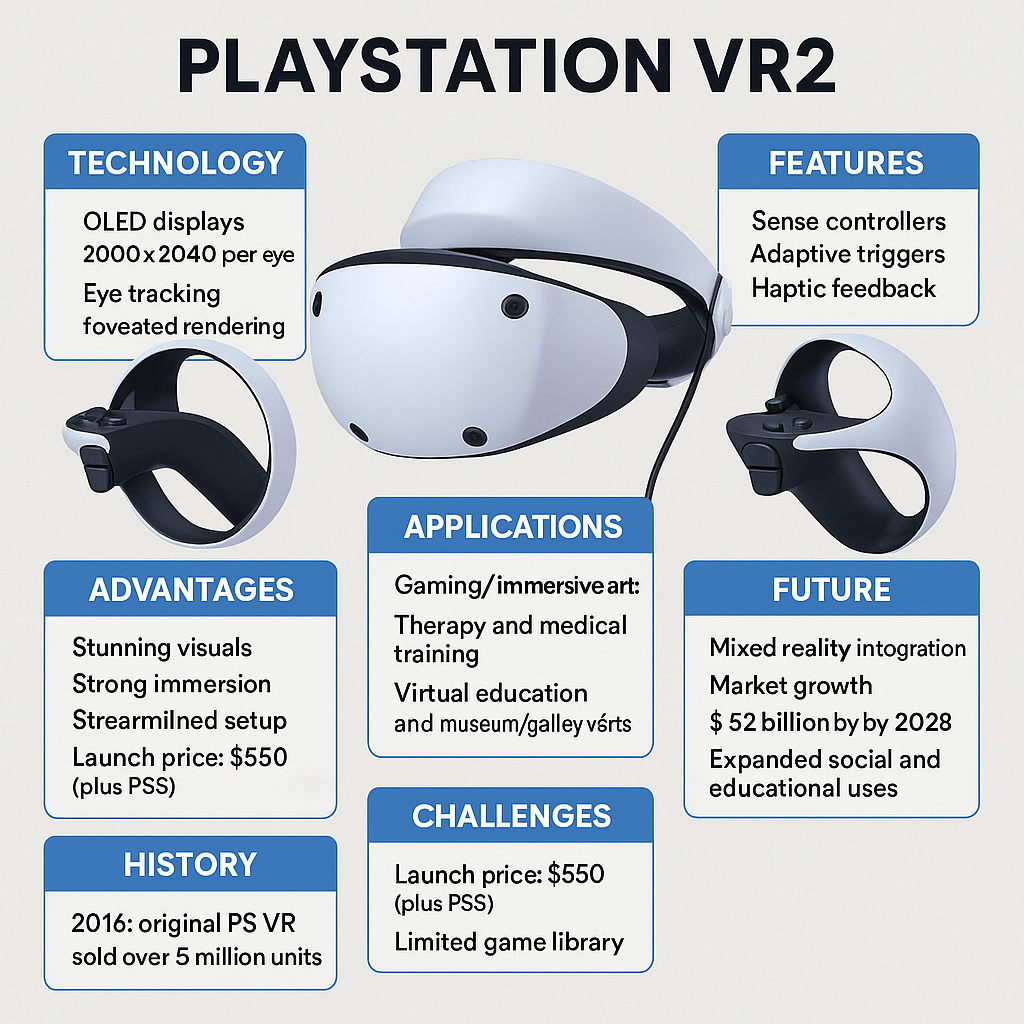
The PlayStation VR2 stands out in the XR landscape due to its integration of cutting-edge hardware that enhances immersion in ways that resonate with both gamers and creators exploring immersive digital artforms. At its core, the PSVR2 features OLED displays with a resolution of 2000x2040 per eye, delivering stunning visuals that make virtual worlds feel tangible, much like stepping into a living painting. This is complemented by eye-tracking technology, which allows for foveated rendering—optimizing graphics where the user is looking—to reduce processing demands while maintaining high quality, a breakthrough that echoes advancements in real-world applications like medical training simulations where precision is key. The Sense controllers, with adaptive triggers and haptic feedback, provide tactile responses that mimic real sensations, such as the pull of a bowstring in a game like Horizon Call of the Mountain, fostering a deeper emotional connection akin to interactive theater. Historically, Sony built on the original PSVR from 2016, which sold over 5 million units and popularized VR in homes, but PSVR2 addresses past limitations like wired setups by introducing a single-cable connection to the PS5, streamlining user experience. Innovations include inside-out tracking via four built-in cameras, eliminating the need for external sensors, which democratizes access for educators using VR for virtual field trips or artists crafting digital sculptures. Challenges persist, such as the high entry cost of around $550 plus the required PS5, potentially limiting widespread adoption, and software library growth, with only about 100 compatible titles at launch, though updates have expanded this. Looking ahead, projections suggest PSVR2 could evolve into mixed reality with future firmware updates, blending virtual elements with real environments, much like AR applications in healthcare for surgical planning. This ties into broader trends, where competitors like HTC Vive Focus 3 offer enterprise solutions, but PSVR2's consumer focus inspires innovation in social media, with users sharing VR clips on platforms like TikTok, sparking debates on digital ethics, such as data privacy in eye-tracked experiences. In gaming, it excels with titles that double as artforms, like the rhythmic beats of Beat Saber reimagined in VR, or narrative-driven adventures that explore psychological depths, drawing parallels to historical precedents like the 1990s VR arcades that failed due to tech constraints but now thrive. Real-world applications extend to therapy, where PSVR2's immersion aids PTSD treatment through controlled exposures, supported by studies from institutions like the University of Southern California. Ethically, there's discussion on addiction risks, with experts like those from the American Psychological Association highlighting balanced use. Imagine a student in a remote area donning PSVR2 to dissect a virtual frog, or an artist collaborating in a shared VR space to create murals that react to viewer gaze— these scenarios illustrate its potential for widespread adoption. As XR intersects with AI, future updates might incorporate generative content, allowing dynamic worlds that adapt to user emotions, challenging traditional media. In entertainment, PSVR2 revives concert experiences, virtually attending live events, while in education, it simulates historical events, making learning interactive. Competitors push boundaries too; for instance, Valve's Index offers finger tracking, but PSVR2's ecosystem integration with PlayStation Network fosters community-driven content. Social impacts include bridging generational gaps, with families engaging in cooperative VR games, though accessibility advancements are needed for those with disabilities, like improved motion controls. Emerging trends point to hybrid XR, where PSVR2 could link with AR glasses for seamless transitions, enhancing productivity in fields like architecture for 3D modeling. Data from Statista indicates VR market growth to $52 billion by 2028, with gaming leading, underscoring PSVR2's market impact. User trends show increased adoption among millennials for escapism post-pandemic, inspiring creators to experiment with VR filmmaking. Overall, PSVR2 not only refines VR's technical prowess but also catalyzes cultural shifts towards immersive storytelling, positioning it as a cornerstone for future XR innovations that blend fantasy with reality in profound ways.
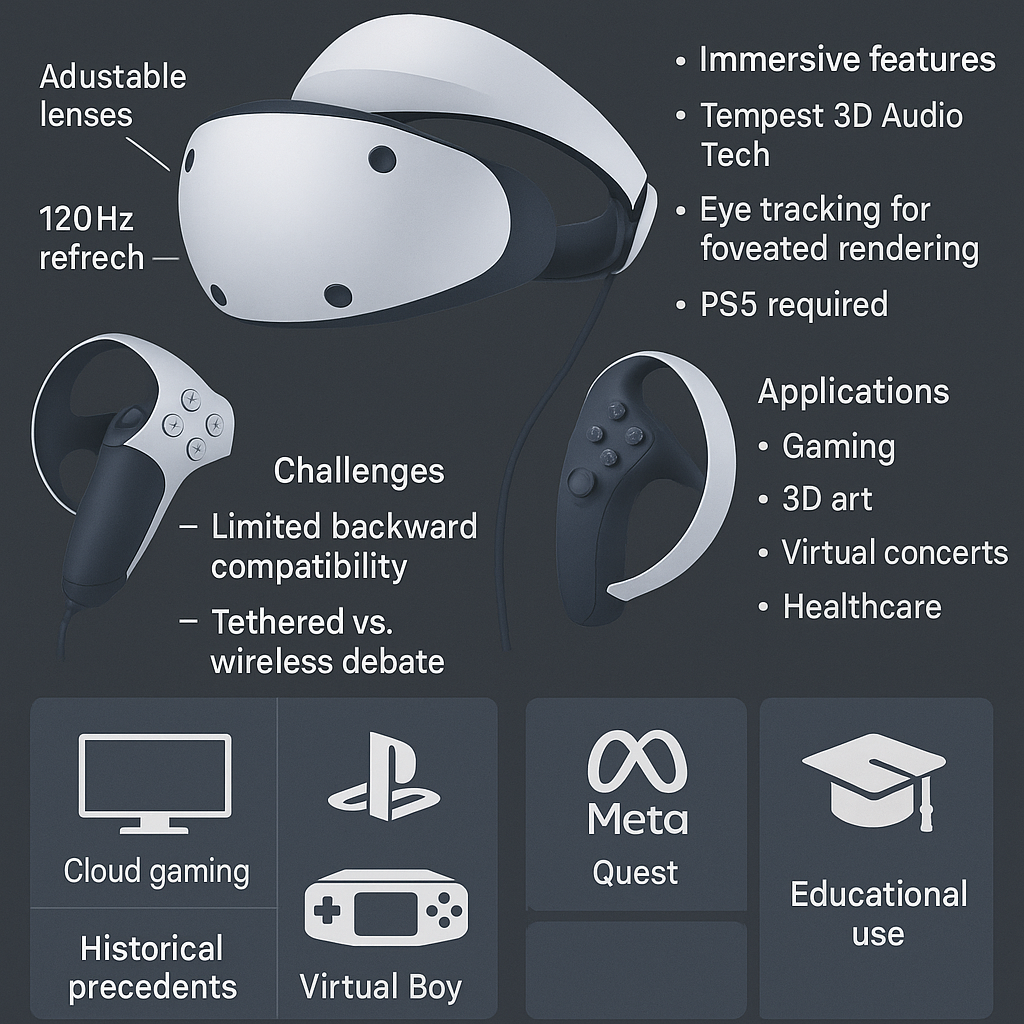
Delving deeper into the history of PSVR2 reveals a lineage rooted in Sony's longstanding commitment to interactive entertainment, evolving from early experiments in the 1990s with prototypes like the Glasstron head-mounted displays to the 2016 PSVR that brought VR to mainstream consoles. This progression mirrors the broader XR field's maturation, where initial hype around devices like the Oculus Rift in 2012 gave way to practical innovations addressing motion sickness and usability—issues PSVR2 mitigates with its 120Hz refresh rate and advanced IMU sensors for smoother tracking. Core features shine in immersive digital artforms, such as the headset's Tempest 3D AudioTech, which spatializes sound to create auditory illusions, enhancing experiences like virtual art galleries where users can "hear" echoes off digital walls, akin to real-world acoustics in museums. Innovations extend to its foveated rendering, powered by Tobii eye-tracking, which not only boosts performance but enables gaze-based interactions, revolutionary for applications in social media where avatars respond to eye contact, fostering more authentic virtual connections. Challenges include the ecosystem's dependency on the PS5, creating a barrier for non-console owners, and limited backward compatibility with original PSVR games, though Sony has promised expansions. Future projections envision PSVR2 integrating with cloud gaming via PlayStation Plus, allowing streaming of XR content without high-end hardware, potentially revolutionizing accessibility in education for underfunded schools. Peripheral subjects enrich this narrative; for example, competing companies like Meta with their Quest series (though specific models are notable separately) emphasize standalone VR, but PSVR2's tethered power delivers superior graphics, influencing debates on tethered vs. wireless ethics in terms of environmental impact from battery production. Historical precedents, such as Nintendo's Virtual Boy failure in 1995 due to poor ergonomics, underscore PSVR2's ergonomic design with adjustable lenses and lightweight build at 560 grams. In real-world applications, healthcare leverages similar tech for pain management, with VR distractions reducing perceived pain by up to 24% according to NCBI studies, and PSVR2's precision could enhance this. Social impacts involve ethical implications, like the digital divide where affluent users access premium experiences, prompting calls for subsidized XR in public libraries. Gaming applications are vast, with PSVR2 supporting titles that blend art and interactivity, such as Moss: Book II, where players manipulate environments like puppeteers, inspiring creators in digital art. Entertainment sees VR concerts, imagining a hypothetical scenario where a band performs in a shared virtual space, fans interacting via haptic suits. Emerging trends include XR's role in metaverses, with PSVR2 potentially linking to platforms like Decentraland for persistent worlds. User trends from Reddit communities show enthusiasm for modding, extending device longevity. In innovation, PSVR2's HDR support paints vibrant colors, crucial for artforms mimicking real light behaviors. Challenges like VR fatigue are addressed with comfort features, but future iterations might incorporate biofeedback for health monitoring. Analogies abound: just as smartphones democratized photography, PSVR2 could do the same for 3D content creation. In education, virtual labs simulate dangerous experiments safely, while in social media, live VR streaming creates new influencer paradigms. Market impact is evident with Sony's stock boosts post-launch, and cultural significance lies in diversifying narratives, with indie developers using PSVR2 for stories on mental health. Ethical debates question immersion's psychological effects, with experts advocating guidelines. Hypothetically, a therapist using PSVR2 for exposure therapy could tailor scenarios in real-time, blending AR elements for hybrid sessions. Peripherally, technologies like hand-tracking in rivals push Sony to innovate, and historical VR in aviation training informs modern uses. Overall, PSVR2's trajectory promises a future where XR blurs lines between digital and physical, enriching societal fabrics through inspired, practical engagements.
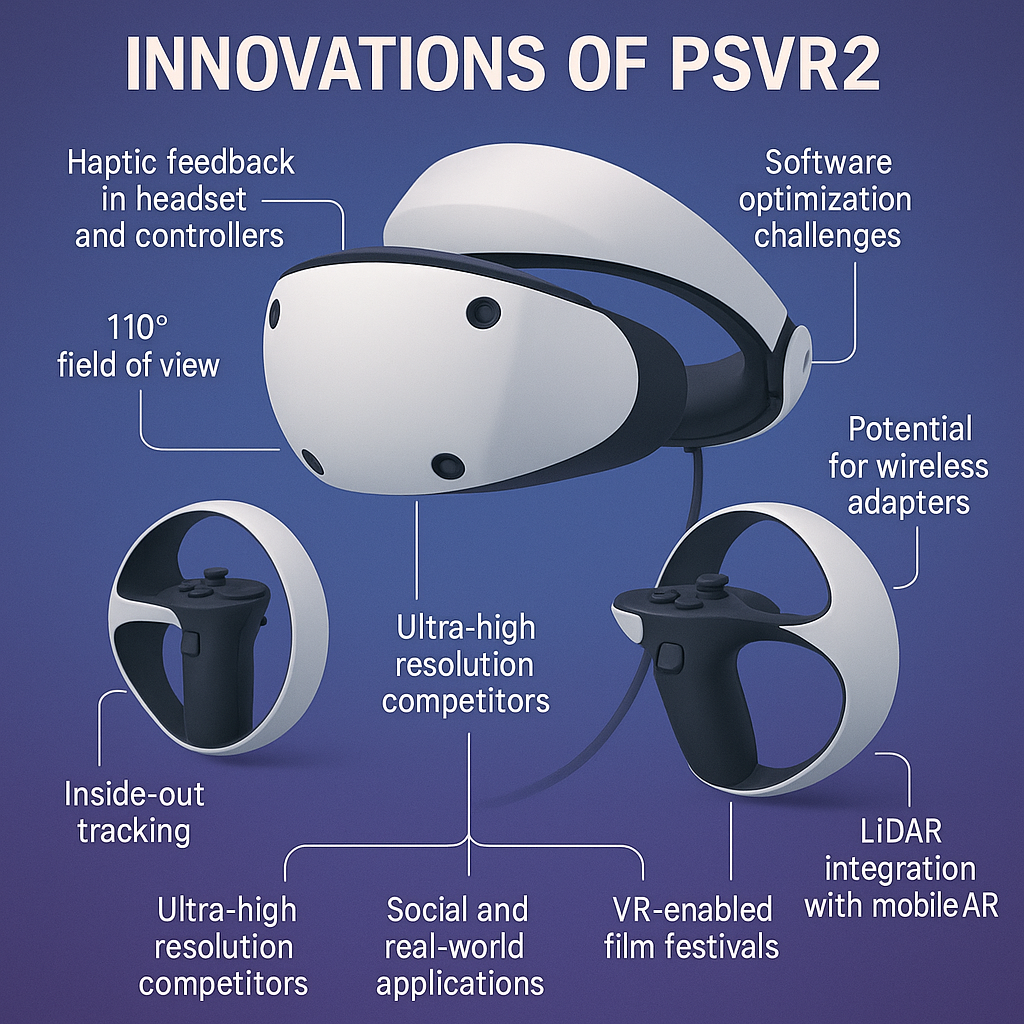
Exploring the innovations of PSVR2 highlights its role in advancing haptic technology, where the headset itself includes motors for subtle vibrations, syncing with controllers to simulate textures—like feeling raindrops in a virtual storm—elevating immersive digital artforms to sensory symphonies. This builds on core features like its 110-degree field of view, wider than predecessors, offering peripheral vision that mimics human sight, crucial for real-world applications in training simulations, such as driving or flight schools where spatial awareness prevents accidents. History shows Sony's pivot from the original PSVR's external camera dependency to PSVR2's self-contained tracking, a response to user feedback and tech evolution since the 2010s VR resurgence. Challenges encompass software optimization, with some games experiencing frame drops, but firmware updates have improved stability, projecting towards seamless integration with next-gen consoles. Future outlooks include potential wireless adapters, freeing users for untethered exploration, which could transform social VR into dynamic, location-based experiences. Incorporating peripherals, related technologies like LiDAR scanning in mobile AR (seen in apps like Pokémon GO) complement PSVR2 by allowing scanned real objects into virtual spaces, enhancing creativity for educators designing custom lessons. Competing devices, such as the Pimax Crystal with its ultra-high resolution, challenge PSVR2's market share, but Sony's exclusive titles provide a unique draw. Historical precedents include the 1980s Sensorama machine, an early multisensory simulator, foreshadowing PSVR2's holistic approach. Social debates rage on VR's isolation effects, with studies from Frontiers in Psychology suggesting moderated use promotes empathy through perspective-taking games. In gaming, PSVR2 shines with adaptive difficulty via eye-tracking, personalizing experiences like puzzle-solving in The Room VR, analogous to choose-your-own-adventure books come to life. Real-world applications in healthcare involve rehabilitation, where patients regain mobility through gamified exercises, backed by data showing improved outcomes. Ethical implications include content moderation in user-generated worlds, preventing harassment. Accessibility advancements, like voice commands, broaden appeal to disabled users. Emerging trends point to AI companions in VR, generating art collaboratively, as in a scenario where an artist sketches with an AI that anticipates strokes. Cultural significance is seen in VR film festivals, where PSVR2 enables home viewing of 360-degree narratives. Market impact includes boosting PS5 sales, with analysts predicting XR contributions to Sony's revenue growth. User trends reveal a surge in VR fitness apps, blending exercise with entertainment. In education, PSVR2 facilitates virtual dissections, reducing animal use ethically. Entertainment expands to immersive theater, imagining audience-voted plot twists. Challenges like high power consumption spark sustainability discussions, with future eco-friendly materials projected. Analogies: PSVR2 is like a portal gun from sci-fi, transporting users instantly. In social media, sharing VR moments creates new content forms. Peripherally, brain-computer interfaces like Neuralink could integrate, enabling thought-controlled navigation. Historical VR in military training informs civilian adaptations. Overall, PSVR2's innovations not only tackle current hurdles but propel XR towards a future of enriched, multifaceted interactions across industries, inspiring a generation to rethink reality's boundaries.
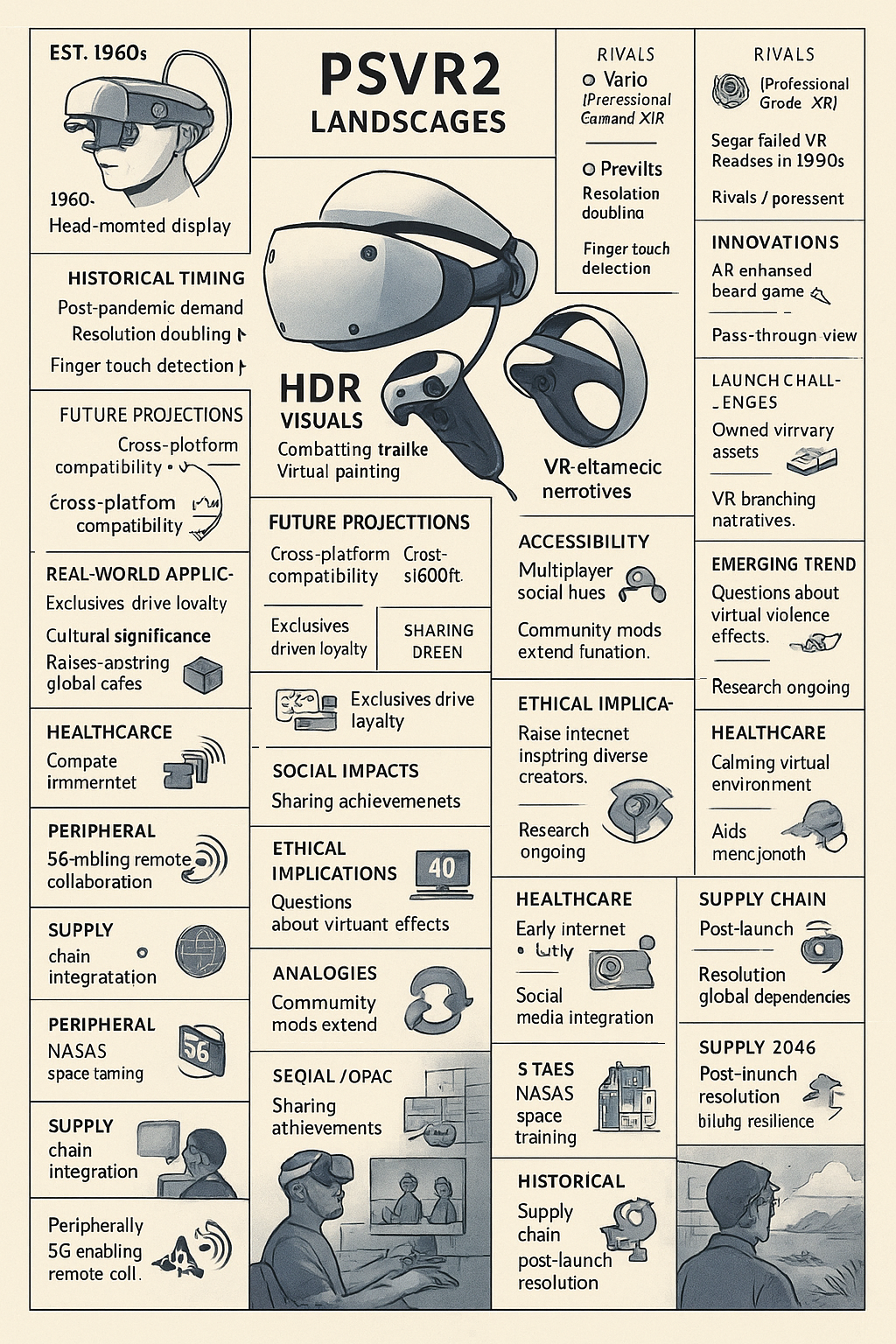
The challenges facing PSVR2 are multifaceted, yet they underscore its potential for growth in the XR ecosystem, particularly in overcoming barriers to entry that have plagued VR since its inception in the 1960s with Ivan Sutherland's head-mounted display. Core features like its high dynamic range (HDR) visuals combat common issues like screen door effect, providing crystal-clear imagery that supports immersive digital artforms, such as virtual painting sessions where colors pop with lifelike vibrancy. History reveals Sony's strategic timing, launching amid post-pandemic demand for home entertainment, building on the original PSVR's 4K limitations by doubling resolution and adding features like finger-touch detection on controllers for nuanced gestures. Innovations in pass-through view allow glimpses of the real world without removing the headset, a boon for mixed reality applications blending digital overlays with physical environments, like AR-enhanced board games. However, challenges include a relatively sparse launch library, with developers citing high production costs, though Sony's investments in studios like Firesprite are addressing this, projecting a robust 2024 lineup. Future projections anticipate cross-platform compatibility, potentially linking with PC VR for expanded access. Peripheral contexts include competing companies like Varjo (focusing on professional-grade XR) highlighting PSVR2's consumer orientation, while historical precedents such as Sega's failed VR headset in the 1990s teach lessons in market readiness. Social impacts involve ethical debates on screen time, with organizations like the World Health Organization advising limits, yet PSVR2's active gameplay counters sedentary concerns. In real-world applications, education benefits from simulations like historical reenactments, fostering empathy, as in a hypothetical class virtually experiencing the Renaissance. Gaming innovations shine in multiplayer modes, creating social hubs akin to digital cafes. Entertainment sees VR as a new medium for storytelling, with branching narratives. Accessibility is challenged by motion sickness, but features like teleportation locomotion mitigate it. Emerging trends include blockchain integration for owned virtual assets, enhancing art ownership. User data from forums shows community mods extending functionality. Market impact is tempered by competition, but PSVR2's exclusives drive loyalty. Cultural significance lies in democratizing high-end VR, inspiring diverse creators. Ethical implications question virtual violence's effects, with research ongoing. In healthcare, PSVR2 aids mental health through calming environments. Analogies compare it to the internet's early days—clunky but transformative. Social media integration allows sharing achievements, boosting engagement. Peripherally, technologies like 5G enable low-latency streaming, vital for remote collaboration. Historical VR in space training by NASA informs modern uses. Challenges like supply chain issues post-launch highlight global dependencies, but resolutions build resilience. Imagine a remote worker using PSVR2 for virtual meetings, feeling present despite distance. In immersive art, artists experiment with volumetric captures, creating 3D sculptures. Future updates might add scent emitters for fuller immersion. Overall, by navigating these challenges, PSVR2 paves the way for XR's maturation, intertwining technology with human experience in innovative, ethical ways that promise broad societal benefits.
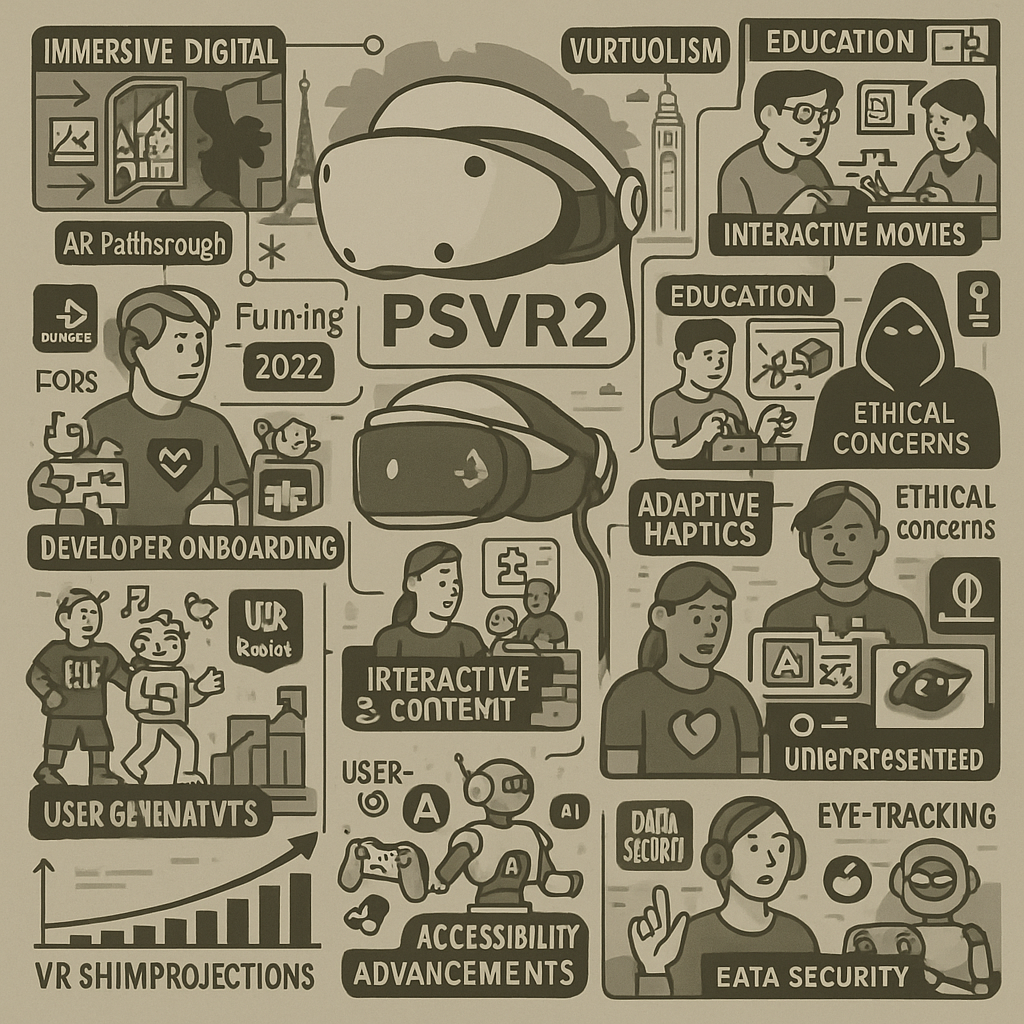
Projecting into the future of PSVR2 illuminates a trajectory where it could spearhead widespread XR adoption, leveraging its core strengths in seamless PS5 integration to evolve beyond gaming into versatile tools for real-world applications and immersive digital artforms. Features like its robust build and IPD adjustment ensure comfort for prolonged sessions, essential for innovations in virtual tourism, where users explore distant locales with photorealistic detail, as if teleporting globally. History traces back to Sony's acquisitions, like the 2022 purchase of Bungie, bolstering multiplayer VR capabilities that echo early online gaming revolutions. Challenges such as developer onboarding are being tackled through SDK improvements, with projections for user-generated content platforms akin to Roblox in VR. Future enhancements might include AR passthrough upgrades, enabling hybrid experiences that overlay digital art onto physical spaces, transforming homes into galleries. Peripheral elements encompass related technologies like haptic suits from companies such as bHaptics, which could pair with PSVR2 for full-body feedback, enriching sensory art. Competing studios like Epic Games with Fortnite's VR potential push Sony to innovate in social VR. Historical precedents, including the dot-com bubble's lessons on overhype, guide tempered growth strategies. Social impacts include fostering global communities, though ethical concerns on misinformation in virtual worlds prompt moderation needs, as discussed in reports from Pew Research Center. In gaming, PSVR2's adaptive haptics create emotional depth, like feeling a character's heartbeat in horror titles. Real-world applications in healthcare project virtual reality therapy for anxiety, with data showing efficacy. Accessibility advancements could involve AI-assisted controls for inclusivity. Emerging trends like Web3 integration allow NFT art sales in VR. User trends indicate rising interest in VR socializing post-isolation. Market projections from IDC forecast VR shipments doubling by 2025, with PSVR2 contributing. Cultural significance emerges in diverse storytelling, amplifying underrepresented voices. Ethical debates focus on data security, with eye-tracking raising privacy issues. In education, PSVR2 enables collaborative learning, imagining students co-building historical models. Entertainment evolves to interactive movies, viewer choices altering plots. Challenges like hardware upgrades are anticipated with modular designs. Analogies liken PSVR2 to smartphones' app ecosystems, exploding creativity. Social media sees VR influencers curating experiences. Peripherally, AI-driven content generation could personalize artforms. Historical VR in architecture for blueprints informs current uses. Overall, PSVR2's future holds promise for a connected, immersive world, where XR enhances daily life, drives innovation, and addresses societal needs through thoughtful evolution.
AI Generated. AI-Human Verified.