Table of Contents
Moorhead’s Downtown: The Heart of Community Revitalization
Participatory Planning as Resident Engagement
XR Tools Empowering Deeper Involvement
Real Impacts on a Resident’s Experience
From Local Voices to Lasting Urban Health
Moorhead’s Downtown: The Heart of Community Revitalization
Moorhead, Minnesota, home to about 45,000 people along the Red River, has made downtown renewal its top focus in the Onward Moorhead Comprehensive Plan adopted in 2022. This long-term guide aims to turn the city center into a lively spot with homes above shops, new parks and plazas, and easy paths to nearby neighborhoods and the river. Its first major goal calls downtown the community’s core, fixing issues like empty blocks and few places to gather while boosting jobs, easy walking, and local pride.
Supporting reports such as the Downtown Moorhead Master Plan and yearly progress updates note long-standing problems including outdated malls and parking lots that hurt daily life and local identity. Current work includes tearing down the old Moorhead Center Mall for a $300 million overhaul featuring over 1,000 new housing units, a $40 million library and community hub called The Loop that opened in 2026, a public plaza for events, and better links to the riverfront. These steps draw from resident ideas to create spots that welcome both locals and visitors while building a stronger, more connected city.
Participatory Planning as Resident Engagement
City leaders invite everyday people to help shape projects like new plazas, trails, and mixed-use buildings through surveys, pop-up meetings, and creative touches such as questions printed on local brewery coasters. This has gathered hundreds of responses, including input on redesigning City Hall Plaza, so plans match what residents actually need rather than top-down ideas alone.
The approach fits Moorhead’s goals for fair growth by letting citizens weigh in early on walkability, green spaces, and support for small businesses. By looping residents into decisions step by step, the city builds shared ownership and refines ideas that reflect real daily experiences in a Minnesota river town.
XR Tools Empowering Deeper Involvement
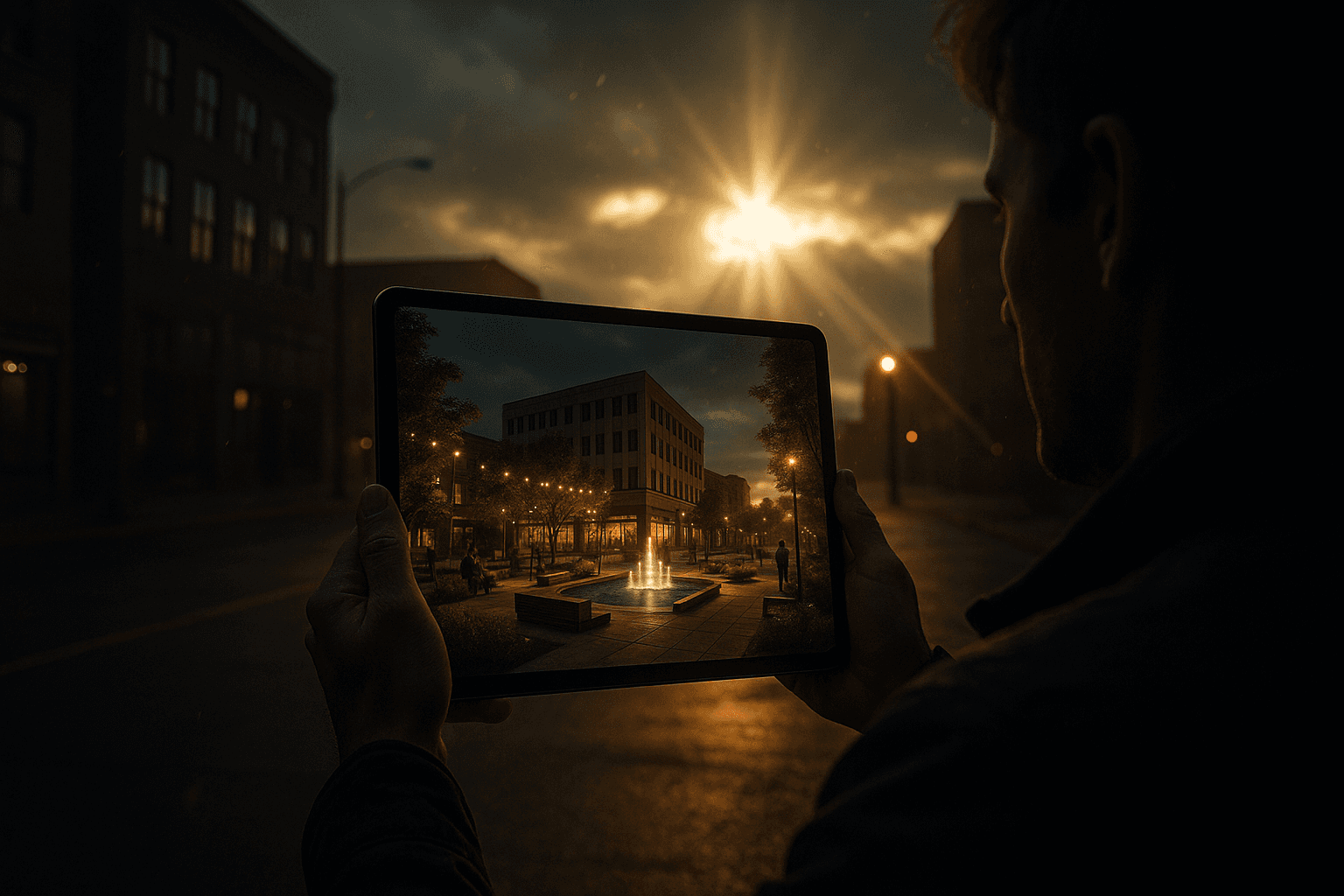
Extended reality, or XR, brings planning ideas to life using augmented reality (AR) that layers digital models onto your phone’s camera view of real streets, and virtual reality (VR) that drops you into fully computer-created scenes. In AR, residents can stand at a corner, scan with an app, and see proposed plazas, lights, or shop fronts appear right there, then tweak details like seating or trees to match their preferences. VR sessions at libraries or online let people walk through future river paths or new buildings and comment on how spaces feel, how accessible they are, or how they might work in cold winters.
Real-world uses show XR boosts involvement. Youth in Oslo used AR apps to plan tree plantings and better understood designs, leading to changes in final plans. Cities like Hamburg and Zürich let residents try VR or AR tours of upcoming neighborhoods, resulting in more feedback and higher turnout than paper maps or meetings alone. In Moorhead, AR or VR notes can flow straight into official databases, giving planners clear, location-based comments that static drawings miss and helping more people join who cannot attend evening sessions.
Real Impacts on a Resident’s Experience
Picture a longtime Moorhead resident who drives by empty downtown lots every day and once felt shut out of planning. With the city’s AR app linked to the Downtown Master Plan, she points her phone at the future City Hall Plaza site and instantly sees how new lights, local plants, and flexible event areas could turn it into a safe evening hangout. She widens a virtual walkway, adds family-friendly spots, and sends her marked-up view noting better safety.
A VR session later lets her stroll the planned trail to Riverfront Park, checking sightlines and benches suited for snowy weather. Her input joins hundreds of others, helping shape designs with more inclusive features. XR turns distant maps into something personal she can shape, moving her from onlooker to active partner in creating spaces that fit community life.
From Local Voices to Lasting Urban Health
By pairing everyday resident input with XR tools, Moorhead shows how focusing on downtown can give people real say in their surroundings. Neighbors move from reacting to finished plans to testing and refining ideas on-site through simple apps and immersive views that highlight possibilities and trade-offs right where changes will happen.
This connects personal actions to shared results, building places that encourage social connections, local jobs, and climate-ready design. As XR grows more common on phones and in community spots, it can expand involvement so routine city needs become chances for ongoing civic participation that strengthens neighborhoods for years ahead. The Onward Moorhead Comprehensive Plan and related master plans lay the groundwork, while regional studies from partners like MetroCOG highlight how broad input improves housing and development outcomes.