Table of Contents
Introduction: A Resident's Connection to Arcata's Green Heart
Arcata's Defining Quality: Environmental Sustainability and Climate Resilience
The Engagement Approach: Citizen Science for Ecosystem Monitoring
A Day in the Life: Resident Participation Through XR
Real Impacts and Transformed Participation
Broader Questions of Agency and Urban Health
Introduction: A Resident's Connection to Arcata's Green Heart
Arcata, California, sits nestled among ancient redwoods and along the rugged Humboldt Bay coastline. Residents here have long understood that their quality of life depends on the health of the surrounding ecosystems, from clean water in local watersheds to thriving forests that buffer against storms.
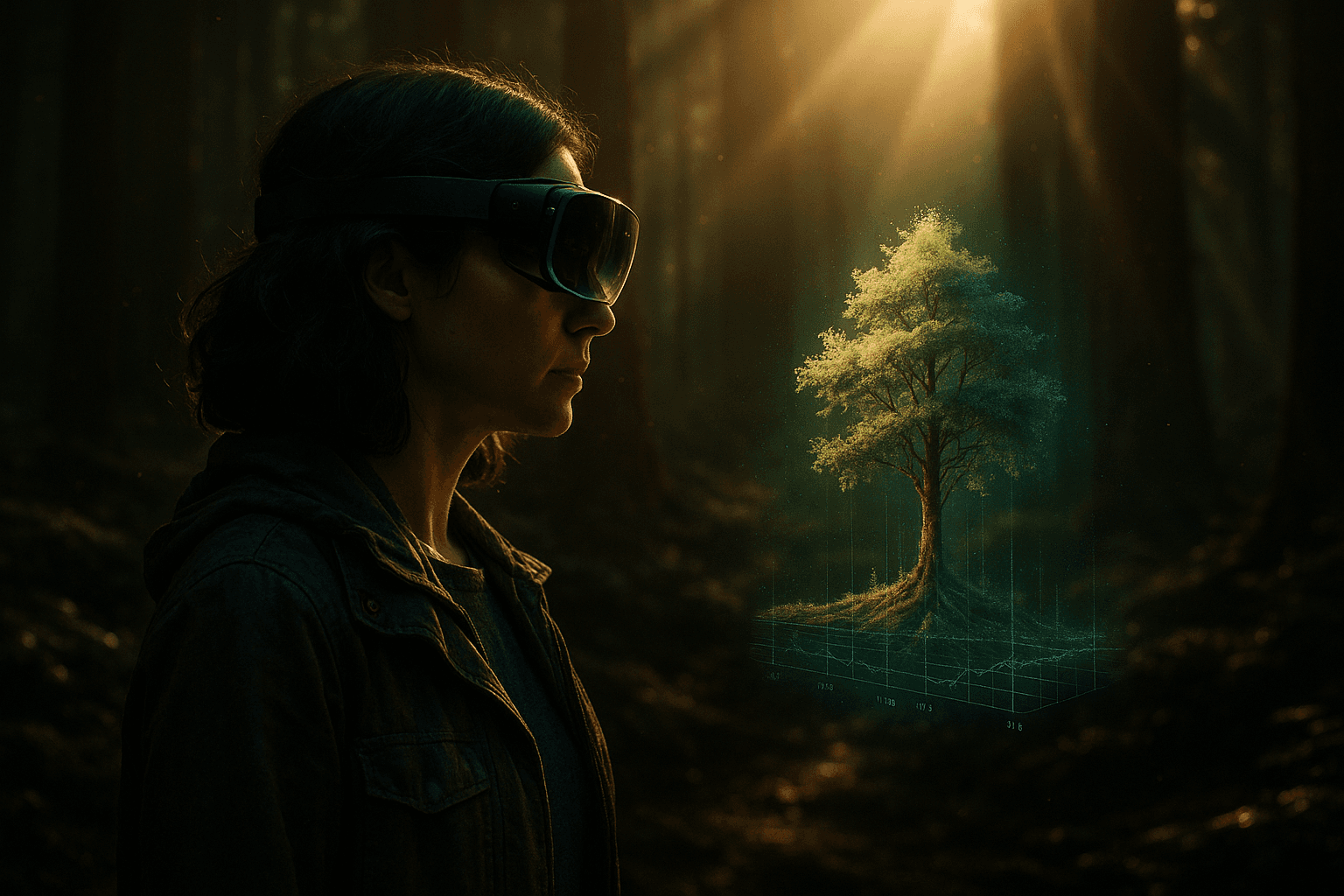
One resident, Elena, a local teacher and longtime community volunteer, embodies this connection. Through citizen science, she contributes directly to monitoring local watersheds and forests by logging simple observations like water clarity or tree conditions during regular walks.
Extended reality technologies, or XR tools that blend digital overlays with the real world through augmented reality glasses or virtual reality headsets, now amplify her efforts. These turn everyday observations into immersive, data-rich experiences that deepen engagement and drive meaningful change for the community.
Arcata's Defining Quality: Environmental Sustainability and Climate Resilience
Arcata's official General Plan update and the Humboldt Regional Climate Action Plan emphasize sustainability as a core municipal priority. The city commits to reducing greenhouse gas emissions from cars and energy use, protecting biodiversity in redwood forests and wetlands, and adapting to sea-level rise along Humboldt Bay through better infrastructure and habitat restoration.
These documents highlight the need for ongoing resident involvement to track environmental changes and inform policy. Local studies and programs at Cal Poly Humboldt reinforce Arcata's identity as a leader in community-driven conservation, with strong wildlife ecology courses and field research that support real-world monitoring of birds, fish, and forests.
This focus creates both opportunity and responsibility for residents to participate actively in safeguarding their shared natural resources, turning local knowledge into actionable data for city leaders.
The Engagement Approach: Citizen Science for Ecosystem Monitoring
Citizen science programs allow residents like Elena to collect and share data on water quality, tree health, and wildlife populations using apps or simple field tools. These efforts directly support city goals outlined in Arcata's environmental reports, such as tracking changes at the innovative Arcata Marsh and Wildlife Sanctuary, which treats wastewater naturally while providing habitat for birds and otters.
Participants use basic kits during regular outings to log observations that feed into municipal databases and university research at Cal Poly Humboldt. The approach builds collective knowledge while fostering personal stewardship, as seen in community projects like reporting otter sightings or algae blooms that help scientists spot early warning signs of ecosystem stress.
By focusing exclusively on this method, residents gain agency in shaping Arcata's response to climate challenges without relying on top-down mandates alone, creating a two-way flow of information between everyday people and planners.
A Day in the Life: Resident Participation Through XR
Elena begins her Saturday morning with a walk along the Arcata Marsh and Wildlife Sanctuary. She wears lightweight AR glasses that overlay real-time data on the landscape before her, such as historical water levels compared to current readings pulled from city sensors.
Through the glasses, she sees virtual markers highlighting areas flagged for restoration in the city's latest climate assessment and can compare past marsh conditions to today. When she spots an unusual algae bloom, she records a 3D scan that uploads instantly to a shared platform, similar to how XR tools are used in environmental citizen science to document changes in real time.
Later, at home, Elena joins a virtual reality session where participants from across the community explore a simulated future version of the marsh under different climate scenarios, like higher sea levels or restored wetlands. They discuss observations and vote on proposed interventions that the city planning department will review, making complex climate projections feel tangible and personal.
Real Impacts and Transformed Participation
Elena's contributions have helped identify erosion hotspots that prompted targeted city interventions, such as planting native vegetation to stabilize shorelines. XR tools make these findings more vivid, allowing her to visualize impacts that raw spreadsheets cannot convey, much like AR apps that help measure tree growth or forest health in community projects.
Participation rates in Arcata's citizen science initiatives have grown as residents use accessible XR applications on personal devices. The technology lowers barriers for those with mobility limitations by enabling virtual fieldwork alongside physical outings, expanding who can contribute to monitoring efforts at places like the marsh.
City reports now incorporate XR-generated visualizations when presenting updates to the public, closing the loop between individual action and collective decision-making and showing clear results from resident input.
Broader Questions of Agency and Urban Health
Elena's story in Arcata illustrates how XR can turn passive awareness into active stewardship. Residents gain clearer insight into the consequences of their environment, strengthening their voice in local governance through shared data and visualizations.
Similar approaches elsewhere could enhance urban health by linking personal actions to measurable ecological outcomes, as explored in research on XR for monitoring urban nature-based solutions. The result is a more resilient community where technology serves human connection to place rather than replacing it.
Ultimately, such engagement reminds cities that sustainability thrives when residents are equipped to see, understand, and shape the future of their shared spaces, building stronger ties between people and the ecosystems they depend on.