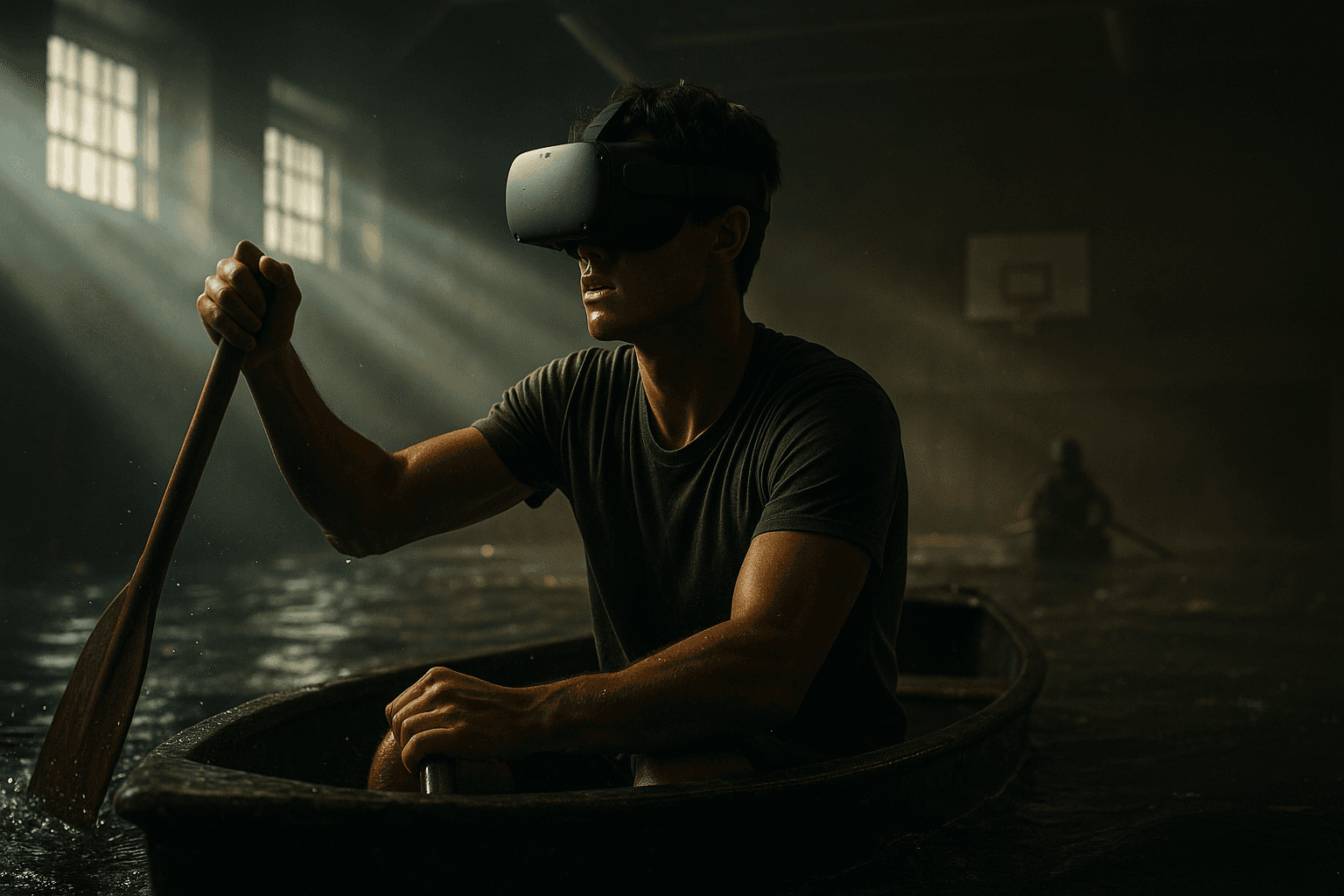
Imagine your local high school gym transforming into a chaotic flood zone, where students paddle through virtual waters to rescue survivors—all without leaving the building. This isn't science fiction; it's the reality of the Army National Guard's groundbreaking Disasterville program, launched in early 2026. Using mixed reality (MR) technology, including Meta Quest 3 headsets and hand-tracking features, this initiative immerses high schoolers in realistic disaster scenarios like wildfires, floods, and earthquakes. Developed in collaboration with XR experts, it blends physical props with virtual environments to teach critical skills such as teamwork, decision-making, and quick response—skills that directly improve community resilience. As natural disasters become more frequent, with the Army National Guard responding across 54 states and territories, programs like this highlight how XR can bridge awareness gaps and prepare the next generation. Beyond education, Disasterville serves as a communal tool for residential areas, fostering neighborhood connections by simulating shared crises and encouraging collaborative preparedness. In this post, we'll explore the technology behind it, its real-world applications, and how it could extend to everyday community building. Drawing from detailed reports, including insights from military training simulations and federal program analyses, we'll uncover how immersive tech is not just training soldiers but empowering civilians to safeguard their homes and neighbors.
Table of Contents
The Challenge of Modern Disaster Response
Natural disasters are escalating in frequency and intensity, straining community resources and response capabilities. From wildfires ravaging neighborhoods to floods displacing families, the need for effective preparedness has never been more critical. Traditional training methods often fall short, relying on lectures or basic drills that fail to capture the chaos of real events. This gap leaves residents, especially in residential areas, ill-equipped to handle emergencies collaboratively. The Army National Guard recognizes this problem, noting that many young people are unaware of the skills required for disaster relief. As highlighted in program details, disasters like earthquakes demand quick decision-making and teamwork, yet conventional education rarely provides hands-on experience. Enter XR technology as a solution, offering immersive simulations that mimic these high-stakes scenarios without real-world risks. By addressing these challenges, XR not only educates but also builds communal resilience in neighborhoods.
Inside Disasterville: XR Technology Breakdown
Disasterville leverages cutting-edge mixed reality to create engaging, educational experiences. Students don Meta Quest 3 headsets, enabling controller-free interactions via advanced hand-tracking. The setup transforms gyms into disaster zones using plywood structures overlaid with AR/VR graphics for scenarios like wildfire suppression or earthquake rescues. Teams of five complete 10-minute missions, using virtual tools such as hoses and jaws of life, all while navigating physical props. This blend of physical and virtual elements ensures realism, as noted in development insights. Key tech nuances include local-network tracking for multiplayer collaboration and AI-powered simulations for dynamic hazards. Such innovations demonstrate XR's precision in replicating real-world applications, making abstract concepts tangible. Overall, this technical foundation positions Disasterville as a model for immersive learning.
"Disasterville is more than VR... we're bringing students as close to the thrill of the mission and realities of the challenges that Guard Soldiers face," says Lieutenant Colonel Ted Dunham.
From Classroom to Community: XR as a Communal Tool
Extending beyond schools, Disasterville exemplifies XR as a tool for connecting neighborhoods and residential areas. By simulating shared disasters, it encourages participants to think communally, fostering bonds that translate to real-life preparedness. Imagine local community centers adopting similar MR setups for family training sessions, where residents practice evacuations or resource sharing. This approach aligns with the program's goal of highlighting the National Guard's role in community support, as detailed in official resources. In residential settings, XR could enable virtual neighborhood drills, linking households digitally for coordinated responses. The technology's accessibility—no heavy equipment needed—makes it ideal for communal use. Educators and recruiters have praised its fun, interactive nature, which boosts engagement. Ultimately, this shifts XR from isolated experiences to a vital communal asset, enhancing safety and unity in everyday life.
- Promotes teamwork in simulated crises.
- Adapts to local disaster risks.
- Encourages ongoing neighborhood dialogues.
Multi-Perspective Views on XR Impact
From an educational standpoint, Disasterville bridges knowledge gaps, with teachers noting its value as a "fun field trip" that sparks interest in real-world applications. Recruiters view it as a recruitment booster, showcasing part-time service opportunities. Technologically, developers emphasize the seamless integration of hand-tracking and props for immersion. Community leaders see potential in scaling it for residential preparedness, connecting neighbors through shared virtual experiences. Critics might argue about accessibility, but the program's mobile tours address this by visiting diverse locations. Overall, these viewpoints underscore XR's versatility in improving human life, from individual skill-building to collective resilience. As one principal shared, it provides "a wonderful experience" that opens eyes to military and civic roles.
| Perspective | Key Insight |
|---|---|
| Educational | Enhances engagement through gamified learning. |
| Technological | Leverages AI for realistic simulations. |
| Community | Builds neighborhood connections via shared scenarios. |
Scaling XR for Neighborhood Connections
To scale Disasterville's model, communities could integrate XR into local apps for ongoing training. Start with problem identification—assess area-specific risks like floods—then apply XR insights for customized simulations. Solutions include partnerships with organizations like the National Guard for accessible tech. This creates interest through pilot programs, leading to actions like community workshops. In residential areas, it serves as a tool for connecting with neighbors, perhaps via virtual town halls. Technical considerations involve ensuring device compatibility and data privacy. Success stories from initial tours suggest high adoption potential. By following this pattern, XR evolves from educational novelty to essential communal infrastructure.
- Identify local risks.
- Develop tailored XR modules.
- Host community events.
- Measure impact and iterate.
In synthesizing the insights from the Army National Guard's Disasterville program, it's clear that XR technologies are paving the way for transformative improvements in human life, particularly in disaster preparedness and community building. By immersing students in realistic scenarios, this initiative not only educates on critical skills but also fosters a sense of communal responsibility that extends to neighborhoods and residential areas. The seamless blend of physical props and virtual environments demonstrates XR's potential to make abstract threats tangible, encouraging proactive engagement. As we've explored, from technological breakdowns to multi-perspective impacts, Disasterville addresses real-world challenges like increasing natural disasters while highlighting opportunities for scaling in everyday settings. Imagine neighborhoods using similar tools for virtual drills, strengthening bonds and readiness without the risks. This contemporary solution underscores how immersive tech can connect people, turning isolated individuals into cohesive communities. For those inspired, consider supporting the program by visiting NationalGuard.com to learn more about involvement or local events. Whether through volunteering, advocating for XR in education, or simply sharing this post, your actions can amplify its reach and help build safer, more connected residential areas.
Key Takeaways
- Disasterville uses MR headsets for immersive disaster simulations in high schools.
- It enhances teamwork and decision-making skills without real risks.
- XR serves as a communal tool for neighborhood preparedness and connections.
- Program tours promote awareness of National Guard roles in communities.
- Hand-tracking technology enables controller-free, realistic interactions.
- Scalable for residential areas to foster collaborative emergency planning.
- Addresses rising natural disasters with fun, educational experiences.
- Encourages part-time service and civic engagement among youth.
What are your thoughts? Comment below!
Generated by AI. Reviewed by Human.