Table of Contents
Introduction: Arvada's Enduring Identity
The Distinctive Quality: Preserving Small-Town Character
The Engagement Approach: Structured Community Input Sessions
How XR Transforms Participation
A Resident's Journey: From Concern to Contribution
Measurable Impacts and Realistic Outcomes
Broader Implications for Agency and Urban Health
Introduction: Arvada's Enduring Identity
Arvada, Colorado, a suburban city of roughly 122,000 residents northwest of Denver, balances rapid regional growth with a commitment to its roots through ongoing city planning. Residents like longtime local Maria Gonzalez actively shape this balance through deliberate civic channels. Extended reality tools now deepen their involvement by making abstract plans tangible and accessible.
The Distinctive Quality: Preserving Small-Town Character
Arvada's 2014 Comprehensive Plan, with updates guiding future development, identifies the preservation of its small-town identity as a core goal. This includes maintaining walkable neighborhoods, historic downtown elements, and a human-scale built environment amid suburban expansion, as highlighted in official planning documents.
The plan calls for high-quality design standards that honor the city's heritage while accommodating new residents. City data shows Arvada's land area and density patterns support this focus on character over unchecked sprawl.
The Engagement Approach: Structured Community Input Sessions
Arvada channels resident input through organized public workshops and feedback periods tied directly to plan updates and zoning reviews. These sessions gather structured comments on design guidelines, open-space priorities, and neighborhood compatibility.
The approach ensures voices from diverse blocks influence outcomes without relying on informal social media or one-off complaints. Official city records document how such input has refined policies on building heights and streetscapes in recent years.
How XR Transforms Participation
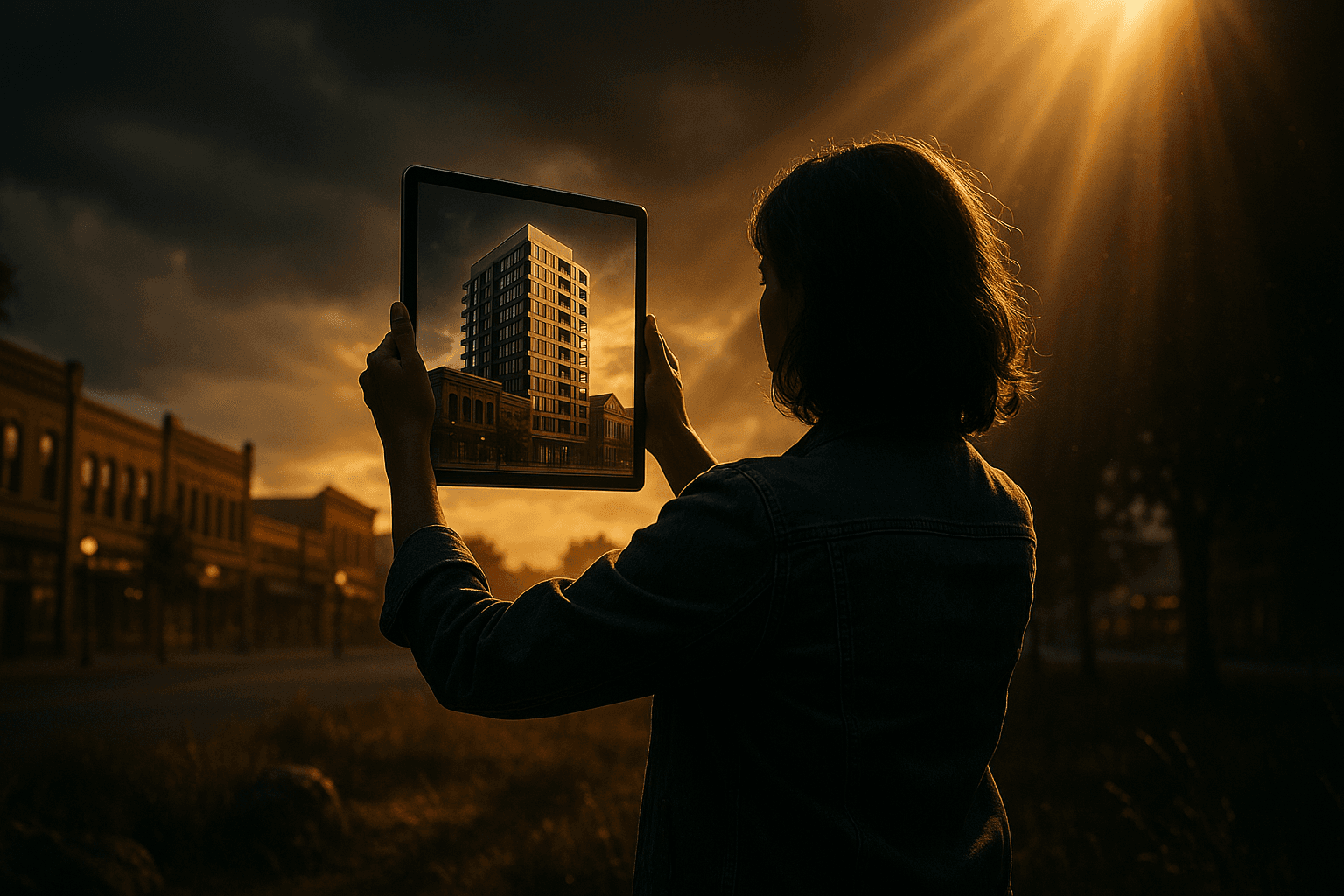
Augmented reality overlays now allow participants in these sessions to view proposed developments superimposed on actual street views via smartphones or tablets, similar to tools explored in urban planning applications. Residents scan QR codes at meeting sites or use city-provided apps to experience scale, shadows, and sightlines in real time.
Virtual reality headsets at select workshops let users walk through simulated neighborhood futures, adjusting variables like tree canopy or facade materials on the fly. This shifts passive listening into active exploration, revealing impacts invisible on paper maps, as shown in studies on AR for public participation.
A Resident's Journey: From Concern to Contribution
Maria Gonzalez, who has lived in Arvada's Olde Town area for fifteen years, first attended a community input session after noticing new multifamily proposals near her block. She worried taller structures would alter the intimate feel she values during evening strolls.
At the session, an AR demo let her stand on the sidewalk and see a digital version of the building rise before her eyes. She rotated the model, noted how it would block afternoon light on a favorite café patio, and recorded voice notes for planners.
Her feedback, combined with similar input from neighbors using the same tools, prompted revisions that lowered maximum heights and added mandatory setbacks with landscaping buffers. Maria now volunteers to help facilitate XR stations at future meetings.
Measurable Impacts and Realistic Outcomes
Post-session surveys from Arvada's planning department show XR participants report higher understanding of proposals compared to traditional slide presentations alone. Attendance at workshops has increased steadily since the technology's introduction, aligning with broader findings on immersive tools boosting engagement.
Approved projects reflect these changes: several recent developments include enhanced pedestrian connections and preserved viewsheds that align with resident priorities. Long-term tracking in annual plan reports ties these adjustments to sustained neighborhood satisfaction scores.
Broader Implications for Agency and Urban Health
Arvada's model illustrates how XR can amplify resident agency by converting abstract policy into personal, embodied experience. When people see and manipulate their environment's future, participation moves from obligation to ownership, supported by research on XR for urban engagement.
Stronger civic ties like these support urban health through more responsive design that reduces conflict, encourages walking, and fosters social connection. Cities adopting similar focused approaches may build more resilient communities where residents feel genuinely heard and invested in the places they call home.