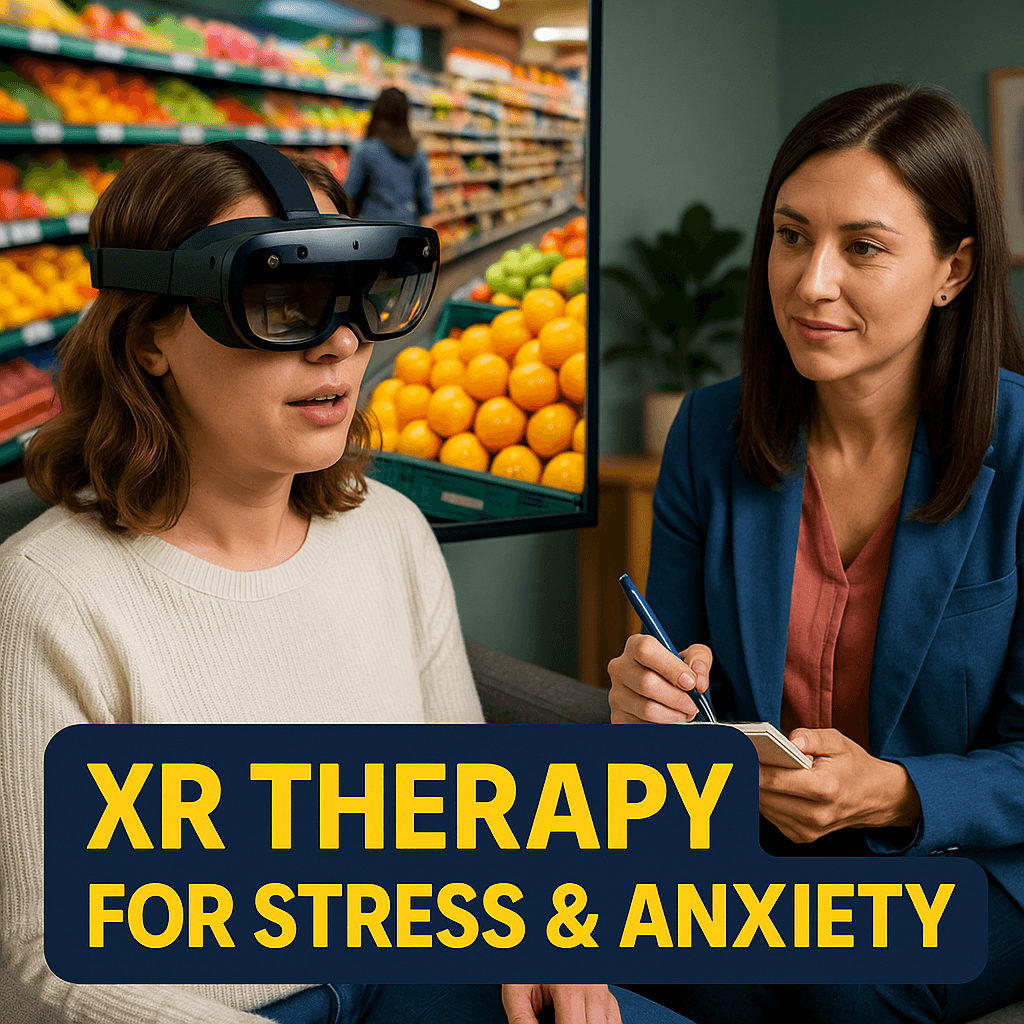
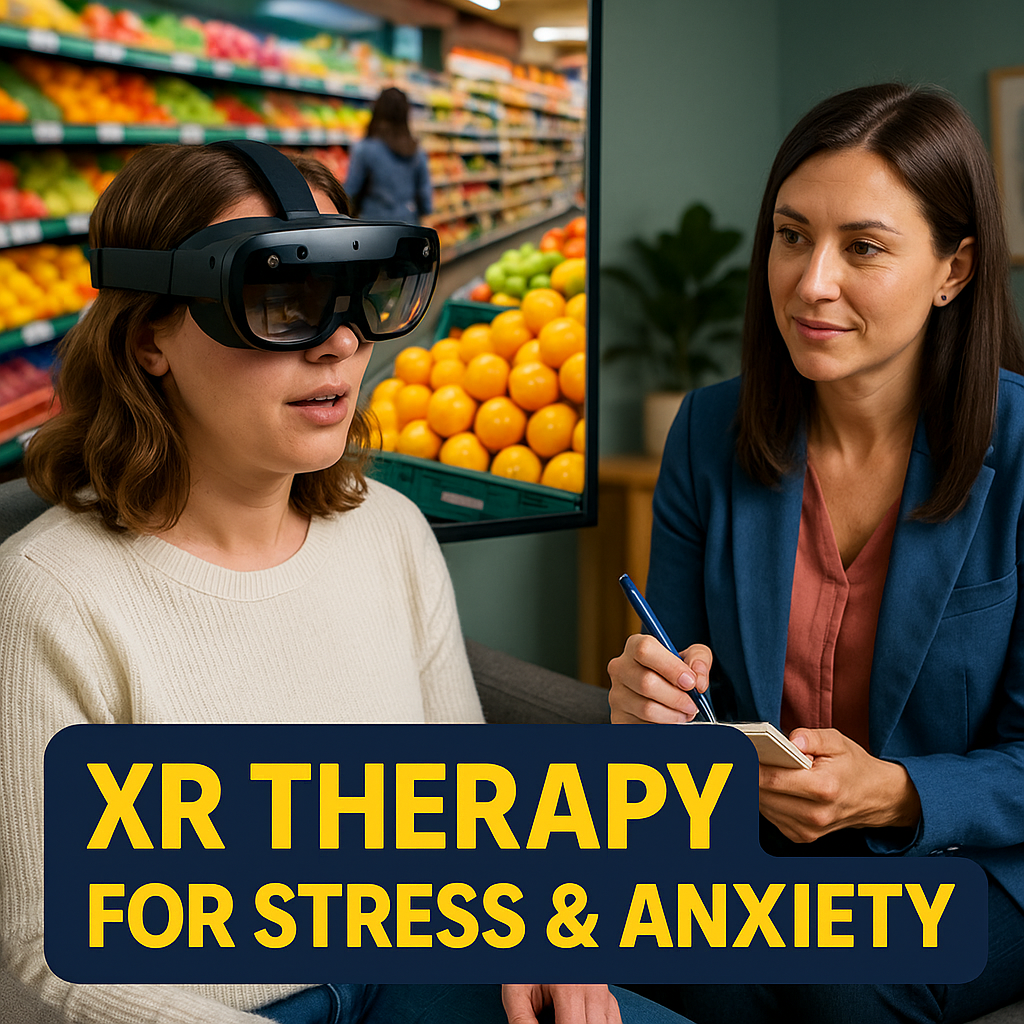
Imagine stepping into a bustling grocery store without leaving your therapist's office, facing your deepest anxieties head-on, yet feeling safe and supported. In 2026, this isn't science fiction—it's the reality brought by innovative XR technologies like ExpandXR. As stress levels soar amid global uncertainties, with PTSD affecting up to 30% of high-risk groups like first responders and veterans, immersive solutions are stepping in to bridge the gap between clinical therapy and real-world application. A standout example is the Unreal that Feels Real talk at AWE USA 2026, showcasing AI-enhanced augmented reality for treating PTSD and anxiety disorders. This technology, developed at Wayne State University's STARC lab, uses AR to simulate everyday scenarios, helping users build resilience through controlled exposures. Backed by clinical data from sources like a 2024 methods paper, it promises to transform mental health care by making therapy more accessible and effective. Beyond clinical settings, XR opens doors to recreational stress-reducing endeavors, such as virtual mindfulness retreats that blend relaxation with therapeutic immersion. In this post, we'll explore the mechanics of ExpandXR, its real-world impacts, evidence from studies, and how it's paving the way for broader XR applications in daily wellness. Get ready to discover how XR isn't just enhancing lives—it's redefining stress management for a calmer future.
Table of Contents
The Stress Epidemic in 2026
In 2026, stress has become a pervasive challenge, exacerbated by ongoing global events, economic pressures, and technological overload. According to recent data, up to 90% of urban populations experience trauma leading to significant symptoms, with PTSD prevalence reaching 8% in the general American population and soaring to 30% among veterans and first responders. Traditional therapies, while effective, suffer from high dropout rates—fewer than 50% of patients complete prolonged exposure therapy, and 25-40% abandon it after just one session. This gap highlights the need for innovative solutions that address not only symptoms but also real-world functioning. XR technologies emerge as a beacon of hope, offering immersive environments that simulate stressors in a controlled manner. By integrating AI and AR, these tools allow users to confront anxieties without the risks of actual exposure. From a multi-perspective viewpoint, clinicians note improved patient engagement, while patients report feeling more empowered. The problem of inaccessible scenarios in therapy is met with XR's ability to recreate diverse, personalized situations, paving the way for more effective stress management strategies.
Introducing ExpandXR
ExpandXR stands out as a patented AI-enhanced AR platform designed specifically for treating PTSD, social anxiety, and other anxiety disorders. Developed at the Stress, Trauma, and Anxiety Research Clinic (STARC) at Wayne State University, it leverages devices like the Apple Vision Pro to blend real-world environments with interactive holograms. As highlighted in the AWE USA 2026 agenda, this technology enables patients to interact with over 100 AI-driven characters in tailored scenarios, such as grocery stores or workplaces. From problem to solution, traditional exposure therapy's limitations—like poor generalization—are addressed through ExpandXR's focus on functional improvement. Clinicians control scenes wirelessly, ensuring safety while patients maintain visual contact. This innovation has garnered accolades, including the 2025 UnitedXR Healthcare Solution of the Year and a 2026 Webby nomination, underscoring its impact. Multiple perspectives reveal its versatility: therapists appreciate the ease of use, patients value the realism, and researchers point to DOD-funded trials for validation.
How ExpandXR Works
At its core, ExpandXR uses AI to generate holographic 3D humans and scenarios overlaid onto the patient's real environment, facilitating in vivo exposure therapy. Patients wear an AR headset, walking through actual spaces while interacting with virtual characters that role-play specific encounters. For instance, a user avoiding social settings might practice ordering food in a simulated restaurant, with the AI adapting responses in real-time. Key features include precise surface mapping for seamless integration, wireless mobility for natural movement, and telemedicine capabilities for remote sessions. As detailed in the STARC lab's ExpandXR page, the system supports customization for individual needs, such as trauma-specific avoidances. From interest to action, users start with low-stakes interactions, gradually building confidence. This technical approach ensures immersive realism without motion sickness, making it suitable for clinical and potentially recreational use. Perspectives from developers emphasize AI's role in diversity—characters vary in race, sex, and behavior—to trigger and resolve personalized fears effectively.
Clinical Evidence and Success
Clinical data backs ExpandXR's efficacy, with ongoing trials funded by the Department of Defense comparing it to traditional therapies. A methods paper in PMC reports that patients experienced strong emotional responses, with AR eliciting anxiety levels superior to VR, as measured by skin conductance and heart-rate variability. In preliminary observations, users achieved 80% confidence in managing real-world situations post-treatment, with examples like resuming grocery shopping after avoidance. Quotes from patients highlight the immersion:
"They feel like real humans. This is so psychological, I cannot feel they are not real."
Success stories include first responders regaining occupational functions, as noted in Wayne State's news. From a multi-perspective lens, researchers cite dropout reductions, while stats show AR's cost-effectiveness at around $3500 per headset, with potential for wider adoption. These insights demonstrate ExpandXR's role in bridging therapy to everyday life.
XR for Recreational Stress Relief
Beyond clinical applications, XR like ExpandXR inspires recreational stress-reducing endeavors, blending therapy with leisure. Imagine virtual mindfulness sessions where users engage in calming scenarios, such as serene nature walks with AI-guided breathing exercises, to alleviate daily stress. This aligns with broader XR trends in 2026, where immersive technologies promote wellness through gamified relaxation. The platform's adaptability allows for non-clinical uses, like role-playing social interactions for personal growth, fostering resilience in a fun, engaging way. Problem to solution: Everyday stress from work or social pressures is mitigated by accessible AR tools that simulate safe environments for practice. Multiple viewpoints include users who find it empowering for self-care, and experts who see potential in integrating it with apps for at-home stress management. As per insights from Psychiatric Times, such technologies enhance exposure by simulating real-world interactions, making recreational use a natural extension for proactive mental health.
Future Implications
Looking ahead, ExpandXR signals a shift toward integrated XR in mental health, with implications for education, workplaces, and personal wellness. As hardware costs drop and AI advances, these tools could become household staples for stress reduction, much like fitness apps today. From interest to actions, individuals might adopt XR for daily mindfulness, while organizations implement it for employee well-being programs. Challenges remain, such as ensuring accessibility and ethical AI use, but the trajectory is promising. Perspectives from innovators suggest transdiagnostic applications extending to autism or phobias, broadening impact. In 2026, with recognitions like Webby nominations, ExpandXR exemplifies how XR improves human life by making therapy immersive and effective.
In synthesizing the transformative power of XR technologies like ExpandXR, it's clear that 2026 marks a pivotal year for mental health innovation. By addressing the stress epidemic through AI-enhanced AR, this solution not only treats disorders like PTSD and anxiety but also empowers recreational stress-reducing endeavors, allowing users to engage in immersive mindfulness and scenario-based relaxation from the comfort of home. The clinical evidence, from DOD-funded trials to patient testimonials, underscores its efficacy in fostering real-world functioning and reducing avoidance behaviors. Broader implications extend to everyday wellness, where XR could democratize access to therapeutic tools, blending leisure with healing for a more resilient society. As we've explored, from the mechanics of holographic interactions to future integrations, XR is redefining how we combat stress—making it more personalized, engaging, and effective. For those grappling with anxiety or seeking proactive stress relief, exploring these technologies could be a game-changer. We encourage you to dive into the linked resources, consider trying XR-based apps, or even attend events like AWE USA to experience the potential firsthand. Support ongoing research and development in this field to help bring these life-improving solutions to more people. What's your take on XR for stress management? Share in the comments and join the conversation on immersive wellness.
Key Takeaways
- Stress in 2026 affects up to 30% of high-risk groups, with XR like ExpandXR offering innovative solutions for PTSD and anxiety.
- ExpandXR uses AI-driven AR to simulate real-world scenarios, improving functional outcomes with over 100 interactive characters.
- Clinical data shows 80% patient confidence post-treatment and superior anxiety induction compared to VR.
- High dropout rates in traditional therapy (25-40% after one session) are addressed by XR's immersive, low-risk approach.
- Recreational applications include virtual mindfulness for daily stress relief, blending therapy with leisure.
- DOD-funded trials and awards like 2025 UnitedXR Solution of the Year validate ExpandXR's impact.
- Future XR adoption could lower costs and expand to education and workplace wellness programs.
- Act by exploring XR tools or supporting research to enhance mental health accessibility.
What are your thoughts? Comment below!
Generated by AI. Reviewed by Human.