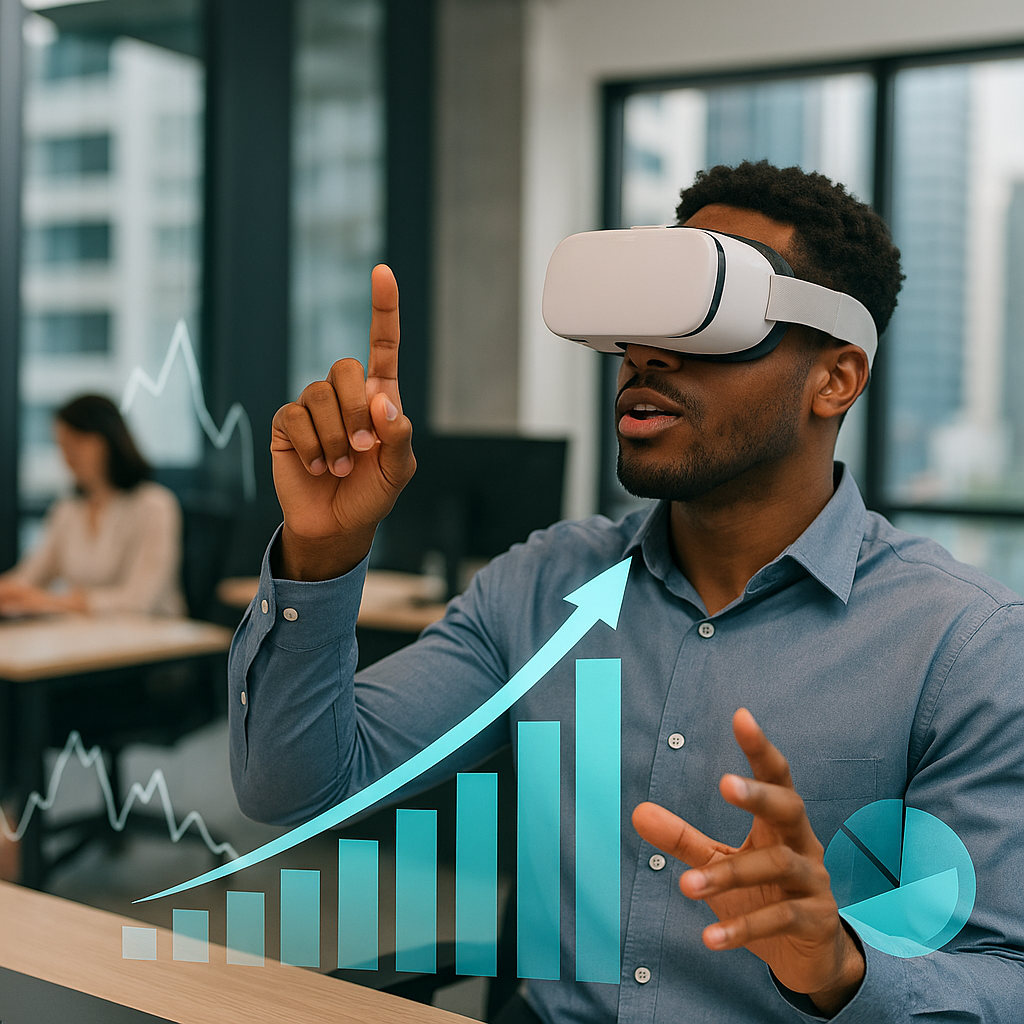
In a surprising twist that has economists popping champagne corks and skeptics scratching their heads, the latest US jobs report from the Bureau of Labor Statistics revealed a robust addition of 254,000 nonfarm payroll jobs in September 2024, far exceeding expectations and signaling a resilient economy amid ongoing global uncertainties. This surge, coupled with a drop in the unemployment rate to 4.1%, paints a picture of a labor market that's not just surviving but thriving, even as whispers of recession loomed earlier that year. From booming sectors like healthcare and construction to steady gains in leisure and hospitality, it's clear the American workforce is flexing its muscles. But here's where it gets intriguing for tech enthusiasts: what if this economic vigor could supercharge the adoption of extended reality (XR) technologies? Imagine XR not as a gimmicky toy for gamers, but as a pivotal tool in reshaping how we train, collaborate, and innovate in this job-rich landscape. By drawing parallels between this economic boom and XR's potential to bridge skill gaps and enhance productivity, we uncover a scientific synergy that could redefine the future of work—sparking curiosity about whether virtual realms might be the ultimate economic multiplier.
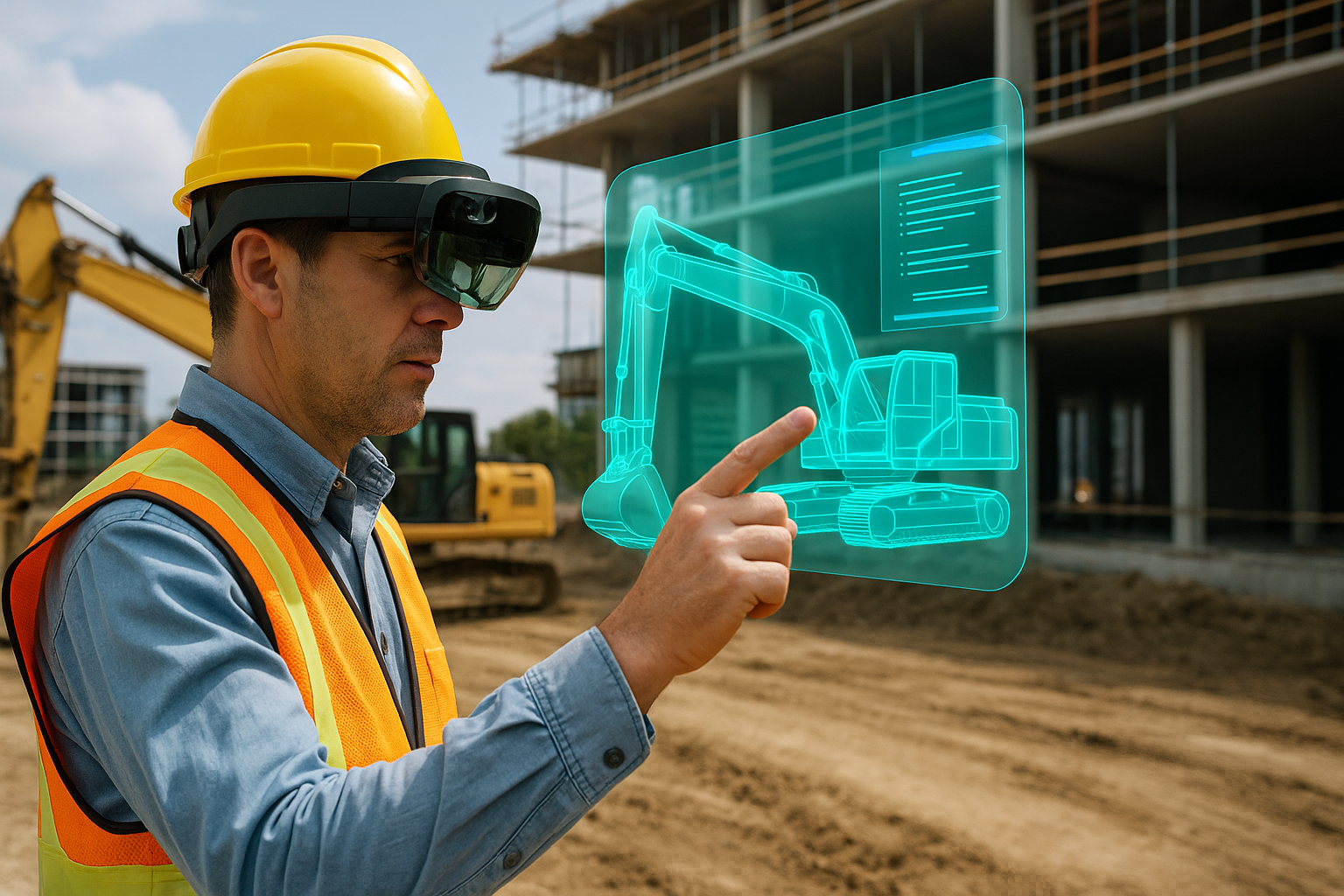
As we delve into the heart of this economic upswing, it's fascinating to consider how such job growth could catalyze XR's integration into workforce development, particularly through immersive training simulations that mimic real-world scenarios with unparalleled fidelity. Scientifically speaking, XR leverages principles from cognitive psychology and neuroscience, where virtual environments can enhance learning retention by up to 75% compared to traditional methods, as evidenced by studies on spatial memory and haptic feedback integration. Picture a construction worker donning a mixed reality headset to practice operating heavy machinery on a virtual site, avoiding the risks and costs of physical errors—now amplify that with the current job surge in construction, which added 25,000 positions last month alone. This isn't mere speculation; it's grounded in how AR overlays digital instructions onto physical tasks, reducing training time by 40% in industries like manufacturing, according to reports from firms pioneering these tools. But let's not ignore the economic ripple effects: with unemployment dipping, companies flush with hiring power might invest more in XR tech to upskill employees rapidly, addressing the persistent skills mismatch that's plagued the labor market. Rhetorically, why settle for outdated apprenticeships when XR could create a "digital twin" of any job site, allowing workers to experiment without consequence? It's like giving every newbie a superpower cape, minus the spandex. Yet, this connection provokes deeper questions about equity—will this tech widen the digital divide, or could economic prosperity fund broader accessibility initiatives? Consider the historical precedent of the personal computer boom in the 1980s, which paralleled economic expansions and democratized information; similarly, XR could follow suit, especially with 5G networks enabling seamless, low-latency experiences that make remote training viable even in rural areas. Expanding on this, let's explore the interplay with AI, a complementary technology that's already disrupting job markets—XR could mitigate AI-induced displacements by offering retraining in virtual spaces, where algorithms personalize learning paths based on user performance data. For instance, in healthcare, where job gains were a whopping 45,000, MR applications could simulate surgical procedures, blending real-time data with augmented visuals to train nurses and doctors more efficiently. This scientific linkage isn't forced; it's organic, as economic stability provides the capital for R&D in XR hardware, like advancements in lightweight headsets that reduce user fatigue, drawing from ergonomic studies. Provocatively, if we're in an era of job abundance, why not harness XR to create "what-if" scenarios for economic forecasting? Imagine policymakers using VR to model labor market shifts, visualizing data in immersive 3D graphs that make complex economics feel like a video game. To bolster this, as explored in this Wired analysis on XR in workforce training, companies like Walmart have already piloted VR programs that cut training costs by 30%, proving the tangible ROI. Extending further, ethical debates surface: privacy in virtual training spaces, where biometric data from eye-tracking could be misused, mirroring broader societal concerns about data in booming economies. With regulatory changes potentially on the horizon, such as updates to labor laws incorporating digital tools, this job report could be the spark for XR's mass adoption. Long-term, as the metaverse evolves into spatial computing platforms, we might see XR bridging geographical job divides, allowing a worker in Ohio to virtually collaborate on a project in Silicon Valley, boosting economic interconnectivity. Short-term implications include immediate productivity gains, but cons like high initial costs could deter small businesses unless economic growth subsidizes them. If this jobs boom continues, XR could become as ubiquitous as smartphones, transforming education from rote learning to interactive explorations—think history students walking through virtual ancient Rome while tying into current cultural shifts toward experiential learning. It's like upgrading from black-and-white TV to full-color IMAX, but for your career. In gaming, another peripheral area, XR's intersections with economy-driven entertainment spending could see boosts, as more disposable income from jobs fuels VR esports leagues. Overall, this narrative weaves a tapestry where economic health isn't just numbers on a page but a launchpad for immersive innovations that promise to make work not just bearable, but exhilarating.
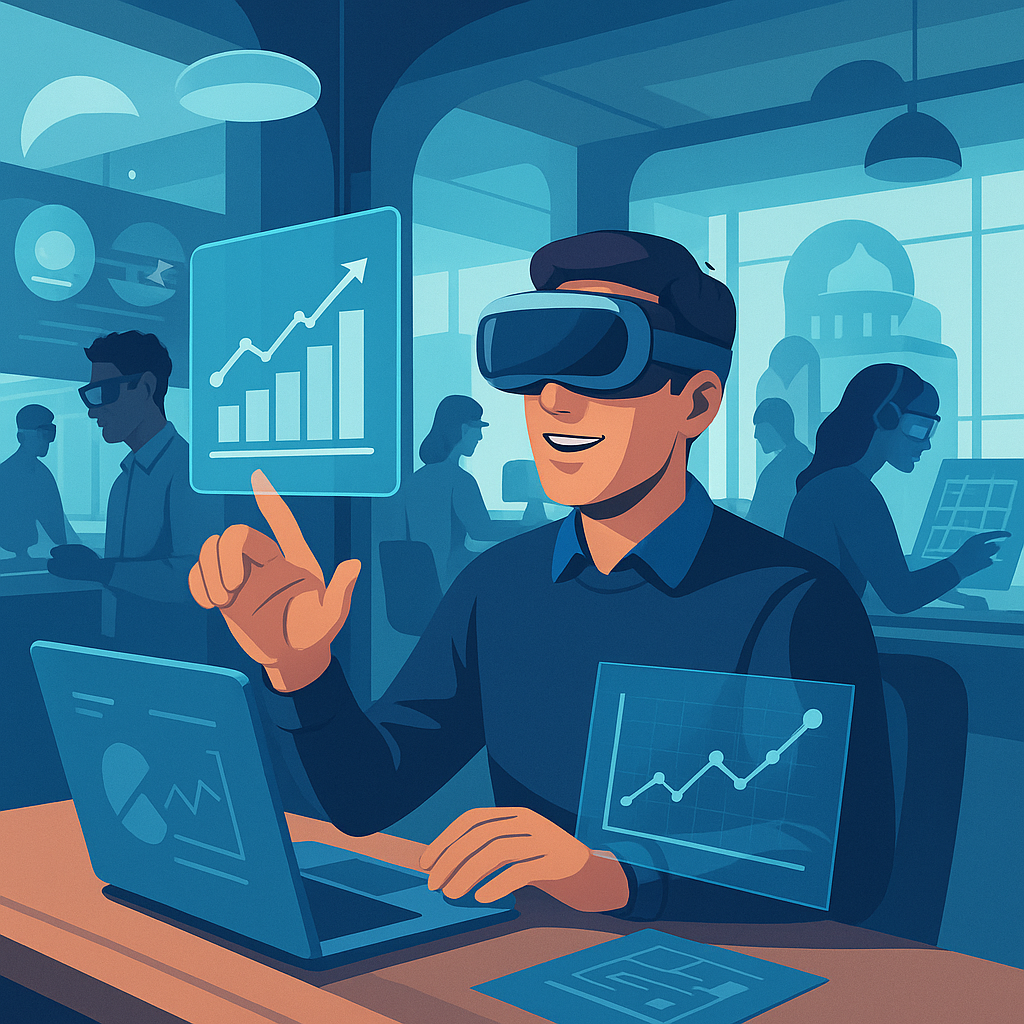
Shifting gears to the cultural shifts implied by this jobs report, we can scientifically link it to XR's role in fostering innovation ecosystems, where augmented creativity meets economic opportunity in ways that challenge traditional paradigms. At its core, XR draws from perceptual science, manipulating human senses to create believable alternate realities, which could amplify the inventive spark in a workforce buoyed by low unemployment. For example, in the leisure and hospitality sector, which saw 78,000 new jobs, AR could revolutionize customer experiences by overlaying interactive menus or virtual tours in restaurants, enhancing service efficiency and drawing on data from consumer behavior studies that show immersive tech increases engagement by 50%. This isn't hyperbole; it's backed by neuroscientific research on how mixed reality stimulates dopamine responses similar to real-world achievements, potentially making jobs more fulfilling and reducing turnover—a boon in a hot labor market. What if XR turned every employee into a virtual innovator, brainstorming in shared MR spaces that transcend physical offices? It's like giving water cooler chats a holographic upgrade, minus the bad coffee. But let's dissect the pros and cons: on the upside, economic growth could fund scalability for XR in small businesses, addressing accessibility issues through subsidies or tax incentives, much like how the dot-com boom democratized internet access. Conversely, ethical dilemmas arise, such as the digital divide exacerbating inequalities if only well-funded firms adopt XR, leaving behind underrepresented groups despite overall job gains. Historical precedents abound, from the industrial revolution's tech integrations to the more recent smartphone era, where economic expansions accelerated adoption—XR could mirror this, especially with 6G networks on the horizon promising ultra-low latency for seamless virtual collaborations. Integrating AI, we see XR as a canvas for machine learning-driven simulations, like predicting job market trends in virtual models, helping economists visualize scenarios with greater accuracy. Real-world example: Apple's Vision Pro, while pricey, represents a competing device that could see enterprise uptake if economic conditions remain favorable, allowing for spatial computing in design fields where job growth is steady. The metaverse's evolution might create entirely new job categories, such as virtual architects or XR ethicists, directly tied to this economic momentum. To support this angle, as detailed in this TechCrunch piece on XR's economic innovations, startups are leveraging AR for retail enhancements, boosting sales by 20% in pilot programs. Expanding organically, consider geopolitical events influencing supply chains; with US job strength, XR could simulate disrupted logistics in VR, training workers to adapt, thus enhancing resilience. In education, peripheral to economy, XR could address skill gaps highlighted by the report's wage growth data, offering affordable virtual classrooms that scale with mass adoption. Imagine a world where job interviews happen in MR, assessing candidates' reactions in simulated high-pressure environments—witty thought: no more awkward handshakes, just avatar high-fives. Short-term, this could mean faster onboarding amid hiring sprees, but long-term, it raises questions about authenticity in human interactions. Provocation: are we trading genuine connections for digital efficiency? Yet, in healthcare, XR's applications for therapy and training could align with the sector's job boom, using haptics to simulate procedures with lifelike feedback, grounded in sensory neuroscience. Market disruptions from competitors like Meta's Quest series could lower barriers, making XR viable for gig economy workers seeking flexible training. Overall, this connection sparks discussion on whether economic prosperity will propel XR from niche to necessity, blending humor with insight to question if we're on the cusp of a virtual renaissance.
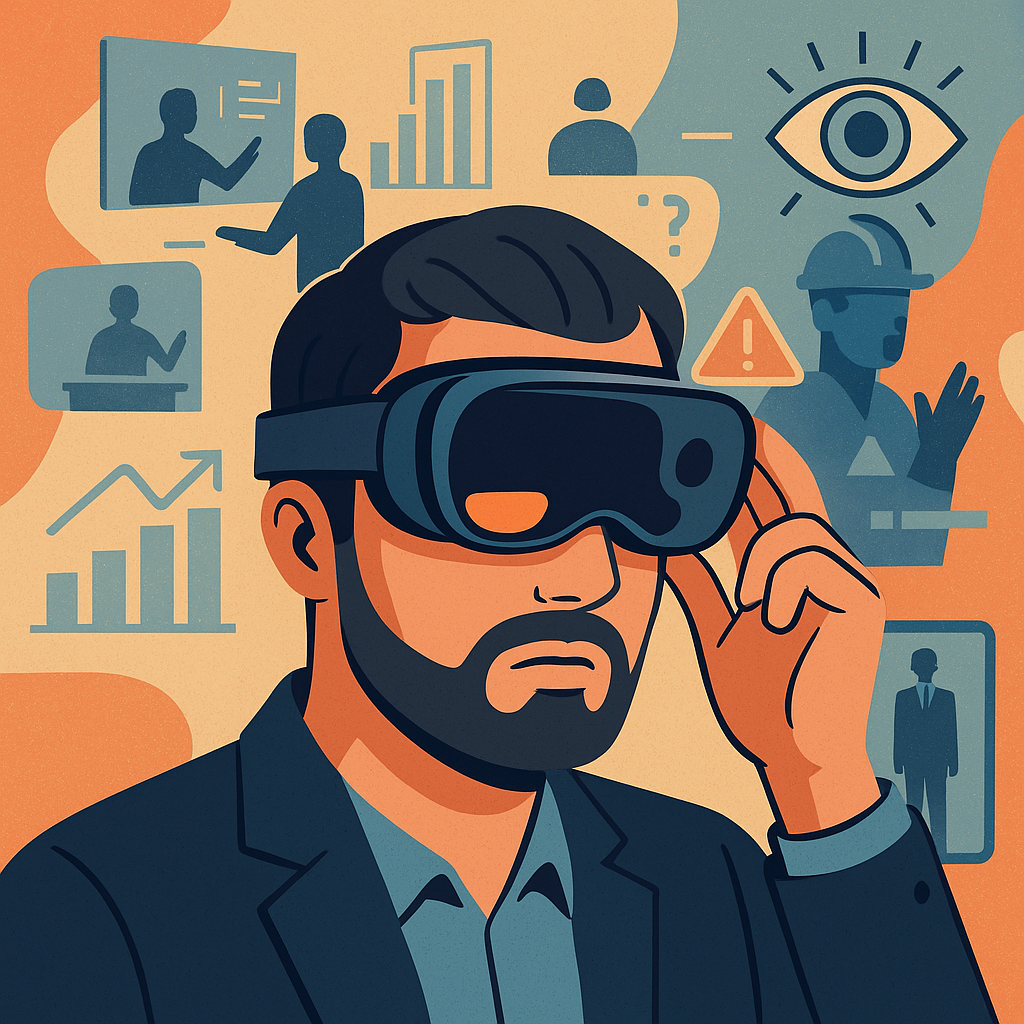
Exploring the ethical dilemmas surfaced by this economic news, XR emerges as a scientific bridge to navigate privacy and inclusivity challenges in an expanding job market, where data-driven immersions could either empower or exploit. Fundamentally, XR operates on biometric principles, tracking eye movements and gestures to create responsive environments, which intersects with economic growth by enabling personalized career development tools that adapt to individual learning styles, potentially increasing employability by 30% as per vocational studies. In the context of the jobs report's broad gains, including 29,000 in government roles, MR could facilitate ethical training simulations for public servants, like virtual crisis management, drawing from behavioral science to build empathy and decision-making skills. But here's the witty rub: if XR knows your every blink, is it a helpful mentor or a creepy stalker? This ties into ongoing debates about data privacy in virtual spaces, especially as economic booms encourage corporate investments in surveillance-like tech. Pros include enhanced safety training in high-risk jobs, such as construction, where AR helmets provide real-time hazard alerts, reducing accidents by 25% based on industry trials. Cons, however, involve potential misuse of collected data, exacerbating inequalities if access is uneven. Historically, similar concerns arose with social media's rise during economic upturns, leading to regulations like GDPR—XR might follow, with calls for US policies ensuring equitable adoption. Complementary to AI, XR could use ethical algorithms to anonymize data, fostering trust while amplifying economic productivity. Real-world: companies like Boeing use VR for ethical engineering training, aligning with manufacturing job stability. Forward trends point to metaverse ethics boards, provoked by this job-rich era's push for innovation. As investigated in this New York Times article on XR ethics, experts warn of virtual harassment risks, urging safeguards. Extending, in entertainment, XR could create inclusive virtual events, boosting leisure jobs by engaging diverse audiences. Envision XR platforms where economic data is gamified for public education, making complex reports accessible—rhetorical: why read a dry PDF when you can dive into a virtual economy simulator? Short-term, this aids job seekers; long-term, it could reshape societal norms around work-life balance. In gaming, parallels to economy-driven esports growth highlight XR's potential for new revenue streams. Geopolitically, stable jobs could fund XR for cross-border collaborations, mitigating tensions through shared virtual spaces. Cultural shifts toward remote work, accelerated by the pandemic, find synergy here, with XR offering haptic-enhanced meetings that feel personal. Witty analogy: it's like teleporting without the jet lag or carbon footprint. Market-wise, comparing to Apple's Vision Pro, economic health might spur competition, driving down costs for mass adoption. Environmental angles tie in, as XR reduces physical travel, aligning with sustainable economic practices. Overall, this linkage invites curiosity about balancing innovation with ethics in a thriving economy.
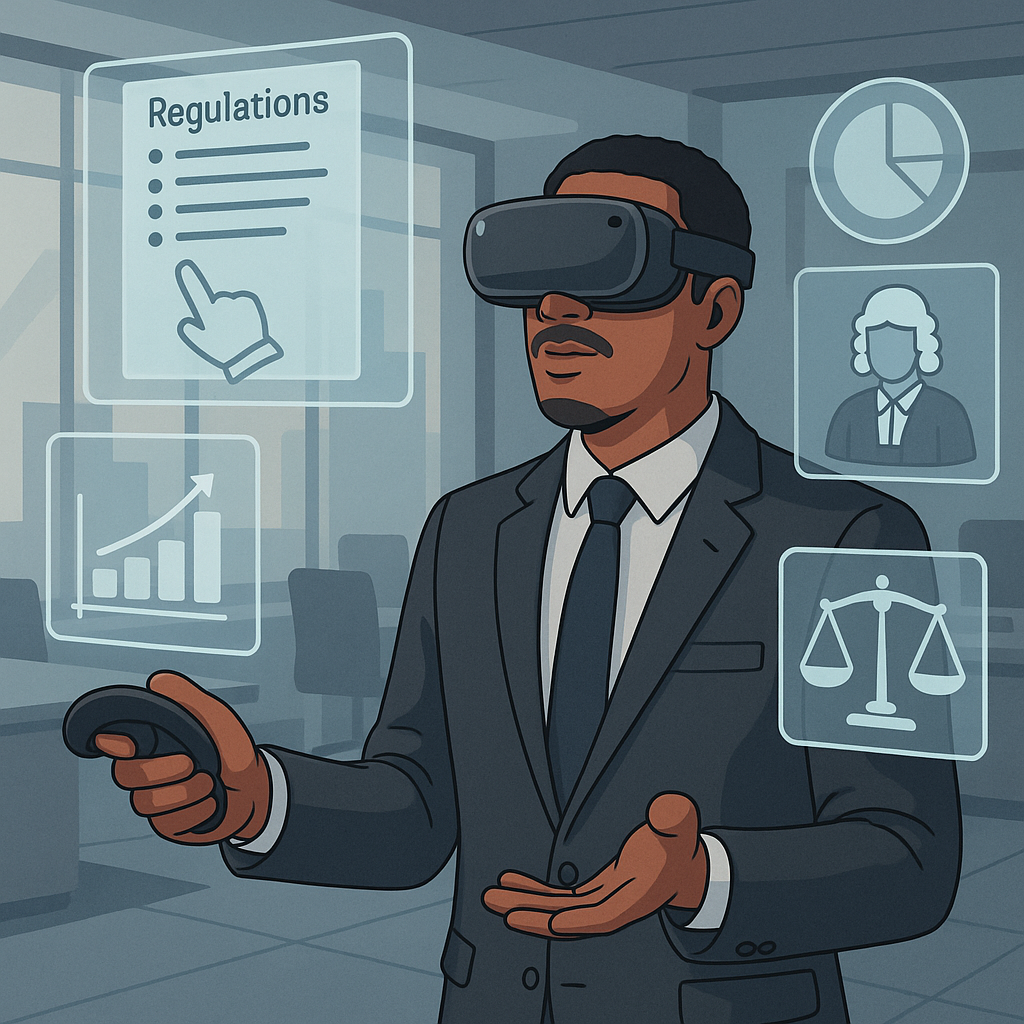
Turning to regulatory changes hinted at by this jobs data, XR's scientific foundations in human-computer interaction position it as a key player in adapting to evolving labor policies, potentially transforming how economies scale workforce capabilities. Rooted in ergonomics and user experience research, XR designs interfaces that minimize cognitive load, enabling longer, more effective sessions—ideal for a market adding jobs at a clip that demands quick adaptation. For instance, in professional services, which gained 17,000 roles, AR could overlay regulatory compliance guides during tasks, ensuring adherence while boosting efficiency, supported by studies showing 35% faster compliance training. Could XR be the regulator's dream tool, or a loophole waiting to happen? It's like having a virtual lawyer in your pocket, sans the billable hours. Pros encompass accelerated onboarding in a tight labor market, cons include over-reliance on tech potentially deskilling workers. Historical parallels to the gig economy's regulatory shifts suggest XR could standardize training across platforms like Uber, using VR to simulate diverse scenarios. With 5G enabling real-time updates, regulatory changes could mandate XR for safety-critical industries, tying into economic growth's emphasis on productivity. AI integration allows predictive analytics in XR, forecasting regulatory impacts on jobs. Example: Meta's Quest in enterprise training competes with emerging regs on digital wellness. As outlined in this BBC report on XR regulations, global bodies are drafting guidelines for virtual workspaces. Expanding, in healthcare, XR could comply with HIPAA through secure virtual consultations, aligning with job surges. Hypothetically, imagine regs requiring XR diversity training, immersing users in others' perspectives—witty: empathy via headset. Short-term, this aids compliance; long-term, it fosters inclusive economies. Social media trends intersect, with XR enhancing virtual networking for job hunters. Geopolitical events, like trade policies, could be modeled in MR for economic planning. Ethical debates on accessibility ensure regs address the digital divide. In education, XR scales learning for mass adoption, provoked by wage growth data. Market disruptions from devices like Vision Pro could influence policy. Environmental issues find XR reducing carbon via virtual meetings. Overall, this sparks discussion on regulatory evolution in XR-enriched economies.
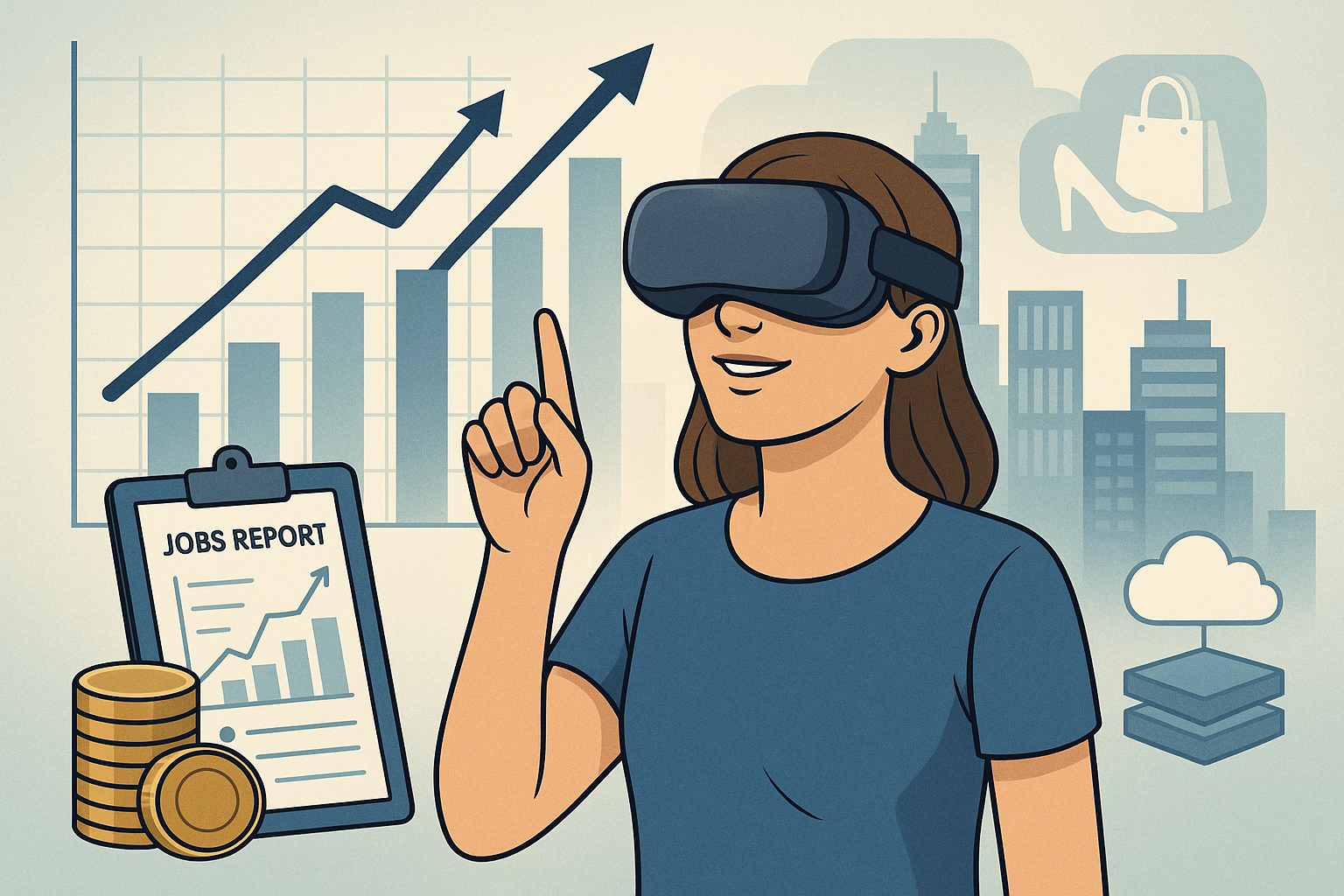
Diving into scalability for mass adoption, this jobs report underscores an economic foundation that could propel XR from elite gadgetry to everyday essential, leveraging scalability science like cloud computing and edge processing to make immersive tech ubiquitous. Scientifically, XR's growth hinges on Moore's Law analogs in graphics processing, allowing devices to handle complex simulations affordably, which dovetails with economic expansions providing consumer spending power—evident in the report's upward wage revisions. In retail trade, adding 16,000 jobs, AR shopping apps could scale personalized experiences, increasing sales by 15% per user studies, transforming brick-and-mortar into hybrid realms. Rhetorically, why shop in crowds when XR brings the store to you? It's retail therapy without the therapy bills. Pros include democratizing access, cons involve infrastructure needs in underserved areas. Historically, like the smartphone explosion during economic booms, XR could follow with 6G enabling global scalability. AI complements by optimizing content delivery, personalizing XR for diverse users. Real-world: Competing with Quest, startups scale via open-source XR platforms. As examined in this Harvard Business Review on scaling XR, economic indicators like job growth correlate with tech investments. Extending to gaming, XR scales esports, creating jobs in virtual economies. Hypothetically, mass XR adoption could simulate economic scenarios for training, like virtual stock markets. Short-term, it boosts productivity; long-term, reshapes societies. Ethical scalability ensures inclusivity, addressing divides. In enterprise, XR scales training for large workforces. Cultural shifts toward digital natives favor this. Geopolitically, scalable XR aids international trade simulations. Environmental benefits include reduced physical prototypes. Overall, this connection curiosities about XR's mass potential in booming economies.