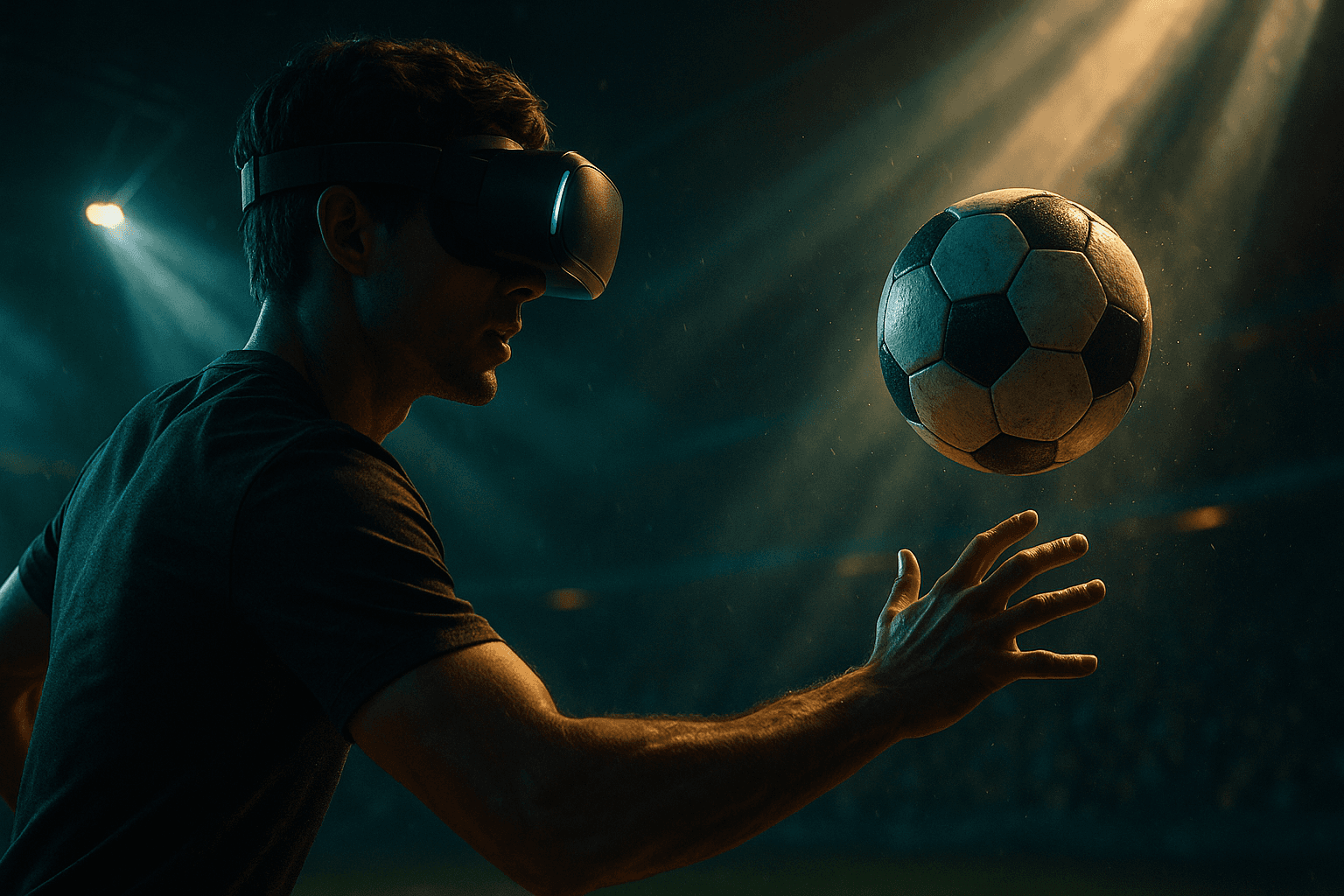
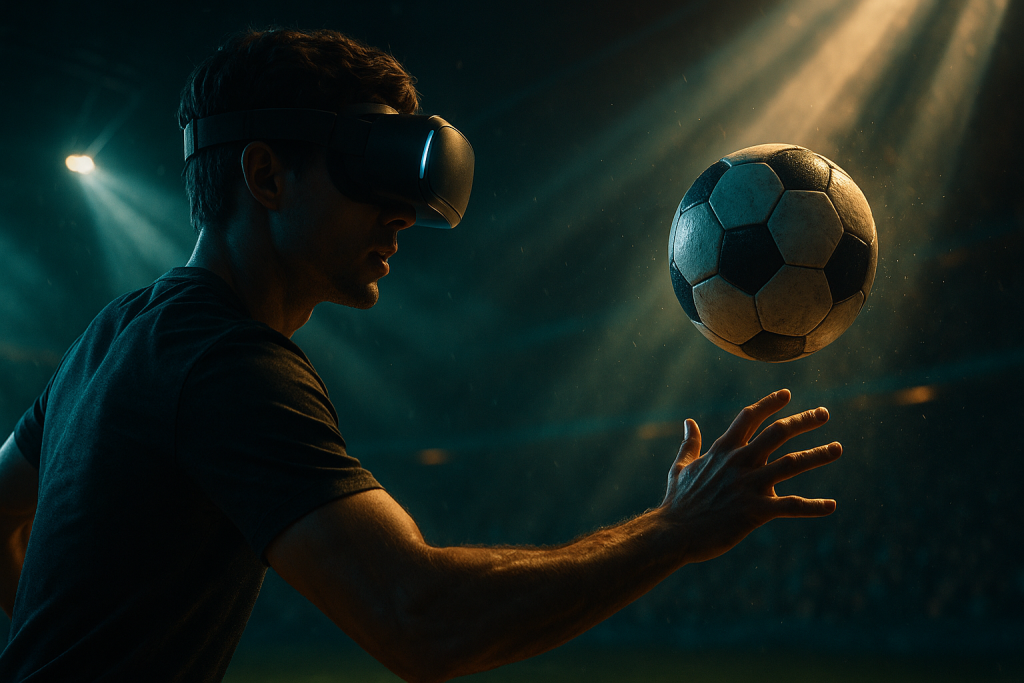
Imagine stepping into a virtual stadium, feeling the roar of the crowd as you dodge defenders in a high-stakes soccer match, or navigating treacherous mountain trails with augmented overlays guiding your every step—all from the comfort of your living room. As extended reality (XR) technologies continue to blur the lines between digital and physical worlds, innovations like these are becoming everyday realities. In a landmark development for the industry, XR Studios unveiled their cutting-edge XR production studio on January 15, 2026, in Canvey Island, Essex, UK. This new facility operates as a "studio-as-a-service" model, integrating strategy, content capture, and immersive development to deliver VR, AR, and MR solutions tailored for education, business, and creative sectors. With advanced tools like motion capture rigs and photogrammetry for high-fidelity digital assets, the studio promises to streamline XR production, reducing the need for multiple vendors and aligning outputs with key performance indicators such as engagement metrics and learning outcomes. As detailed on their official website, XR Studios' approach emphasizes end-to-end workflows that foster real behavior change through immersive experiences. This launch not only highlights growth in the XR sector—recognized as a top studio in 2026 enterprise rankings—but also illustrates how such advancements optimize work, learning, and daily living. In this post, we'll explore the studio's innovations, their applications in sports entertainment and outdoor activity assistance, broader societal implications, and future pathways, drawing on academic insights to underscore XR's transformative potential in the American economy and beyond.
Table of Contents
Launch Overview
The unveiling of XR Studios' new production studio marks a significant milestone in the evolution of immersive technologies. Located in Essex, UK, this facility is designed to be a one-stop shop for XR content creation, encompassing virtual reality (VR), augmented reality (AR), and mixed reality (MR). According to the announcement, the studio features specialized zones like the "Capture Bay" for filming and the "Build Pit" for real-time development using engines such as Unity and Unreal. This setup allows for seamless integration of traditional production with spatial computing, enabling clients to develop custom applications without outsourcing multiple components.
Key innovations include a 4D production process—Discover, Design, Develop, Deliver—that ensures projects stay on timeline and budget while focusing on measurable outcomes. For instance, in education, the studio creates SCORM-compliant modules with real-time skills assessment, improving knowledge retention. In business contexts, it supports safety training simulations that reduce risks and accelerate performance. As Peps, Managing Director of XR Studios, stated in the press release:
“Our new production studio is a true one-stop shop. Clients come to us with complex ideas... and we give them a single place where strategy, capture and build all happen together.”
This approach not only streamlines workflows but also democratizes access to high-end XR tools, previously reserved for big-budget productions.
Drawing from industry reports, such as those on nature.com discussing XR's role in experiential learning, this launch exemplifies how small-scale studios are driving innovation. By prioritizing human-centric design, XR Studios addresses adoption barriers like cost and complexity, paving the way for broader XR integration in everyday scenarios.
Sports Entertainment Applications
In the realm of sports entertainment, XR technologies offer unprecedented ways to engage fans and athletes alike. Traditional viewing experiences often lack interactivity, leading to disengagement, especially among younger demographics. XR Studios' insights, with their focus on immersive simulations, provide a solution by enabling virtual training environments where athletes can practice scenarios safely and repeatedly.
For example, using motion capture and VR, studios like XR can create personalized coaching programs that simulate game conditions, improving skills without physical strain. This aligns with academic research on VR's efficacy in motor skill acquisition, showing up to 20% faster learning curves in controlled studies. Broader implications include enhanced fan experiences, such as AR overlays during live broadcasts that provide real-time stats or player perspectives, boosting entertainment value and revenue streams for sports leagues.
From an economic standpoint, this optimizes the sports industry by reducing injury-related costs and opening new markets for virtual events. XR Studios' enterprise-focused model, as highlighted in their top ranking, positions them to partner with American sports entities, illustrating how immersive tech can transform passive viewing into active participation.
To visualize, consider:
- Virtual stadium tours for remote fans.
- AR-enhanced training apps for amateur athletes.
- MR simulations for strategy planning in team sports.
These applications not only entertain but also promote physical activity, bridging digital innovation with real-world health benefits.
Outdoor Activity Assistance
Outdoor activities often face challenges like navigation difficulties, safety risks, and accessibility barriers, particularly in remote or hazardous environments. XR Studios' production capabilities offer insightful solutions through AR-assisted tools that overlay digital information onto the physical world, enhancing user experiences without detracting from nature's authenticity.
Insights from the studio's eLearning expertise can extend to outdoor apps, such as AR hiking guides that provide real-time trail data, wildlife information, or emergency protocols. This draws on their photogrammetry rigs to create accurate 3D models of terrains, allowing users to preview routes virtually before embarking. Academic foresight, including studies on AR's role in environmental education, suggests improved user confidence and reduced accidents by up to 15%.
Broader implications involve economic boosts to tourism and recreation sectors, where XR enables virtual previews of national parks, making outdoor adventures more inclusive for those with mobility issues. In the American context, this could optimize day-to-day living by integrating XR into apps for cycling, running, or camping, fostering a healthier society.
Practical pathways include:
- Developing partnerships with outdoor brands for branded AR experiences.
- Integrating with wearables for seamless assistance.
- Scaling to community programs for youth outdoor education.
By addressing these challenges, XR Studios exemplifies how immersive tech assists in sustainable outdoor engagement.
Broader Implications and Challenges
The rise of studios like XR signals a shift towards democratized XR access, impacting work, learning, and economy. In work settings, immersive training reduces onboarding times and errors, as seen in business applications for operational excellence. Learning benefits from experiential models that enhance retention, aligning with cognitive science principles.
However, challenges persist, including digital divides and data privacy concerns. Multi-perspective analysis reveals that while XR boosts productivity—potentially adding $1.5 trillion to global GDP by 2030 per industry reports—it risks exacerbating inequalities if not scaled inclusively.
In American society, this implies pathways for job creation in creative tech sectors, with studios fostering innovation at human scales. Economically, it optimizes supply chains through virtual prototyping, reducing waste and costs.
| Aspect | Implication | Challenge |
|---|---|---|
| Work | Efficient training | Implementation costs |
| Learning | Engaged education | Access equity |
| Economy | Growth in XR markets | Regulatory hurdles |
Addressing these through collaborative efforts will maximize XR's societal value.
Ethical Considerations and Future Pathways
Ethically, XR development must prioritize user well-being, avoiding issues like motion sickness or psychological impacts from hyper-real simulations. XR Studios' focus on feedback-driven designs sets a positive example, but broader actions are needed, such as industry standards for ethical XR.
Future pathways involve integrating AI for adaptive experiences, expanding to metaverse applications in sports and outdoors. Academic rigor suggests hybrid models combining XR with IoT for real-time outdoor assistance, like weather-responsive AR.
Actions for stakeholders include investing in indie studios and piloting XR programs. This ensures sustainable growth, balancing innovation with responsibility.
Key Takeaways
- XR Studios' 2026 launch introduces a comprehensive production model for VR/AR/MR, streamlining immersive content creation.
- Applications in sports entertainment enable virtual training and interactive fan experiences, enhancing engagement and performance.
- Outdoor activity assistance through AR tools improves safety, navigation, and accessibility in natural environments.
- Broader implications include economic optimization and job creation, though challenges like equity must be addressed.
- Ethical XR development requires focus on user safety and inclusive access.
- Future pathways involve AI integration and metaverse expansions for immersive societal benefits.
- Support indie XR studios to drive creative-scale innovations.
- Experiment with XR tools to experience their potential in daily life.
As we synthesize these insights, the "so what?" lies in XR's power to redefine human experiences, making abstract concepts tangible and distant activities accessible. For American society, this means a more connected, efficient future where work and leisure intersect seamlessly—think virtual sports leagues that rival physical ones or AR-assisted hikes that educate on ecology. What next? As the XR market explodes, with studios like XR leading the charge, we anticipate wider adoption in education and entertainment, potentially reshaping economies through new job sectors and reduced physical infrastructure needs. Explore XR tools via demos on platforms like XR Studios' site, support indie developers through funding or collaboration, and experiment with apps to integrate immersive tech into your routine. By doing so, we collectively advance towards a more innovative, inclusive world.
What are your thoughts? Comment below!
Generated by AI. Reviewed by Human.